 Español
  English


The Classic Inca Trail to Machu Picchu is one of the world’s most iconic trekking routes — a once-in-a-lifetime adventure that combines breathtaking Andean landscapes, ancient Inca ruins, and the thrill of reaching the legendary Lost City.
This 4-day hike is also one of the most challenging treks in Peru, with an average elevation gain of around 1,000 meters (3,280 feet) and a maximum altitude of 4,215 meters (13,828 feet) at the famous Dead Woman’s Pass. The high altitude and steep ascents make proper preparation essential.
To fully enjoy the experience and adapt safely to the Inca Trail altitude, we recommend booking your trek well in advance. This allows you enough time to follow a physical training plan and acclimatize properly in Cusco or the Sacred Valley before starting your journey.
At Tunqui Expeditions, our expert local guides ensure that every step of your Inca Trail hike is safe, enriching, and unforgettable — helping you connect deeply with Peru’s rich history and natural beauty.
Altitude on the Inca Trail
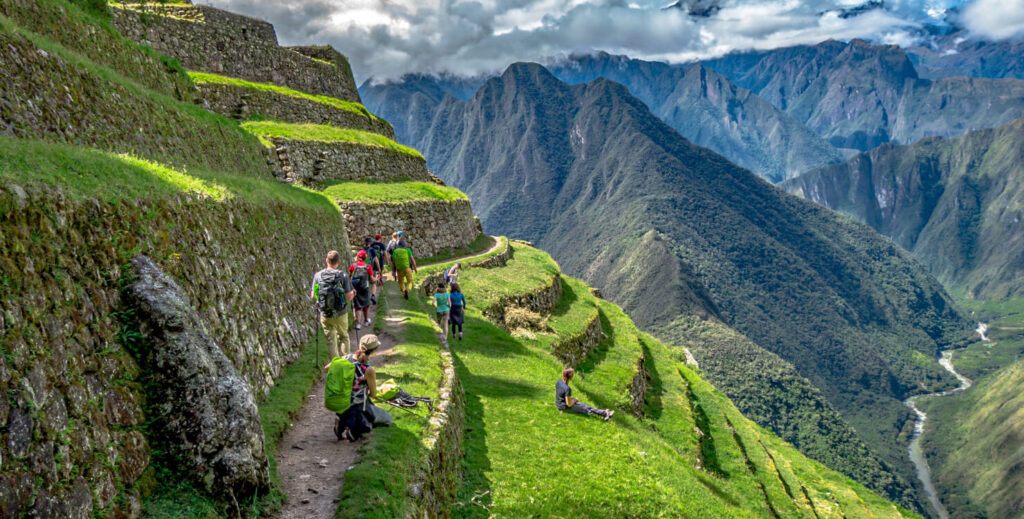
The Inca Trail is renowned for its breathtaking scenery — and its high altitude. Many hikers find the challenge lies not in the distance, but in the steep ascents and thin mountain air. The trail reaches impressive elevations, with several sections rising above 4,000 meters (13,000 feet).
To fully enjoy the experience, it’s essential to acclimatize properly before starting the trek. Spending a few days in Cusco or the Sacred Valley helps your body adjust to the altitude and reduces the risk of altitude sickness. With the right preparation, you’ll be ready to take on the heights and appreciate the journey to Machu Picchu to the fullest.
Inca Trail To Machu Picchu Map and Inca Trail Ruins
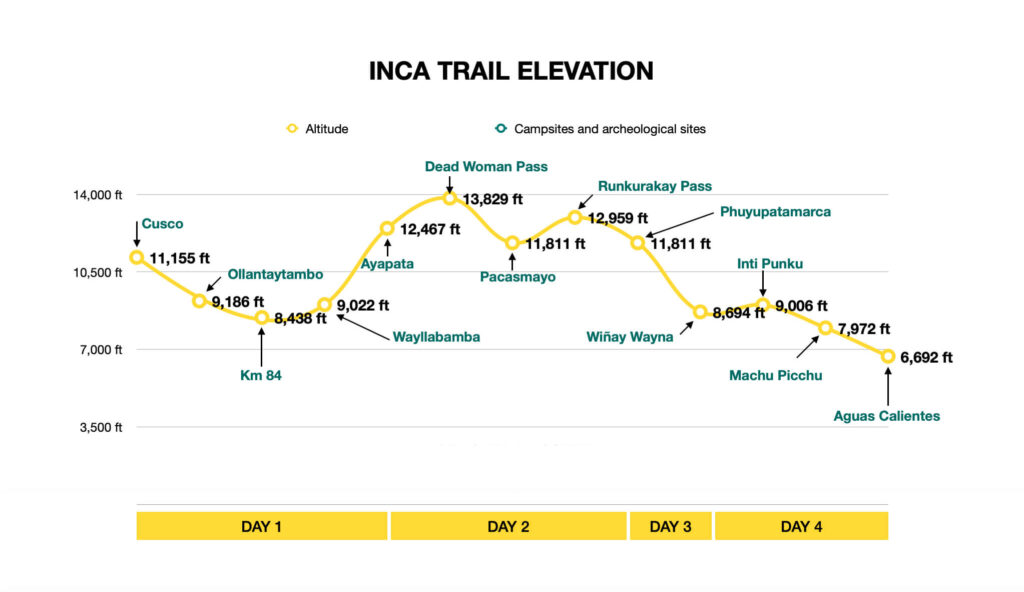
Inca Trail Altitude: How High Does the Trail Go?
The Inca Trail to Machu Picchu covers a wide range of altitudes, from approximately 2,000 meters (6,560 feet) near the Sacred Valley to its highest point at 4,215 meters (13,828 feet) above sea level — the famous Dead Woman’s Pass (Warmiwañusca). This pass stands at nearly twice the elevation of Cusco, making it the most challenging part of the trek.
On average, hikers spend most of the journey at around 3,000 meters (9,800 feet), where the combination of steep climbs and thin mountain air can test endurance. The ascent to Dead Woman’s Pass takes place on the second day of the Inca Trail, and while it’s demanding, reaching the summit is one of the most rewarding moments of the entire hike.
Altitude Along the Inca Trail
How Long Is the Inca Trail to Machu Picchu?
The Classic Inca Trail to Machu Picchu covers approximately 26 miles (42 kilometers) through the heart of the Peruvian Andes. This legendary four-day trek takes hikers across diverse landscapes — from lush cloud forests to ancient Inca ruins — while reaching altitudes as high as 4,215 meters (13,828 feet) at Dead Woman’s Pass.
Although the distance may not seem extreme, the challenging terrain and high altitude make the Inca Trail one of the toughest and most rewarding hikes in the world. Proper preparation, acclimatization, and a guided tour with Tunqui Expeditions ensure a safe and unforgettable journey to Machu Picchu.
Inca Trail Elevation Points – Day by Day
Inca Trail Elevation Profile – Day 1: Inca Trail Elevations and Highlights
The first day of the Classic Inca Trail begins at Km 82, located at an altitude of 2,718 meters (8,924 feet) above sea level. From here, hikers follow a gradual ascent through the beautiful Urubamba Valley, passing small villages and ancient archaeological sites before reaching the first campsite.
Elevation Summary – Day 1
| Elevation Detail | Feet (ft) | Meters (m) |
|---|---|---|
| Highest Elevation (Wayllabamba Camp Zone) | 9,842 ft | 3,000 m |
| Inca Trail Elevation Gain | 1,640 ft | 500 m |
| Total Descent of the Day | 164 ft | 50 m |
Campsites and Their Altitude
- Km 82 (Start Point): 2,718 m / 8,924 ft
- Wayllabamba (First Campsite): 3,000 m / 9,842 ft
- Ayapata (Preferred Campsite on Day 1): 3,300 m / 10,826 ft
Archaeological Sites Along the Route
During Day 1, hikers can visit or see several fascinating Inca ruins:
- Salapunku – 2,720 m / 8,923 ft (visible from the train before the hike begins)
- Kanabamba – 2,625 m / 8,615 ft (visible from the train before the hike begins)
- Wilkarakay – 2,650 m / 8,694 ft
- Patallacta (or Llactapata) – 2,614 m / 8,576 ft
- Wayllabamba – 3,000 m / 9,842 ft
Day 1 of the Inca Trail offers a gentle introduction to the trek — ideal for warming up and acclimatizing to the altitude. The scenic path winds through lush valleys and ancient Inca settlements, setting the tone for the adventure ahead.
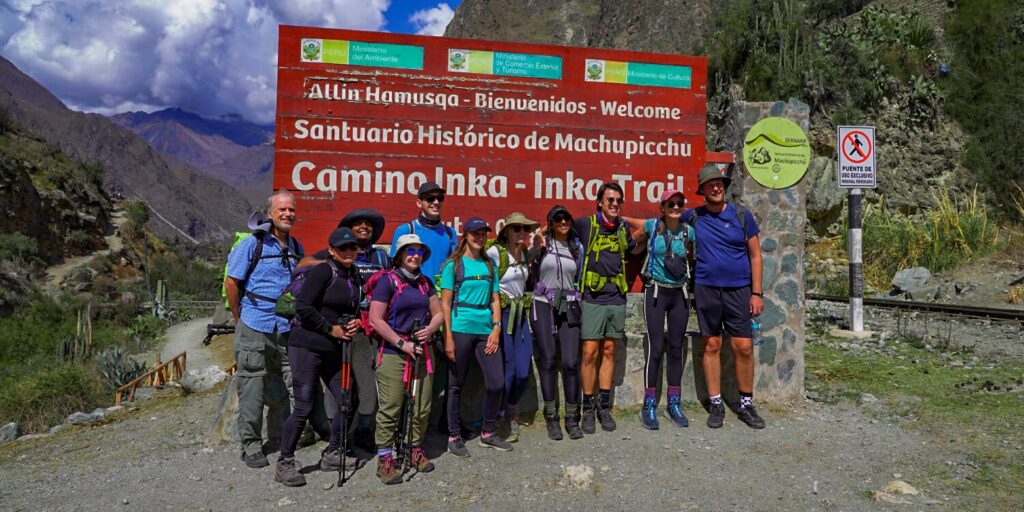
Inca Trail Elevation Profile – Day 2
Day 2: The Challenge to Dead Woman’s Pass
Day 2 of the Classic Inca Trail to Machu Picchu is known as the most demanding and rewarding part of the journey. The trail climbs steadily from the Andean forests of Llulluchapampa to the highest point of the entire trek — Dead Woman’s Pass (Warmiwañusca) — standing at an impressive 4,215 meters (13,828 feet) above sea level.
After conquering the pass, hikers begin a steep descent toward the second campsite, surrounded by breathtaking mountain scenery and the ancient energy of the Andes.
Elevation Summary – Day 2
| Elevation Detail | Feet (ft) | Meters (m) |
|---|---|---|
| Highest Elevation (Dead Woman’s Pass) | 13,828 ft | 4,215 m |
| Inca Trail Elevation Gain | 3,610 ft | 1,100 m |
| Total Descent of the Day | 1,970 ft | 600 m |
Campsites and Their Altitude
- Llulluchapampa – 3,800 m / 12,467 ft (rest stop before the final ascent to the pass)
- Pacaymayo Alto – 3,600 m / 11,811 ft (second official campsite)
- Chaquicocha – 3,600 m / 11,811 ft (alternative or preferred campsite for some groups)
Mountains Visible on Day 2
- Dead Woman’s Pass (Warmiwañusca) – 4,215 m / 13,828 ft, the highest point on the Inca Trail.
- Salkantay Mountain – 6,271 m / 20,574 ft, the tallest peak in the Vilcabamba mountain range, often visible in the distance on clear days.
Archaeological Sites Along the Trail
- Runkurakay – 3,950 m / 12,959 ft, a circular Inca ruin believed to have served as a watchtower or resting lodge for messengers.
- Sayacmarca – 3,600 m / 11,811 ft an ancient Inca site built on a steep mountainside, offering incredible views of the surrounding valleys.
Day 2 is the heart of the Inca Trail — a true test of endurance and spirit. The climb to Dead Woman’s Pass is challenging but unforgettable, rewarding hikers with stunning panoramic views and a deep sense of achievement before descending into the high Andean valleys.
Inca Trail Elevation Profile – Day 3
Day 3: The Scenic and Cultural Journey
Day 3 of the Classic Inca Trail to Machu Picchu offers a perfect balance of natural beauty and archaeological discovery. Hikers cross the Runkurakay Pass — the second-highest point on the trail — before descending through cloud forests and a series of fascinating Inca ruins. This day is less demanding than Day 2 but remains full of excitement, with breathtaking views and well-preserved ancient sites along the route.
Elevation Summary – Day 3
| Elevation Detail | Feet (ft) | Meters (m) |
|---|---|---|
| Highest Elevation (Runkurakay Pass) | 13,123 ft | 4,000 m |
| Inca Trail Elevation Gain | 1,476 ft | 450 m |
| Total Descent of the Day | 3,280 ft | 1,000 m |
Campsites and Their Altitude
- Phuyupatamarca – 3,650 m / 11,975 ft (the “Town Above the Clouds,” the third campsite of the trek)
- Wiñaywayna – 2,600 m / 8,530 ft (preferred campsite on Day 3, near the famous archaeological site of the same name)
Mountains Along the Route
- Runkurakay Pass – 4,000 m / 13,123 ft, the second-highest point on the Inca Trail, offering panoramic views of the Andes and the surrounding valleys.
Archaeological Sites Along the Trail
- Sayacmarca – 3,600 m / 11,811 ft, known for its strategic location and stunning views of the Aobamba Valley.
- Conchamarka – 3,550 m / 11,646 ft, a smaller but beautifully preserved ruin near Sayacmarca.
- Phuyupatamarca – 3,650 m / 11,975 ft, meaning “The Town Above the Clouds”, one of the most beautiful sites on the trail.
- Intipata – 2,840 m / 9,317 ft, an impressive set of agricultural terraces built into a steep slope.
- Wiñaywayna – 2,600 m / 8,530 ft, an extraordinary archaeological complex with terraces and temples dedicated to water and fertility.
Day 3 is a favorite among trekkers for its mix of easier walking, jaw-dropping views, and deep cultural immersion. With every step, you get closer to Machu Picchu — surrounded by cloud forests, ancient ruins, and the mystical beauty of the Andes.
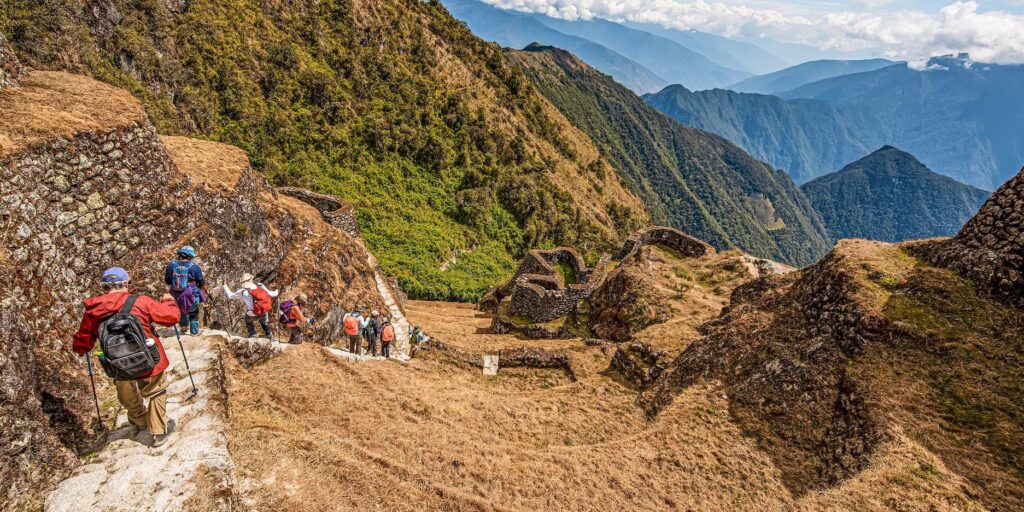
Inca Trail Elevation Profile – Day 4
Day 4: The Final Stretch to Machu Picchu
The last day of the Classic Inca Trail is the most exciting and emotional part of the journey. Hikers wake up before dawn to reach the Sun Gate (Inti Punku) — the first viewpoint of the legendary Machu Picchu citadel.
Although it’s the shortest hiking day, the early start and the anticipation make it unforgettable. From the Sun Gate, travelers descend into the heart of the Lost City of the Incas, completing one of the world’s most iconic trekking experiences.
Elevation Summary – Day 4
| Elevation Detail | Feet (ft) | Meters (m) |
|---|---|---|
| Highest Elevation (Sun Gate / Inti Punku) | 8,858 ft | 2,700 m |
| Inca Trail Elevation Gain | 525 ft | 160 m |
| Total Descent of the Day | 492 ft | 150 m |
Campsite and Its Altitude
- Puente Ruinas – 2,000 m / 6,561 ft
(the final campsite for the extended 5-day Inca Trail itineraries, located near the Urubamba River and below Machu Picchu)
Mountains Visible on Day 4
- Pumasillo Mountain – 5,991 m / 19,656 ft, the majestic snow-capped peak that dominates the Vilcabamba range, visible from Machu Picchu.
- Machu Picchu Mountain – 3,082 m / 10,111 ft, the highest mountain in the Machu Picchu area, often climbed for panoramic views of the citadel.
- Huayna Picchu Mountain – 2,693 m / 8,835 ft, the iconic peak rising behind Machu Picchu, famous for its steep trails and ancient terraces.
Archaeological Sites Along the Route
- Sun Gate (Inti Punku) – 2,700 m / 8,858 ft, the ceremonial entrance to Machu Picchu, offering the first breathtaking view of the Lost City at sunrise.
- Machu Picchu Citadel – 2,430 m / 7,972 ft, the world-renowned archaeological wonder and the final destination of the Inca Trail.
Day 4 is the perfect finale to your trek — a short hike leading to the awe-inspiring sight of Machu Picchu emerging from the morning mist. Standing at the Sun Gate is an unforgettable moment that rewards every step taken along the trail.
Inca Trail Difficulty:
How Hard Is the Trek to Machu Picchu?
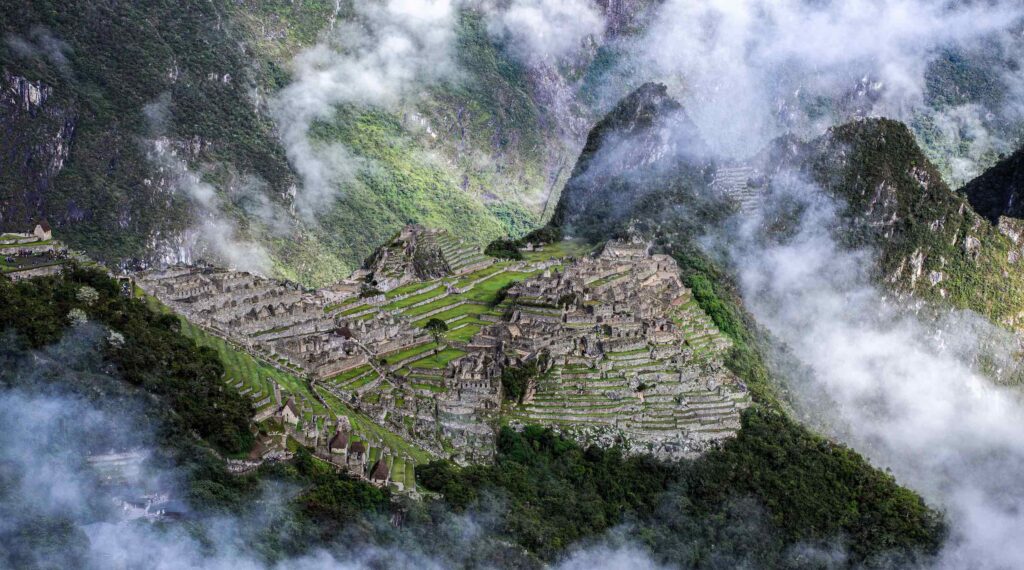
The Inca Trail to Machu Picchu is one of the most legendary hikes in the world — and with good reason. This challenging route combines steep ascents, stone stairways, and dramatic altitude changes that test both endurance and determination. Some sections reach inclines of 30% or more, and at altitudes over 4,000 meters (13,000 feet), the thinner mountain air can make every step feel heavier.
It’s common for hikers to experience mild symptoms of altitude sickness, such as shortness of breath, fatigue, or light headaches. That’s why proper acclimatization and preparation are essential before starting the trek.
But don’t worry — while the Inca Trail is demanding, it’s absolutely achievable for moderately fit and experienced hikers. With good preparation, a positive mindset, and the expert guidance of Tunqui Expeditions, you’ll conquer the trail safely and enjoy one of the most rewarding adventures of your life.
Altitude Sickness on the Inca Trail: Symptoms, Prevention, and Tips
Altitude sickness, locally known as soroche, is a common condition that can affect travelers who ascend to high altitudes too quickly — typically above 2,500 meters (8,200 feet). The Inca Trail to Machu Picchu reaches elevations of over 4,200 meters (13,800 feet), where the air is thinner and oxygen levels are lower.
Common symptoms of altitude sickness include headache, dizziness, nausea, fatigue, and shortness of breath. These effects can vary from mild to more intense depending on how well your body adapts.
To minimize the risk, it’s essential to acclimatize properly before beginning your trek. Spending a few days in Cusco (3,400 m / 11,152 ft) or the Sacred Valley (2,800 m / 9,186 ft) allows your body to adjust gradually to the altitude.
Preparing well before your Inca Trail adventure is the key to a safe and enjoyable experience. Below are some useful tips and strategies to help you adapt, prevent discomfort, and fully enjoy the magic of hiking through the Andes.
Tips to Acclimate to the Inca Trail Altitude
Before beginning your Inca Trail trek to Machu Picchu, it’s essential to give your body time to adapt to the high altitude of the Andes. Proper acclimatization helps prevent altitude sickness (soroche) and ensures you can fully enjoy the breathtaking landscapes along the trail.
Here are some practical tips to help you adjust effectively:
1. Spend a Few Days in Cusco or the Sacred Valley
Arrive in Peru at least 2–3 days before your trek. Cusco (3,400 m / 11,152 ft) and the Sacred Valley (2,800 m / 9,186 ft) are perfect places to let your body gradually adapt to the thinner air. Use this time to rest, explore, and stay hydrated.
2. Stay Hydrated
Drink plenty of water and herbal teas, especially the traditional coca leaf tea, which locals have used for centuries to ease altitude discomfort. Avoid excessive alcohol and caffeine, as they can dehydrate you and slow acclimatization.
3. Eat Light and Nutritious Meals
Opt for easy-to-digest foods such as soups, fruits, and vegetables. Heavy meals can make you feel sluggish and worsen altitude symptoms during your first few days in Cusco.
4. Rest Well and Take It Easy
Avoid strenuous activities right after arrival. Give your body time to adjust before attempting long hikes or climbs. Sleep is your best ally in the acclimatization process.
5. Consider Altitude Medication (If Needed)
Some travelers take medication like acetazolamide (Diamox) to prevent altitude sickness. Always consult your doctor before using any medication or supplements
6. Choose a Professional Trekking Company
Joining a trusted local operator like Tunqui Expeditions ensures you have experienced guides, proper acclimatization schedules, and emergency support — all of which make your trek safer and more enjoyable.
Inca Trail Weather: What to Expect on Your Trek to Machu Picchu
The Inca Trail to Machu Picchu winds through the majestic Andes Mountains, where the weather can vary dramatically throughout the day. Although the region generally enjoys a mild, temperate climate, conditions change quickly due to altitude and geography.
Mornings on the trail are often clear and sunny, perfect for hiking and taking in breathtaking mountain views. However, temperatures can drop sharply in the afternoons, especially at higher elevations, and nights tend to be cold, sometimes reaching near freezing during the dry season.
The best time to hike the Inca Trail is during the dry season (May to September), when the skies are clearer and rainfall is minimal. The rainy season (November to March) brings lush green landscapes but also slippery trails and occasional downpours.
To enjoy your adventure comfortably, it’s essential to pack the right clothing — including layers, a waterproof jacket, and warm gear for the evenings. For detailed packing recommendations, check out our Inca Trail Packing List.
At Tunqui Expeditions, we monitor daily weather conditions to ensure your trek is both safe and enjoyable, helping you experience the best of the Andes — rain or shine.
The Inca Trail Rainy Season: What You Should Know
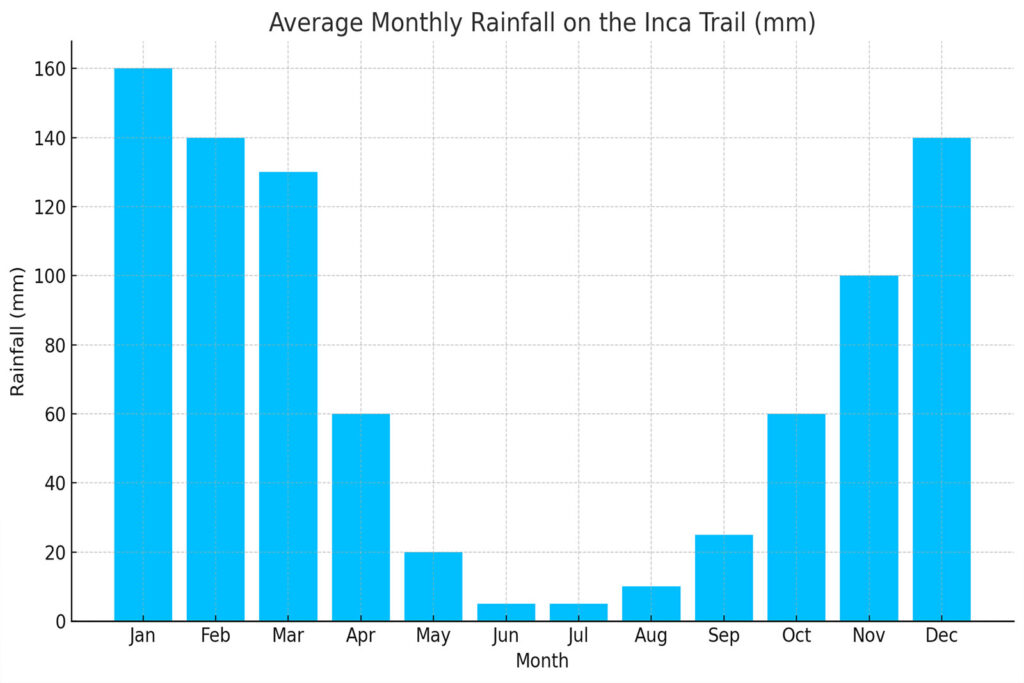
The rainy season on the Inca Trail runs from December to March, coinciding with the summer months in the Andes. During this time, Cusco and the Sacred Valley experience frequent showers and misty mountain mornings.
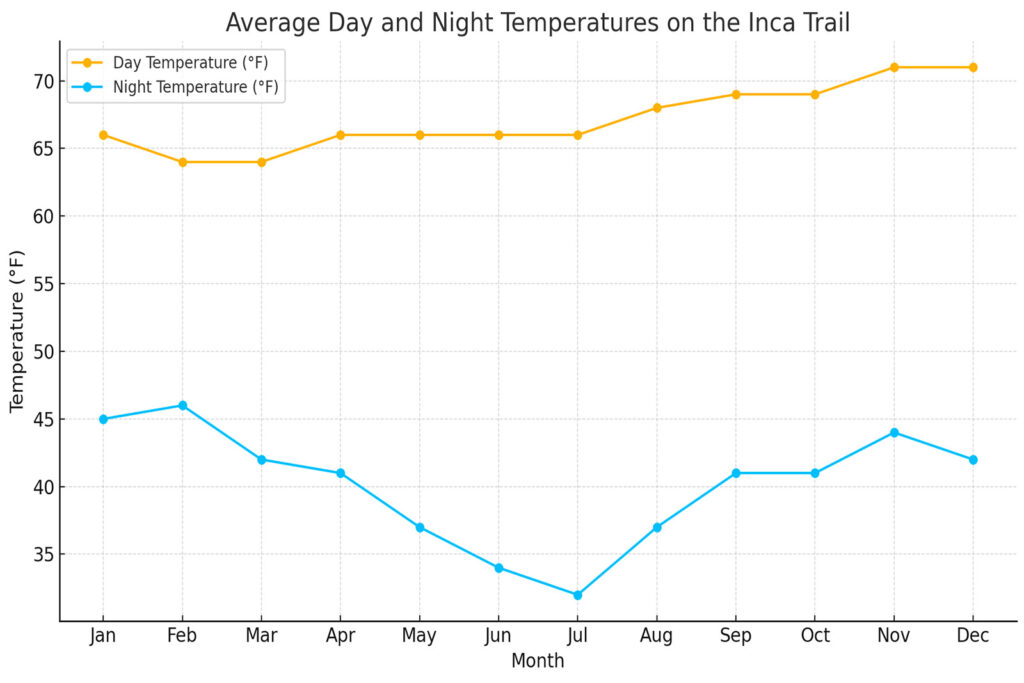
Daytime temperatures average around 18 °C (64 °F), while nights can drop to 9 °C (48 °F) or even lower at higher elevations. Although the rain adds a mystical touch to the landscapes, it also brings slippery and muddy trails that can make hiking more challenging.
It’s important to note that the Inca Trail is closed every February for annual maintenance and conservation. However, trekking in December, January, or March is still possible — with a few trade-offs. The main advantage? Fewer hikers, meaning a quieter and more peaceful experience along the route.
On the downside, you’ll need to be prepared for wet conditions and occasional heavy rain. If you choose to hike during this season, make sure to pack quality rain gear, waterproof boots, and quick-dry clothing to stay comfortable and safe throughout your journey.
How Much Does It Rain on the Inca Trail?
During the rainy season, the Inca Trail can receive 100–150 mm (4–6 inches) of rainfall per month, with January and February being the wettest months. Showers usually occur in the afternoons and evenings, while mornings often remain clear and bright — offering dramatic views of mist-covered valleys and lush green mountains.
The Inca Trail During the Dry Season
The dry season on the Inca Trail lasts from May to September and is widely considered the best time of year to hike to Machu Picchu. During these months, the weather is generally stable, with clear skies, abundant sunshine, and minimal rainfall — perfect conditions for trekking and photography.
Daytime temperatures average around 16 °C (61 °F), providing comfortable hiking conditions. However, nights can be extremely cold, sometimes dropping below 0 °C (32 °F), especially at higher elevations and campsites.
Because of the ideal weather, this is also the busiest season on the Inca Trail. Permits sell out months in advance, so it’s crucial to book your trek early. Expect larger crowds along the route and at Machu Picchu, as well as longer lines for buses and trains in Aguas Calientes (the town below the citadel).
Despite the tourist traffic, the pros of trekking in the dry season are unbeatable: crystal-clear mountain views, drier trails, and spectacular sunrises over the Andes. Just make sure to pack warm layers for the chilly nights and plan ahead to secure your Inca Trail permit with Tunqui Expeditions.
How to Prepare for the Inca Trail to Machu Picchu
The Inca Trail is one of the world’s most breathtaking — and challenging — treks. To make the most of your experience, proper preparation is key. From physical training to essential gear and smart planning, here’s how to get ready for your journey with Tunqui Expeditions.
1. Prepare Your Body
Start training several weeks before your trek. Go on daily walks or hikes of one to two hours, ideally on inclined terrain or stairs to build endurance and leg strength. If possible, take longer weekend hikes carrying a backpack to simulate real trekking conditions.
2. Eat Healthy and Energizing Meals
In the days leading up to your trek, focus on balanced, carbohydrate-rich meals with plenty of vegetables. This will give you sustained energy and help your body handle the Inca Trail’s altitude more effectively. Avoid alcohol and heavy foods right before your hike.
3. Dress and Pack Properly
Comfortable, high-quality gear can make a huge difference. Make sure you have:
- Broken-in hiking shoes or boots
- Rain gear and waterproof jacket
- A comfortable daypack
- Warm clothing layers for the evenings
- Sun protection (hat, sunglasses, sunscreen)
This will help you adapt to the trail’s changing weather and terrain while staying comfortable throughout the journey.
👉 Need help? See our Inca Trail Packing List for more details.
4. Book Your Inca Trail Permit Early
The Classic Inca Trail is one of the most popular treks in the world, and permits sell out quickly — often months in advance. To secure your spot, book early with Tunqui Expeditions, an authorized local operator that guarantees your permit, guide, and logistics.
5. Learn a Few Spanish Phrases
While most guides speak English, learning some basic Spanish words or greetings can enhance your experience and help you connect with local communities along the way. A simple “¡Buenos días!” or “Gracias” goes a long way in Peru.
What to Do During the Inca Trail
Once you begin your trek, following these simple tips will help keep you safe, comfortable, and fully immersed in the experience:
- Follow your tour guide’s instructions at all times.
- Pace yourself — take your time and rest whenever you need to.
- Drink plenty of water to stay hydrated throughout the day.
- Use restrooms before starting each hiking segment.
- Stay on the marked trail and avoid wandering off-route.
Remember: the Inca Trail is not just a hike — it’s a journey through history, nature, and spirit. Preparing properly ensures you can enjoy every step toward the Lost City of Machu Picchu safely and confidently.
Inca Trail Permits 2026: Everything You Need to Know
The Inca Trail to Machu Picchu is one of the most sought-after treks in the world — and access is strictly limited. Because the trail lies within the Machu Picchu Historical Sanctuary, it is protected under a conservation plan managed by the Peruvian Ministry of Culture to preserve its delicate environment and ancient Inca stonework.
Limited Permits – Book Early!
Each day, only 500 Inca Trail permits are issued by the Ministry of Culture. This total includes guides, porters, and cooks, leaving only around 180–200 permits available for travelers. Because of this limited availability, permits sell out months in advance, especially for the high season (May–September).
Our best advice: book your Inca Trail permit for 2026 as early as possible to secure your spot. Reservations are already open for the 2026 season, and spaces are filling quickly.
Important Booking Information
After the Trek
Once you reach Machu Picchu, you’ll have time to explore one of the most iconic archaeological sites in the world — a well-deserved reward after days of trekking through the Andes.
If you’re ready to make your dream adventure a reality, reserve your Inca Trail 2026 permit today with Tunqui Expeditions. Our expert local guides and professional team will ensure a safe, enriching, and unforgettable experience from start to finish.
👉 Discover more details about our Classic Inca Trail Tour and plan your journey to the Lost City of the Incas with confidence.
Related Blogs You Might Enjoy
Discover everything you need to know about the legendary Inca Trail — from preparation tips and permits to what to expect on each day of the trek. A must-read for anyone planning their Machu Picchu adventure.
Follow the footsteps of the ancient Incas along one of the world’s most iconic routes. Learn about the trail’s highlights, elevation changes, and the magic awaiting you at the Sun Gate
Uncover the fascinating history behind the Inca Trail and explore how this sacred route connects ancient ruins, stunning landscapes, and the heart of Peruvian culture.
Gain insider knowledge from Silvio Tunqui, an experienced local guide and founder of Tunqui Expeditions. Get expert advice, professional insights, and authentic stories about trekking the Inca Trail.