 Español
  English


The Salkantay Trek is one of the most thrilling and scenic ways to reach the legendary Machu Picchu, combining adventure, culture, and nature in one unforgettable journey. This spectacular multi-day hike takes you across dramatic landscapes — from the snow-capped Salkantay Mountain to the lush cloud forests of the Peruvian Andes — offering a perfect blend of challenge and wonder for every traveler.
Unlike the crowded Inca Trail, the Salkantay Trail offers a more peaceful and authentic trekking experience, allowing you to connect deeply with the Andean environment and local communities. Along the way, you’ll witness breathtaking mountain vistas, turquoise glacial lakes, tropical valleys, and ancient pathways that have guided travelers for centuries.
At Tunqui Expeditions, we guide you through every step of this extraordinary adventure — from expert packing tips to the must-see highlights you’ll encounter on the trail. Whether you’re an experienced hiker or a first-time adventurer, the Salkantay Trek to Machu Picchu is your gateway to one of Peru’s most rewarding experiences.
Get ready to discover Machu Picchu through the eyes of the Andes — a journey of challenge, beauty, and spiritual connection that will stay with you forever.
What Is SALKANTAY?
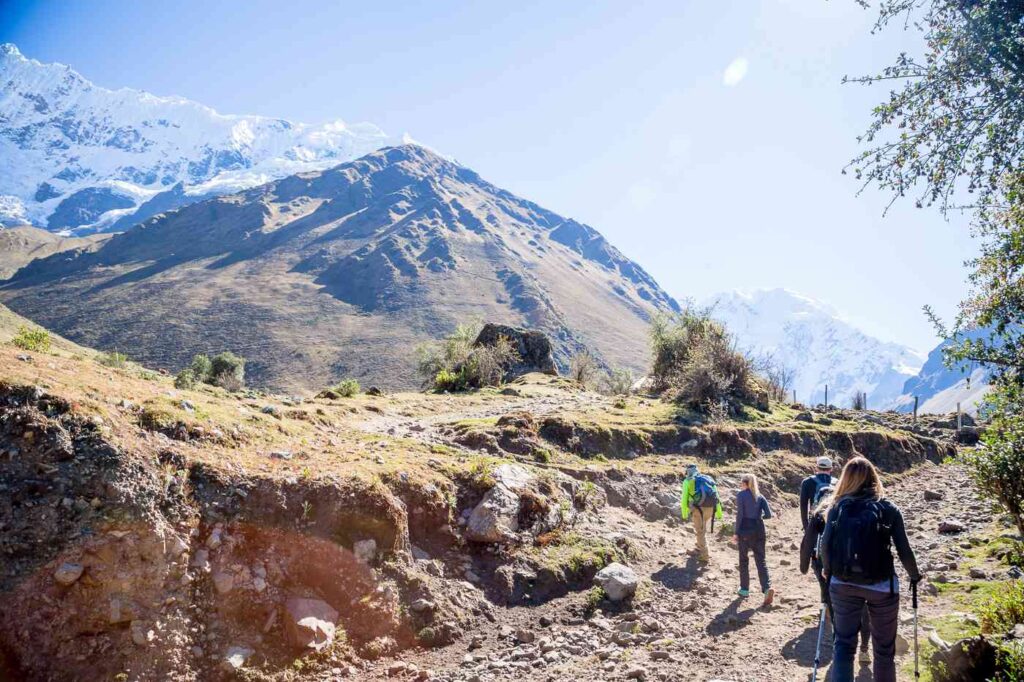
Salkantay is a majestic mountain located in the Cusco region of Peru, standing proudly at 6,271 meters (20,574 feet) above sea level. As the second-highest peak in the region, Salkantay dominates the landscape with its snow-capped summit and rugged beauty, making it one of the most iconic mountains in the Peruvian Andes. The name “Salkantay or Salcantay,” often translated as “Savage Mountain” or “Wild Mountain”, perfectly captures its untamed spirit and the challenges it presents to adventurers and mountaineers alike.
Beyond its breathtaking presence, Salkantay plays a central role in The Salkantay Trek, one of the most remarkable routes leading to Machu Picchu. This unforgettable trail offers travelers a journey through dramatically shifting landscapes — from high alpine passes to lush cloud forests — while immersing them in the rich cultural and natural heritage of the Andes.
Choosing The Salkantay Trek means experiencing a more authentic and less crowded path to Machu Picchu, where every step reveals the raw beauty and spiritual essence of Peru’s mountains.
Where Is SALKANTAY LOCATED?
Salkantay Mountain is located deep in the Peruvian Andes, approximately 100 kilometers (62 miles) northwest of the city of Cusco — the historic capital of the Inca Empire. It forms part of the stunning Vilcabamba Mountain Range, a subrange of the Andes that is home to some of the region’s highest and most spectacular peaks.
Rising to an impressive 6,271 meters (20,574 feet) above sea level, Salkantay stands as one of the most sacred and visually striking mountains in Peru. The area surrounding it is a land of incredible contrasts — where icy summits tower over tropical valleys filled with orchids, waterfalls, and ancient Inca trails.
For adventurers, The Salkantay Trek offers the best way to experience the magic of this region. The trail begins near the mountain’s base, winding through traditional Andean villages, glacial lakes, and breathtaking passes before descending into lush cloud forests that eventually lead to the legendary Machu Picchu. This unique journey showcases the true diversity of Peru’s landscapes, making it one of the most rewarding trekking routes in South America.
Today, Salkantay has become a must-visit destination for hikers from around the world who seek a more authentic and less crowded alternative to the Inca Trail. Whether you’re drawn by its natural beauty, cultural significance, or the challenge of high-altitude trekking, The Salkantay Trek offers an unforgettable path to the heart of the Andes.
Meaning of Salkantay
The name “Salkantay” comes from the ancient Quechua language and translates to “Wild Mountain” or “Savage Mountain.” The word “Sallqa” means wild or untamed, while “Antay” refers to a specific place or region. Together, they perfectly describe the mountain’s fierce and majestic nature — a symbol of strength, mystery, and raw beauty in the heart of the Andes.
History and Spiritual Significance of Salkantay
Salkantay Mountain has been revered by Andean cultures — especially the Incas — since ancient times. To the Inca civilization, Salkantay was considered an “Apu,” a sacred mountain spirit believed to protect nearby communities and influence the natural world. The Incas viewed each Apu as a living deity that guided their people, controlled the weather, and ensured balance between humans and nature.
Even today, local communities continue to honor Salkantay through traditional rituals and offerings, asking for protection, good harvests, and blessings for their families. These ceremonies, known as “pagos a la tierra” (offerings to the Earth), reflect the deep spiritual connection that Andean people maintain with their mountains and environment.
Beyond its cultural and spiritual importance, Salkantay also holds a vital place in the history of Andean travel routes. While it is not part of the classic Inca Trail, The Salkantay Trek has become one of the most popular and meaningful alternatives for reaching Machu Picchu. The trail allows travelers to walk through stunning mountain scenery and experience firsthand the sacred atmosphere that surrounds this legendary peak.
With its snow-capped summit, mystical landscapes, and enduring spiritual presence, Salkantay remains a powerful symbol of Peru’s natural and cultural heritage — a timeless guardian of the Andes and a highlight for anyone embarking on The Salkantay Trek.
How The Salkantay Trek Was Designed by Silvio Tunqui
The Salkantay Trek to Machu Picchu, as created by Tunqui Expeditions, is not just another hiking route — it’s the result of years of dedication, local knowledge, and love for the Andes.
Every section of the trail, every campsite, every meal, and every story you’ll experience along the way was carefully designed by Silvio Tunqui, a native of Cusco and lifelong mountain guide who dreamed of sharing the true spirit of the Andes with travelers from around the world.
Silvio didn’t design the Salkantay Trek alone — he built it with his people.
Together with experienced horsemen (arrieros), expert guides, talented chefs, and the Tunqui Expeditions operations team, he created a trekking experience that reflects the values of Andean life: respect, balance, and community.
From the start, Silvio envisioned a route that honored both nature and tradition.
He spent years exploring the trails around Salkantay Mountain, talking to local families, studying the terrain, and carefully selecting each campsite for its safety, comfort, and connection to the environment.
Every element — from the views at Llactapata to the tranquility of Salkantaypampa — was chosen with intention, so travelers could experience the Andes not as outsiders, but as part of its living culture.
“When we created our version of the Salkantay Trek, we wanted every traveler to feel what we feel — pride in our land, respect for the mountains, and gratitude for Pachamama (Mother Earth).”
— Silvio Tunqui, Founder of Tunqui Expeditions
Behind every successful trek, there’s an entire team working in harmony:
- The Horsemen (Arrieros): Born and raised in the mountains, they care for the mules and ensure that all equipment and supplies arrive safely to each campsite. They are the silent heroes of every journey.
- The Guides: Trained in mountain leadership and passionate about Andean history, they not only guide the path but also share the ancient stories, language, and traditions of the Inca people.
- The Cooks: Our chefs transform locally sourced ingredients into delicious, healthy, and energizing meals — each one a reflection of Andean hospitality and Peruvian flavor.
- The Office Team: The heart of Tunqui Expeditions, ensuring every logistic detail — from permits to transportation — flows seamlessly, allowing travelers to focus on the adventure itself.
Together, this team created an experience that is authentic, sustainable, and unforgettable — one that goes beyond tourism and becomes a bridge between cultures.
The Salkantay Trek by Tunqui Expeditions was built with purpose: to honor the Andean spirit, to protect the land, and to share its magic with the world.
Every detail — every sunrise at Salkantaypampa, every meal under the stars, every step through the cloud forest — carries the signature of Silvio Tunqui and the dedication of his team.
This is what makes the Salkantay Trek with Tunqui Expeditions unique: it’s not just a route — it’s a carefully crafted experience, born from love, knowledge, and respect for the Andes.
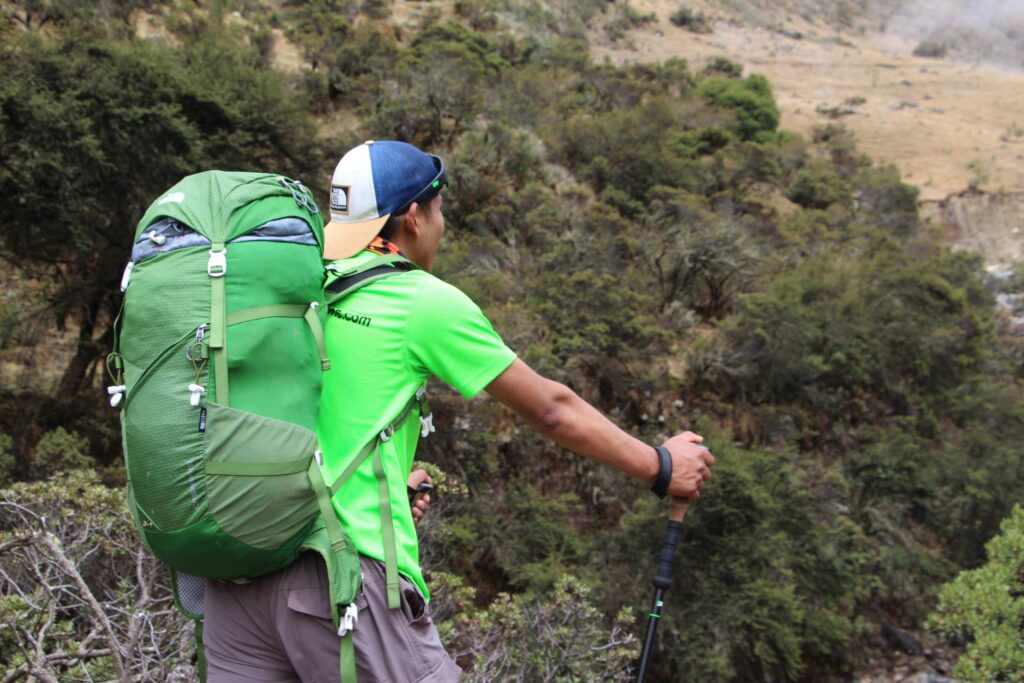
👉 Learn More: How the Salkantay Trek Was Designed by Silvio Tunqui
The Salkantay Trek to Machu Picchu
The Salkantay Trek to Machu Picchu is one of the most thrilling and challenging hiking routes in Peru, guiding adventurers through breathtaking landscapes toward the legendary Inca citadel. Unlike the world-famous Inca Trail, the Salkantay Trek is less crowded yet equally impressive, offering a more authentic and natural experience of the Andes.
This five-day trek covers approximately 60 kilometers (37 miles), taking you through an incredible variety of ecosystems and altitudes. The journey begins at the base of the majestic Salkantay Mountain, with its snow-covered peaks and crisp alpine air, before gradually descending into lush valleys filled with rivers, turquoise lagoons, and cloud forests.
As you make your way along The Salkantay Trail, you’ll witness one of the most dramatic transitions in Peru — from the icy highlands of the Andes to the warm, tropical climate of the Amazonian jungle. Every step reveals new scenery, culture, and wildlife, making this trek a complete and unforgettable adventure.
In this guide, we’ll cover everything you need to know about The Salkantay Trek to Machu Picchu — from altitude and distance to what you can expect on each day of the journey. Whether you’re an experienced hiker or a passionate traveler seeking a new challenge, this trek is a once-in-a-lifetime experience that perfectly combines nature, culture, and adventure.
Trail Statistics – The Salkantay Trek to Machu Picchu
| Category | Details |
|---|---|
| Duration | 4 to 5 days |
| Total Distance | Approximately 60 kilometers (37.3 miles) |
| Difficulty Level | Moderate to challenging — best suited for hikers in good physical condition |
| Highlights | Salkantay Mountain, Humantay Lake, breathtaking Andean landscapes, diverse flora and fauna, and the majestic Machu Picchu |
Starting and Ending Points for the Salkantay Trek to Machu Picchu
The Salkantay Trek to Machu Picchu is often hailed as one of the best trekking adventures in the world — weaving through the majestic Andean landscapes of Peru and leading you to the legendary Inca citadel of Machu Picchu.
Whether you’re a seasoned trekker or a first-time adventurer, this journey promises breathtaking views, cultural discovery, and an experience that will stay with you forever.
To help you make the most of your adventure, it’s important to understand the starting and ending points of the trek. Here’s everything you need to know, carefully outlined by Tunqui Expeditions — your trusted local expert in authentic Andean experiences.
Starting Point: Soraypampa
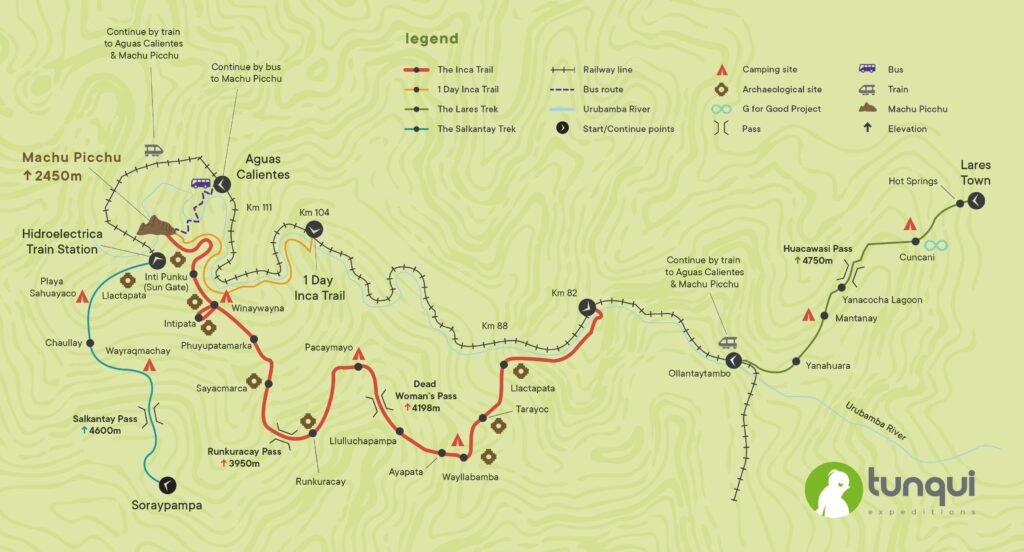
Your adventure with Tunqui Expeditions begins with an early morning pick-up from your hotel in Cusco at a pre-arranged time. You’ll travel in a comfortable private vehicle through the scenic mountain valleys of Mollepata until reaching the official starting point of the trek — Soraypampa (approximately 3,800 meters / 12,467 feet above sea level).
From Soraypampa, the adventure truly begins. The trail winds past towering peaks and leads you to one of the most stunning natural wonders of the Andes — Humantay Lake.
This turquoise lagoon, set against snow-covered mountains, marks the first breathtaking moment of your journey along the Salkantay Trail.
At Tunqui Expeditions, every trek is designed for comfort and cultural immersion. From here, your guide — a local Andean expert — will accompany you through mountain passes, jungles, and ancient Inca paths on your way toward Machu Picchu.
Ending Point: Machu Picchu
The culmination of your Salkantay Trek is nothing short of spectacular — the arrival at the world-renowned Machu Picchu.
This ancient Inca city, hidden among the mist-covered mountains, is the ultimate reward for your effort and determination. As you approach the citadel, the sight of its perfectly carved stone terraces and temples will leave you breathless.
Once inside, you’ll explore Machu Picchu with your expert Tunqui Expeditions guide, who will bring the history and mysticism of this wonder to life. You’ll visit the Temple of the Sun, the Intihuatana Stone, and the Sacred Plaza, while learning about the advanced engineering and deep spirituality of the Inca civilization.
After exploring the site, you’ll descend to Aguas Calientes, where you’ll board the panoramic train back to Cusco, with your hotel drop-off included — all coordinated seamlessly by Tunqui Expeditions.
The Salkantay Trek To Machu Picchu Altitude
The magnificent Salkantay Mountain towers at an impressive 6,271 meters (20,574 feet) above sea level, making it one of the highest and most iconic peaks in the Peruvian Andes. Along The Salkantay Trek, hikers experience significant changes in elevation, which is part of what makes this journey so diverse and rewarding.
The highest point of the trail is the Salkantay Pass, located at 4,650 meters (15,100 feet) above sea level. Reaching this point is often considered one of the most challenging yet memorable moments of the trek — the panoramic views of the snow-covered Salkantay peak and surrounding mountain ranges are simply breathtaking.
The adventure begins at an altitude of around 3,600 meters (11,800 feet), where trekkers gradually acclimatize to the high Andes. From there, the route climbs steadily toward the pass before descending into warmer, greener valleys. As the trail continues, the landscape transforms dramatically — from rugged alpine terrain to humid cloud forest and subtropical jungle.
The trek concludes in Aguas Calientes, the gateway town to Machu Picchu, located at approximately 2,040 meters (6,692 feet) above sea level. This gradual descent allows hikers to experience the incredible range of ecosystems that define The Salkantay Trek, making it one of the most unique and scenic hikes in all of South America.
The Salkantay Trek To Machu Picchu Map
The Salkantay Trek Options
When it comes to The Salkantay Trek, there are two main itinerary options: the classic 5-day Salkantay trek and the shorter 4-day Salkantay trek version. Both routes lead to Machu Picchu on the final day, offering a perfect blend of adventure, scenery, and culture. The main difference lies in the route length and overnight camps.
Below is a comparison of the two most popular itineraries:
| Salkantay Trek 5 Days | Salkantay Trek 4 Days |
|---|---|
| Day 1: Cusco – Humantay Lake – Salkantaypampa | Day 1: Cusco – Humantay Lake – Salkantaypampa |
| Day 2: Salkantay Basecamp – Wayracmachay – Collpapampa | Day 2: Salkantay Basecamp – Wayracmachay – Collpapampa |
| Day 3: Collpapampa – Lucmabamba – Llactapata | Day 3: Collpapampa – Hydroelectric – Aguas Calientes |
| Day 4: Llactapata – Hidroelectrica – Aguas Calientes | Day 4: Machu Picchu |
| Day 5: Machu Picchu | — |
| Total Distance: 60 km (37.3 mi)* | Total Distance: 48 km (30 mi)* |
*The total distance may vary slightly depending on your chosen itinerary and tour operator. Typically, the 5-Day Salkantay Trek covers between 60 and 74 kilometers (37–46 miles), while the 4-Day Trek ranges from 44 to 48 kilometers (27–30 miles).
The Salkantay Trek with Tunqui Expeditions: Sustainable Travel, Small Groups & Authentic Andean Experiences
Embark on the Salkantay Trek to Machu Picchu with Tunqui Expeditions, where adventure meets purpose.
Every step you take through the Andes contributes to a more sustainable, responsible, and culturally rich journey.
Designed by local expert Silvio Tunqui, our philosophy combines eco-friendly practices, small group travel, organic food, and high-quality equipment — ensuring every traveler experiences the true spirit of the Andes with respect and care.
Sustainable Travel on the Salkantay Trek
At Tunqui Expeditions, we believe the Salkantay Trek should protect and give back to the land it crosses.
Our operations follow a strict eco-responsible approach — minimizing waste, reducing our environmental footprint, and supporting the local Quechua communities who live along the route.
By trekking with us, you help preserve the beauty of Salkantay Mountain, its surrounding ecosystems, and the cultural heritage of the Andes for future generations.
Small Groups, Meaningful Adventures
We keep our Salkantay Trek groups small to ensure a more personal and authentic experience.
Smaller groups mean better attention, stronger connections, and a lighter impact on the environment.
You’ll have more time to interact with your guide, connect with fellow travelers, and truly appreciate the breathtaking landscapes and sacred energy of the Andes Mountains.
Organic and Fresh Meals
Food is a vital part of the Salkantay Trek experience, and our chefs take pride in preparing organic, locally sourced, and nutritious meals every day.
Ingredients are purchased directly from Andean farmers and local markets, ensuring both freshness and community support.
From the first breakfast in Soraypampa to the final celebration in Aguas Calientes, every dish reflects the rich flavors and traditions of Peruvian highland cuisine.
Responsible Travelers, Authentic Connections
The Salkantay Trek with Tunqui Expeditions is more than a physical challenge — it’s an opportunity to connect deeply with the Andes and its people.
We encourage travelers to engage respectfully with local communities, wildlife, and sacred sites.
Our expert guides share Andean wisdom, Quechua language, and cultural traditions, helping you travel not just as a visitor — but as a responsible participant in the living culture of Peru.
High-Quality Equipment for Your Comfort
Your safety and comfort are our top priorities on the Salkantay Trek.
We provide modern, high-quality camping equipment, including spacious tents, comfortable sleeping bags, and reliable hiking gear — all carefully maintained to ensure your comfort at every altitude.
Our team handles all logistics so you can focus on what truly matters: the experience, the views, and the journey itself.
Experience the Salkantay Trek the Right Way
Join Tunqui Expeditions and experience the Salkantay Trek to Machu Picchu through the eyes of a local team that truly cares.
With a deep respect for the mountains, their people, and the planet, Tunqui Expeditions offers a journey that is not only breathtaking — but also ethical, sustainable, and unforgettable.
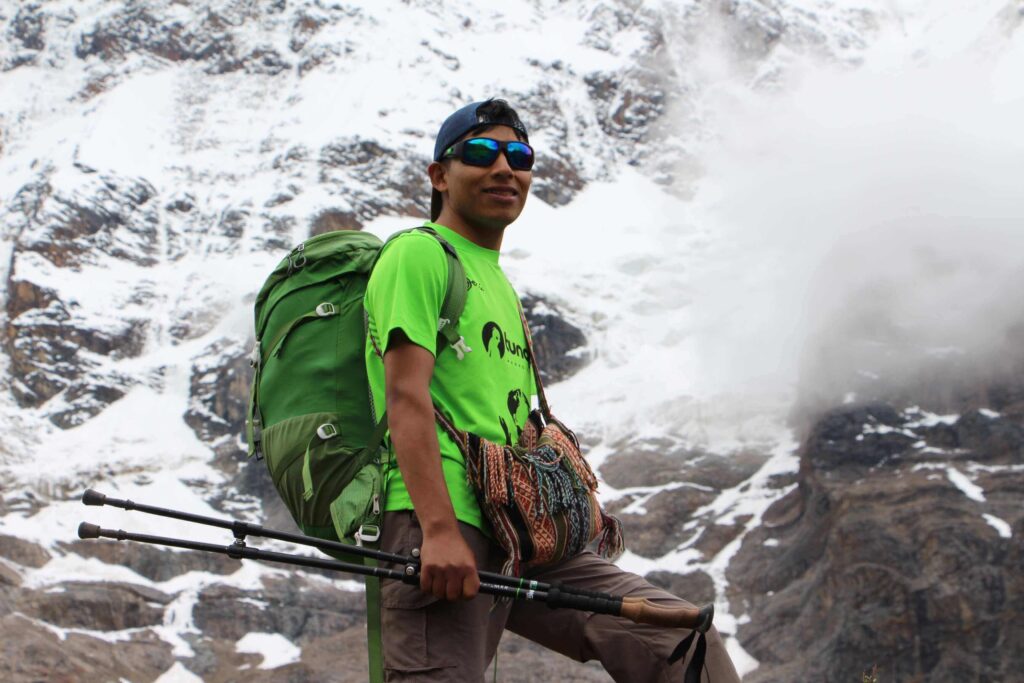
What Can You See and Do on The Salkantay Trek?
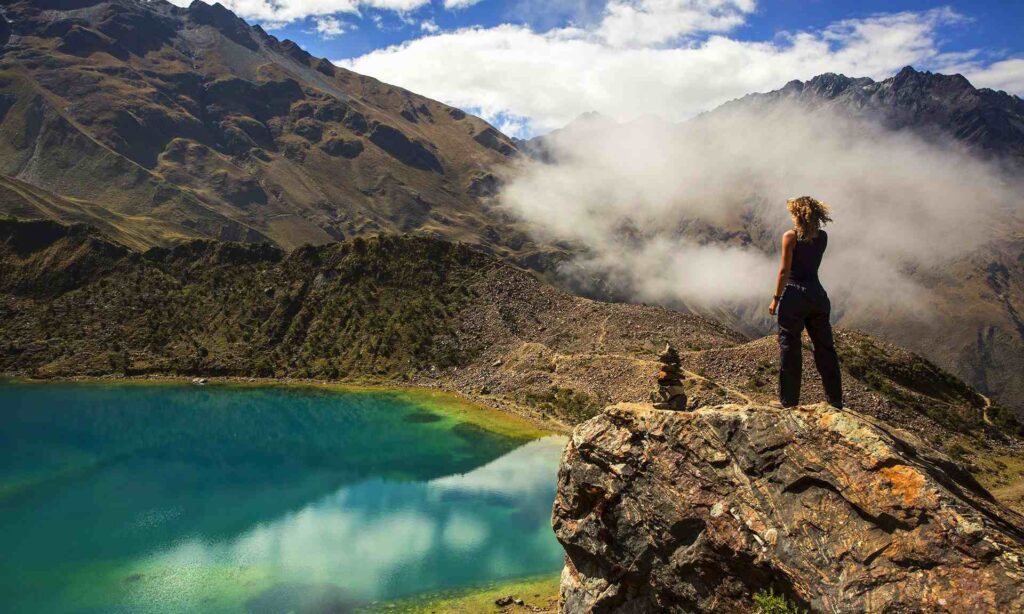
Humantay Blue Lagoon
Tucked beneath the towering Humantay Mountain, the breathtaking Humantay Lagoon is one of the first major highlights of The Salkantay Trek — and one of the most photographed natural wonders in Peru. This dazzling turquoise lagoon, surrounded by snow-capped peaks, perfectly captures the raw beauty of the Andes.
You’ll visit Humantay Blue Lagoon on the first day of the trek, hiking up a moderately challenging trail that takes about three hours round trip. The climb can be steep in parts due to the altitude, but every step rewards you with increasingly stunning views of the surrounding mountains.
Once you reach the top, the sight of the crystal-clear water reflecting the jagged white peaks is absolutely unforgettable. Many hikers take a moment here to rest, breathe in the crisp mountain air, and simply absorb the peaceful atmosphere of this sacred place — once considered by the Incas to be the home of powerful mountain spirits known as Apus.
Visiting Humantay Bue Lagoon is not just a scenic stop — it’s a spiritual and emotional introduction to the natural and cultural heart of The Salkantay Trek.
Salkantay Mountain
The magnificent Salkantay Mountain is the crown jewel and spiritual heart of The Salkantay Trek. Rising to an impressive 6,271 meters (20,574 feet) above sea level, it stands as one of the tallest and most revered peaks in the Peruvian Andes. Its towering presence, capped with glistening snow year-round, creates an awe-inspiring and almost mystical atmosphere for everyone who ventures along this trail.
On the second day of the trek, you’ll come face-to-face with this majestic giant as you ascend toward the Salkantay Pass, the highest point of the entire route. The closer you get, the more dramatic the views become — with sweeping panoramas of glaciers, rugged valleys, and jagged ridges surrounding the mountain.
For centuries, Salkantay has been considered an “Apu”, or sacred protector spirit, by the local Quechua people. Standing before it, many hikers describe a profound sense of peace and connection to nature — a feeling that perfectly captures the essence of trekking in the Andes.
This moment, at the base of Salkantay Mountain, is often the emotional and visual highlight of the journey — a reminder of the raw power and spiritual beauty that define The Salkantay Trek to Machu Picchu.
Salkantay Pass
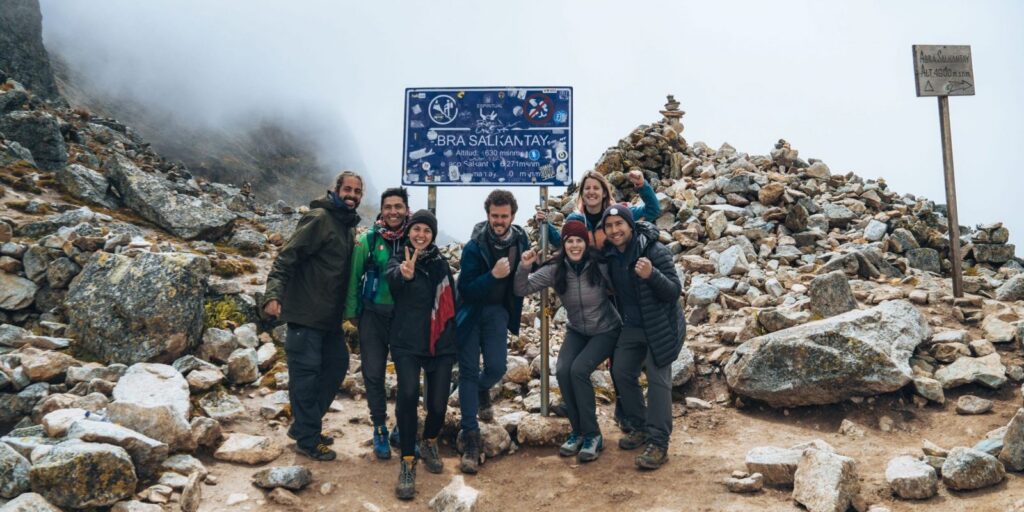
The Salkantay Pass marks the highest point of The Salkantay Trek, standing at an impressive 4,650 meters (15,256 feet) above sea level. This section of the journey is often described as both the most challenging and the most rewarding. From the top, trekkers are greeted with breathtaking panoramic views of the surrounding glaciers, rugged valleys, and towering snow-capped peaks — a sight that feels truly otherworldly.
Most hikers pause here to rest, snap photos, and simply take in the magnitude of the Andes. The thin air and high altitude can be tough, so it’s essential to be well-acclimatized before attempting this section. However, the sense of accomplishment you feel upon reaching the pass — standing beneath the mighty Salkantay Mountain — is something few experiences can match. It’s a moment of silence, awe, and connection with nature’s raw power.
Sleeping Under the Stars
One of the most magical aspects of The Salkantay Trek is spending your nights camping beneath a sky full of stars. Far away from city lights, the night skies here are extraordinarily clear, revealing constellations that seem almost within reach.
Whether your itinerary includes Soraypampa or Salkantaypampa as your first campsite, you’ll find yourself surrounded by the quiet majesty of the Andes — a perfect setting for reflection and wonder. On clear nights, the Milky Way stretches across the horizon, creating a truly unforgettable view.
Even if clouds roll in, there’s still something special about listening to the sounds of the mountains — the distant rush of rivers, the whisper of the wind, and the occasional crack of ice from nearby glaciers. Camping on the Salkantay Trail isn’t just about rest; it’s about experiencing nature at its purest, under one of the most spectacular night skies in the world.
Connect with Nature
When it comes to natural beauty, The Salkantay Trek is truly in a league of its own. What makes this route so extraordinary is the incredible variety of landscapes you experience in just a few days — from icy glaciers and towering snow-capped peaks to lush green valleys and tropical rainforests.
Few trails in the world offer such dramatic transitions within a single journey. As you make your way along the trail, the scenery changes constantly, revealing new ecosystems, climates, and wildlife. You’ll pass through high-altitude plains, rocky passes, and verdant cloud forests, each filled with unique flora and fauna — from hardy mountain shrubs to colorful orchids and vibrant bird species.
This seamless connection between mountain and jungle makes The Salkantay Trek not just a physical adventure, but a deeply immersive experience in nature’s diversity. Every step invites you to slow down, breathe deeply, and truly feel the living pulse of the Andes.
The Tropical Jungle
As you descend from the Salkantay Pass, the scenery transforms completely. The cold mountain air gives way to the warm, humid breeze of the tropical jungle. Here, the landscape bursts with life — dense green vegetation, cascading waterfalls, crystal-clear rivers, and an astonishing range of biodiversity.
This section of The Salkantay Trek leads you into the Santa Teresa Valley, a region renowned for its coffee plantations and rich agricultural traditions. The aroma of freshly roasted coffee drifts through the air, offering a pleasant contrast to the crisp mountain environment you’ve just left behind.
By this point, you’ll have descended roughly 2,000 meters (6,561 feet) from the pass, and you’ll truly feel the shift in climate and atmosphere. Most trekkers reach this area on Day 2 or Day 3, just before beginning the final stretch toward Machu Picchu.
The tropical jungle stage of the trek is not only visually stunning but also spiritually grounding — a gentle reminder of how perfectly interconnected the Andes and the Amazon truly are.
Waterfalls Along the Salkantay Trek
Between Collpapampa and Lucmabamba, the Salkantay Trail transitions from the cold highlands to the warm, lush cloud forest — and along the way, you’ll encounter a series of beautiful natural waterfalls.
Fed by the melting glaciers of Salkantay and Humantay, these waterfalls cascade through dense green valleys, creating a peaceful and refreshing atmosphere for trekkers. Some are small and hidden among the trees, while others crash powerfully into crystal-clear pools.
This section of the trek is alive with birds, butterflies, orchids, and coffee plants, making it one of the most scenic and rejuvenating parts of the journey. Guides from Tunqui Expeditions often stop here to rest, take photos, and share stories about the importance of water in Andean life and tradition.
Make Pachamanca – A Traditional Andean Feast with Tunqui Expeditions
Although it’s not typically part of The Salkantay Trek, Tunqui Expeditions adds a truly special touch to your journey — the chance to take part in a Pachamanca, one of the most iconic culinary traditions of the Andes.
Pachamanca (which means “earth oven” in Quechua) is a centuries-old feast where meats, potatoes, corn, and vegetables are slow-cooked underground using hot stones. This method not only enhances the flavor of the food but also symbolizes a deep connection with Pachamama, the Andean Mother Earth.
During this unique experience, you’ll watch as the locals prepare the ingredients, heat the stones, and cover the food with layers of herbs and earth. When the Pachamanca is uncovered, the aroma is simply irresistible — a perfect blend of smoked meats, roasted potatoes, and natural spices.
At Tunqui Expeditions, we combine this Pachamanca Experience with our Coffee Experience on Day 3 of The Salkantay Trek, giving you the opportunity to enjoy an authentic taste of Andean culture after a day of trekking through lush valleys and coffee farms.
It’s more than just a meal — it’s a celebration of community, tradition, and the connection between people and the land.
Experience the magic of the Andes with Tunqui Expeditions — where every step of your Salkantay adventure brings you closer to Peru’s culture, nature, and flavors.
Llactapata – The Hidden Inca Viewpoint of Machu Picchu
Imagine waking up in your tent to an unobstructed sunrise view of Machu Picchu — that’s exactly what makes Llactapata one of the most unforgettable highlights of The Salkantay Trek. Perched high on a mountain ridge directly facing the Inca citadel, Llactapata offers an awe-inspiring first glimpse of Machu Picchu before you even arrive at the site itself.
Getting there requires a steep but rewarding uphill hike, and once you reach the top, the effort pays off with panoramic views of the surrounding valleys, lush cloud forests, and the silhouette of Machu Picchu in the distance. This is also the only other Inca archaeological site you’ll encounter along the trek before reaching the famous ruins.
Dating back to the 15th century, Llactapata was part of an Inca ceremonial and rest complex, believed to have served pilgrims traveling between Machu Picchu, Vilcabamba, and other settlements scattered throughout the cloud forest. The site’s location suggests it was a spiritual stop where travelers could honor the sacred mountains before continuing their journey.
For those trekking with Tunqui Expeditions, Llactapata offers something truly special — it is the only campsite along the Salkantay Trail where you can sleep directly facing Machu Picchu. From this privileged spot, you’ll enjoy breathtaking sunset and sunrise views, surrounded by Andean nature and ancient history.
Spending the night at Llactapata is not just camping — it’s a magical experience where adventure, culture, and nature converge. As night falls and the stars emerge over the Sacred Valley, you’ll realize why this moment is one of the most treasured memories of The Salkantay Trek with Tunqui Expeditions.
Cocalmayo Hot Springs
After several days of trekking, the Cocalmayo Hot Springs in Santa Teresa offer the perfect way to relax and rejuvenate. Surrounded by lush mountains and flowing rivers, these natural pools provide soothing warmth and a peaceful atmosphere — the ideal recovery stop before reaching Machu Picchu.
Although not always part of the standard Salkantay Trek Tours, Tunqui Expeditions offers it as an optional add-on for travelers who want to unwind and enjoy one of Peru’s most beautiful thermal baths.
Aguas Calientes
Aguas Calientes — also known as Machu Picchu Town — is the final stop before reaching the legendary Inca citadel. After days of trekking through mountains, valleys, and jungles, this charming town offers a well-deserved place to rest and recharge before your ascent to Machu Picchu the next morning.
Here, you can stroll through the local artisan market, enjoy a traditional Peruvian meal, or simply relax in one of the town’s cafés while listening to the sound of the river that flows through the valley.
For travelers hiking with Tunqui Expeditions, Aguas Calientes marks the perfect transition between adventure and discovery — a peaceful evening before the ultimate highlight of The Salkantay Trek: Machu Picchu.
Explore Machu Picchu
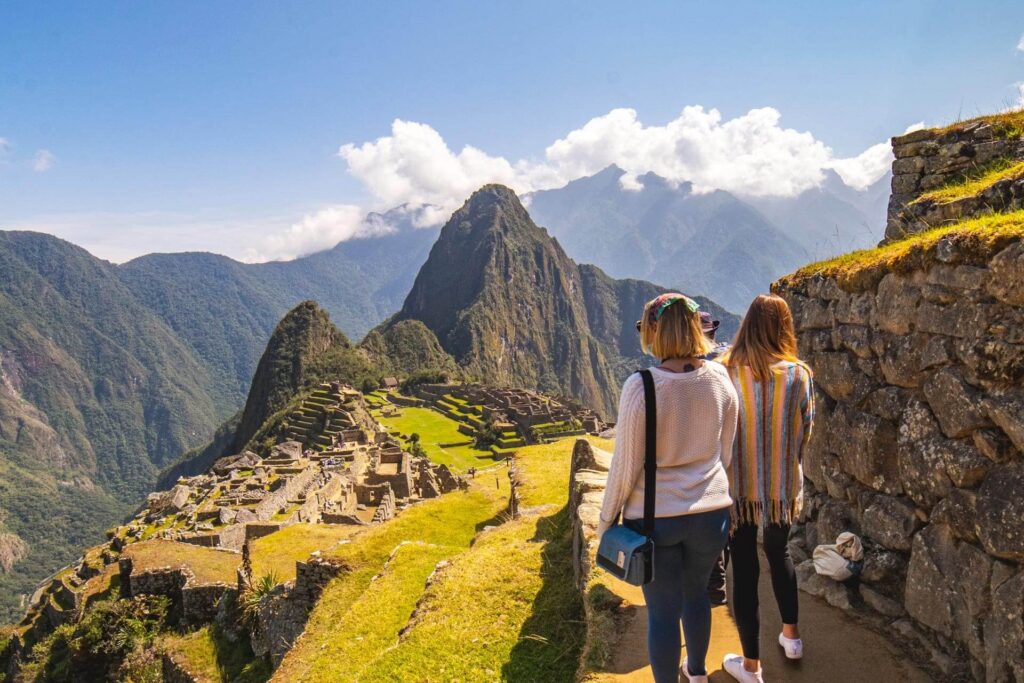
The ultimate reward of The Salkantay Trek is finally reaching Machu Picchu, one of the New Seven Wonders of the World. After days of trekking through breathtaking Andean landscapes, stepping into this ancient Inca sanctuary is an unforgettable moment — the perfect culmination of your adventure.
With Tunqui Expeditions, you’ll explore the citadel alongside an expert local guide, who will bring the history, culture, and mystery of Machu Picchu to life. Your guide will lead you through the most important sectors of the site — temples, terraces, and ceremonial plazas — while sharing fascinating insights into Inca engineering, astronomy, and spirituality.
If you’ve chosen the 4- or 5-day Salkantay Trek, your visit includes Circuit 2 or 3, designed to give you the best panoramic views and access to the main highlights of Machu Picchu. From the Temple of the Sun to the Sacred Rock, every step reveals another layer of this extraordinary civilization.
Reaching Machu Picchu isn’t just the end of the trek — it’s a powerful, emotional experience that connects you with centuries of history and the spirit of the Andes.
Take a look at our complete Machu Picchu guides:
Which Is the Best Salkantay Trekking Company?
There are many tour operators offering the Salkantay Trek to Machu Picchu, each with different levels of service, comfort, and expertise. Choosing the right one can make all the difference in your experience — from safety and organization to the authenticity of your cultural encounters.
Here are some of the top-rated Salkantay trekking companies:
1. Tunqui Expeditions – Local Tour Operator
Based in Cusco, Tunqui Expeditions stands out as one of the best local companies for the Salkantay Trek. With a deep connection to the Andean culture and environment, they focus on authentic, sustainable, and personalized trekking experiences. Their professional local guides, quality equipment, and attention to detail ensure a safe and memorable journey.
Perfect for travelers who want a true local experience with expert guides who know the mountains, history, and culture of the Andes.
2. G Adventures
A globally recognized travel company offering group tours across the world, including the Salkantay Trek. Their tours are well-organized and ideal for travelers looking for a structured, international-style experience.
3. Exodus Travels
Known for their responsible travel philosophy, Exodus Travels offers multi-day trekking adventures with a focus on sustainability and comfort.
4. Intrepid Travel
A leader in adventure tourism, Intrepid provides guided group treks emphasizing eco-friendly practices and cultural immersion.
5. Terra Explorer Peru
A reputable Peruvian company offering adventure experiences such as trekking, mountain biking, and cultural tours — including the Salkantay Trail.
Best Time to Hike The Salkantay Trek to Machu Picchu
The best time to hike The Salkantay Trek to Machu Picchu is during the dry season, which runs from May to October. These months offer the most stable weather conditions — clear skies, dry trails, and spectacular mountain views. This period is also the safest for trekking, as river crossings are easier and the terrain is less slippery.
If you’re looking for the perfect balance between good weather and fewer crowds, May, June, and September are excellent months to plan your adventure with Tunqui Expeditions. During this time, you’ll enjoy sunny days ideal for hiking and crisp, cool nights perfect for stargazing in the Andes.
👉 Read more: The Salkantay Trek Weather Guide – Tunqui Expeditions
Salkantay Weather and Climate
Weather along The Salkantay Trek can vary dramatically — sometimes within the same day. You might start your morning surrounded by chilly mountain air and end your afternoon trekking through warm, humid jungle conditions. Being prepared for these shifts is key to enjoying the experience.
Cusco and the surrounding Andean region have two main seasons:
- Rainy Season (November – April): Expect frequent showers, cloudy skies, and slippery trails. Trekking is still possible, but you’ll need waterproof gear and flexibility in your plans.
- Dry Season (May – October): Clear blue skies, minimal rain, and ideal trekking conditions. This is the peak season for The Salkantay Trek, offering the most scenic landscapes and stable weather.
Even during the dry season, temperatures can vary widely — from freezing cold nights near Salkantay Pass (below 0°C / 32°F) to warm jungle afternoons (up to 25°C / 77°F). Packing layers is essential to stay comfortable throughout the trek.
No matter when you go, Tunqui Expeditions ensures your trek is safe, well-planned, and unforgettable — with expert guides and equipment to handle the ever-changing conditions of the Andes.
How Challenging Is the Salkantay Trek?
The Salkantay Trek is considered moderately challenging — accessible to anyone with a reasonable level of fitness and determination. You don’t need to be an expert hiker or athlete, but you should be physically active and prepared for several days of continuous trekking at high altitudes.
With Tunqui Expeditions, the trek is designed for travelers who enjoy outdoor adventures and want to experience the Andes at their own pace. The key to success is good preparation and steady conditioning before your trip.
You don’t have to train for months, but a few weeks of light preparation can make a big difference. We recommend:
- Going on short local hikes of 1–2 hours a few times a week, gradually increasing distance and elevation.
- Doing cardio workouts such as jogging, cycling, or spinning to improve endurance.
- Including some uphill walking or stair climbing to simulate the ascent sections of the trail.
The main challenge of the trek is the altitude, especially near Salkantay Pass (4,650 meters / 15,256 ft). Spending at least two days acclimatizing in Cusco before the trek is strongly advised.
With a bit of preparation and the expert guidance of Tunqui Expeditions, the Salkantay Trek is absolutely achievable — and the sense of accomplishment when you reach Machu Picchu makes every step worth it.
How to Prepare for the Salkantay Trek
If you’re planning to take on The Salkantay Trek to Machu Picchu, preparation is key. This is an incredibly rewarding adventure — not extreme, but definitely challenging enough to test your stamina, especially at high altitudes. Even experienced hikers can find parts of the trail tougher than expected, so it’s important to get ready both physically and mentally.
Here are some essential tips from Tunqui Expeditions to help you prepare for your unforgettable Salkantay adventure:
1. Train Your Body: Start with regular hikes and light workouts a few weeks before your trip. Focus on leg strength, endurance, and cardiovascular fitness. Uphill walking, jogging, and stair climbing will help prepare you for the elevation gain and long trekking days.
2. Acclimate to the Altitude: Spend at least two days in Cusco before the trek to acclimate to the altitude. This helps your body adjust gradually and reduces the risk of altitude sickness, ensuring you can enjoy the journey comfortably.
3. Pack Smart: Bring the essentials: layered clothing (to handle changing temperatures), comfortable hiking boots, and a warm sleeping bag suitable for cold nights. Don’t forget sunscreen, sunglasses, a hat, and plenty of hydration gear — the sun at high altitude can be intense.
4. Stay Hydrated: Drink lots of water before and during the trek. Hydration helps your body cope better with altitude and keeps your energy levels up throughout the journey.
5. Eat Well: In the days leading up to the trek, maintain a balanced diet rich in carbohydrates and nutrients for energy. During the trek, the Tunqui Expeditions team provides fresh, hearty meals to keep you fueled every step of the way.
6. Prepare Mentally: The Salkantay Trek is as much a mental journey as a physical one. Embrace the challenge, pace yourself, and take time to enjoy the silence of the mountains, the sound of nature, and the connection you’ll build with the Andes and its people.
With the right mindset and preparation, you’ll be fully ready to experience one of Peru’s most spectacular adventures — The Salkantay Trek with Tunqui Expeditions.
The Salkantay Trek Packing List (Essentials)
Pack light but smart for The Salkantay Trek. Here are the key essentials you shouldn’t leave behind:
- Comfortable, sturdy hiking boots
- Layered clothing for changing temperatures
- Rain jacket or poncho
- Sunscreen, hat, and sunglasses
- Reusable water bottle and energy snacks
- First aid kit and insect repellent
- Headlamp, trekking poles (optional)
- Camera or phone with portable charger
- Cash for small purchases along the way
👉 Read more: Salkantay Trek Packing List – Tunqui Expeditions
Why Hike The Salkantay Trek?
The Salkantay Trek is the perfect choice for travelers seeking an authentic adventure to Machu Picchu. It offers everything an explorer could ask for — dramatic glaciers, tropical jungles, and ancient Inca trails — all without needing special permits. Every challenge along the way is rewarded with breathtaking views, making it one of the most unique and rewarding treks in the Andes.
The Salkantay Trek Highlights
Hiking the Salkantay Trail in Cusco means immersing yourself in the heart of the Andes. Along the way, you’ll admire the towering Salkantay Mountain, visit traditional Andean villages, and experience the warmth and hospitality of local communities. The route combines stunning natural scenery — from high mountain passes to lush cloud forests — with a deep connection to Peru’s rich culture.
Facts About The Salkantay Trek
- No special permit required: Unlike the Inca Trail, you can hike the Salkantay route freely, though you’ll still need an entry ticket for Machu Picchu.
- Distance & duration: The trek covers about 72 km (45 miles) and typically takes 5 to 7 days, depending on your itinerary.
- Route: The trail begins near Soraypampa and leads through the Andes to Aguas Calientes (Machu Picchu Pueblo).
- Global recognition: Named after the majestic Salkantay Mountain (6,271 m / 20,574 ft), it was recognized by National Geographic Adventure as one of the Top 25 Treks in the World.
Embarking on The Salkantay Trek with Tunqui Expeditions means more than just reaching Machu Picchu — it’s about experiencing the true spirit of the Andes, where adventure, nature, and culture come together in perfect harmony.
How to Book the Salkantay Trek with Tunqui Expeditions
Booking your Salkantay Trek to Machu Picchu with Tunqui Expeditions is simple and secure. We’re recognized as one of the most trusted local tour operators in Cusco, offering authentic, safe, and well-organized adventures through the Peruvian Andes.
Follow these easy steps to book your unforgettable journey:
- Visit Our Salkantay Trek Tours Section
Go to our website’s Salkantay Treks page and explore all the available options. - Choose Your Ideal Itinerary
Select the trek that fits your schedule and preferences — from classic routes to extended experiences. - Check Availability
Review the available departure dates and ensure they align with your travel plans. - Reserve Your Spot
Complete the online booking form with your details and make a secure payment through our website. - Receive Your Confirmation
Once your reservation is complete, you’ll receive a booking confirmation with all the essential details of your trek, itinerary, and preparation tips.
Salkantay Trek Options with Tunqui Expeditions
- Salkantay Trek – 4 Days
- Ultimate Classic Salkantay Trek – 5 Days
- Salkantay Trek With Short Inca Trail 5 Days
- Salkantay Trek With Classic Inca Trail – 8 Days
Each of these itineraries includes professional local guides, comfortable camping equipment, delicious Andean meals, and a deep cultural experience designed to make your adventure both meaningful and unforgettable.
Start your adventure today with Tunqui Expeditions and discover the true magic of the Andes on the Salkantay Trek to Machu Picchu.
The Salkantay Frequently Asked Questions
How long is The Salkantay Trek?
The Salkantay Trek can be experienced in different ways depending on your itinerary and tour operator. The most popular options are the 4-day and 5-day treks. Shorter versions (under four days) can be extremely demanding, while longer tours usually combine additional activities — such as Cusco Hikes or Sacred Valley excursions — rather than extending the actual hiking days.
Salkantay Trek – 4 Days
The 4-day Salkantay Trek is perfect for travelers short on time who still want to experience the highlights of the route.
Your adventure begins in Soraypampa, where you’ll visit the breathtaking Humantay Lake and cross the stunning Salkantay Pass — the highest point of the trek. Over three days, you’ll descend through changing landscapes, from high Andean peaks to lush cloud forests, finally reaching Aguas Calientes, the gateway to Machu Picchu.
On the fourth day, you’ll explore the Machu Picchu citadel with your expert guide before returning to Cusco on one of Peru’s scenic trains.
- Total hiking distance: approximately 44 km (28 miles) — not including the walking tour inside Machu Picchu.
Salkantay Trek – 5 Days
The 5-day Salkantay Trek is the ultimate version of the route, offering a deeper connection with both nature and Inca history. Starting in Soraypampa Village, this itinerary includes all the key highlights — Humantay Lake, Salkantay Pass, and a unique overnight camp at Llactapata, an ancient Inca site perched on a ridge directly facing Machu Picchu.
This special camping experience provides panoramic sunrise and sunset views of the Inca citadel — a moment exclusive to travelers with Tunqui Expeditions.
The trek concludes on the fifth day, with a guided walking tour of Machu Picchu, where you’ll explore its temples, terraces, and sacred plazas before heading back to Cusco.
Total hiking distance: approximately 60 km (38 miles) across four trekking days, plus the guided visit to Machu Picchu on day five.
How high is the Salkantay Trek?
The highest point is the Salkantay Pass, which reaches 4,650 meters (15,256 feet) above sea level. The trek starts at around 3,600 meters (11,800 feet) and descends to Aguas Calientes at 2,040 meters (6,692 feet).
- First campsite: 3,900 m / 12,795 ft
- Second campsite: 2,770 m / 9,087 ft
- Third campsite: 2,750 m / 9,022 ft
- Last night at Aguas Calientes: 2,000 m / 6,561 ft
Is it very cold on the Salkantay Trek?
Yes — the Salkantay Trek can get quite cold, especially during the nights at higher elevations. Temperatures often drop to around 0°C (32°F) and can occasionally fall below freezing, particularly during the dry season months of May to August.
The coldest night is usually the first one, as you’ll be camping near the base of Salkantay Mountain and Humantay Peak, both surrounded by glaciers. The air here is thin, crisp, and noticeably colder compared to the lower valleys.
Trekkers should come well-prepared with warm layers, including thermal clothing, gloves, and a high-quality sleeping bag rated for sub-zero temperatures. With the proper gear and guidance from Tunqui Expeditions, you’ll stay comfortable and ready to fully enjoy the spectacular Andean landscapes — even under the cold mountain stars.
Can it be hot on the Salkantay Trek?
Absolutely. Once you descend into the tropical jungle zone, temperatures can rise to 25°C (77°F) or more during the day — so be prepared for both extremes.
Which Salkantay Trek should I take?
The 5-Day Classic Salkantay Trek is the most popular and includes all the key highlights, while the 4-Day version is ideal for those with limited time. Tunqui Expeditions also offers extended options for a deeper Andean experience.
Is altitude sickness a problem? What should I do to avoid it?
Altitude can affect anyone, regardless of fitness level. To minimize symptoms, spend 2–3 days acclimating in Cusco, stay hydrated, avoid alcohol, and hike at a steady pace. Our guides at Tunqui Expeditions are trained to assist you if you experience any discomfort.
Is the Salkantay Trek worth it?
Absolutely! It’s one of Peru’s most scenic and rewarding hikes, combining snow-capped mountains, tropical forests, Inca history, and the ultimate reward — Machu Picchu. Most trekkers consider it a life-changing experience.
Thank You for Reading!
If you’d like more information about The Salkantay Trek, don’t hesitate to contact us. Whether you have questions about the weather, packing list, or itineraries, the Tunqui Expeditions team will be happy to help.
Reach out to us or fill out the “Need Help With Your Trip” form on our website to start planning your unforgettable journey to Machu Picchu.
Plan your adventure now with Tunqui Expeditions — your trusted local experts for the Salkantay Trek.
👉 Read more: Salkantay Trek FAQs – Tunqui Expeditions
Biodiversity on The Salkantay Route
You might not expect it, but the Salkantay Trek is a journey through one of the most diverse ecosystems in the Andes. The route passes through high mountain passes, lush valleys, and misty cloud forests, creating the perfect habitat for an incredible variety of flora and fauna. Many of these species belong to the Machu Picchu Archaeological Park, which is not only a cultural treasure but also a protected natural sanctuary.
While wildlife sightings can be rare due to the number of visitors, patient and observant trekkers often catch glimpses of fascinating animals and colorful bird species along the way.
Fauna You Might Encounter
Andean Condor
The Andean Condor is the largest flying bird in the world, with an impressive wingspan that can reach over three meters. Often seen gliding gracefully along the cliffs and mountain ridges, these magnificent birds symbolize freedom and power in Andean mythology. Their striking black-and-white plumage and majestic flight make them a true highlight for those lucky enough to spot one.
Spectacled Bear
Known locally as the “Oso de Anteojos”, the Spectacled Bear is the only bear species native to South America. Found in the forested areas near Machu Picchu, these shy creatures are easily recognized by the distinctive white markings around their eyes — which look like eyeglasses. While sightings are rare, spotting one is an unforgettable experience.
Hummingbirds and Other Birds
The cloud forests along the Salkantay Route are home to a dazzling array of hummingbirds, each species displaying unique colors and patterns. You may also encounter toucans, the Andean cock-of-the-rock (Peru’s national bird – Tunqui), and various species of parrots flitting among the trees. Birdwatchers will find this region a true paradise for photography and observation.
Vizcacha
A relative of the chinchilla, the Vizcacha — often called the “Andean rabbit” — can frequently be seen perched on rocks or hopping among boulders near Machu Picchu. With its long ears, bushy tail, and playful behavior, it’s one of the most charming creatures you’ll encounter along the trail.
Exploring the Salkantay Trek with Tunqui Expeditions isn’t just about reaching Machu Picchu — it’s also a journey through Peru’s living wilderness. Each day brings you closer to understanding the deep connection between the Andes, its wildlife, and the people who have called these mountains home for centuries.
Flora Along The Salkantay Route
The Salkantay Trail passes through a spectacular range of ecosystems, making it a paradise for nature and plant lovers. As you descend from the snow-covered peaks of Salkantay Mountain into the lush cloud forests, the vegetation becomes increasingly diverse and vibrant. The mix of altitude, humidity, and sunlight creates the perfect conditions for an extraordinary variety of plant life.
Here are some of the most remarkable species you might encounter along the way:
Orchids
The Salkantay Route and the surrounding areas of the Machu Picchu Sanctuary are home to a dazzling array of orchid species — some of the most beautiful in the Andes. These delicate flowers come in all shapes, sizes, and colors, and many are endemic to the region.
As you hike through the valleys and humid forest sections, keep an eye out for species like Epidendrum, Pleurothallis, Sobralia, and the striking Wakanki orchid, known locally for its graceful petals and bright hues. Each one adds a splash of color and a touch of mystery to the trail.
Polylepis Trees (“Queñuales”)
Found at higher altitudes, the Polylepis trees — locally called queñuales — are among the most unique and important plants in the Andes. Recognized by their reddish, peeling bark and twisted trunks, these trees thrive in harsh, cold environments where few other species can survive.
They play a vital ecological role by retaining water, preventing soil erosion, and providing shelter for many bird species and small mammals. Their presence adds both beauty and life to the rugged mountain landscape.
Exploring the flora of the Salkantay Trail with Tunqui Expeditions offers a deeper appreciation of Peru’s natural richness. Every turn of the trail reveals new shades of green, bursts of color, and the quiet resilience of the Andes — a living reminder that this trek is as much about nature’s diversity as it is about reaching Machu Picchu.
Salkantay Mountain and Climate Change: The Untold Reality
The majestic Salkantay Mountain, a crown jewel of the Vilcabamba Range, stands as one of the most iconic sights for travelers on their way to Machu Picchu. Its towering presence and shimmering glacier have long inspired awe and reverence among hikers and Andean communities alike.
But behind its beauty lies a sobering truth — the glacier that defines Salkantay is disappearing at an alarming rate. In just the past 40 years, the mountain has lost over 60% of its glacier surface, a stark reminder of the accelerating impact of climate change across the Andes.
This rapid melting isn’t just transforming the mountain’s appearance; it’s also threatening critical water sources that sustain local ecosystems and nearby communities. The Salkantay glacier feeds rivers that supply water for farming, drinking, and even the Machu Picchu hydroelectric plant, which provides power to much of the region.
As global temperatures continue to rise, the Andean glaciers — once seen as eternal — are retreating faster than ever. Scientists warn that if current trends persist, mountains like Salkantay could lose their glaciers entirely within a few decades.
At Tunqui Expeditions, we believe in responsible and sustainable travel. Our treks are designed to raise awareness about the fragility of the Andean environment and the importance of protecting these sacred landscapes. When you hike the Salkantay Trek, you’re not just walking toward Machu Picchu — you’re witnessing firsthand the changing face of the planet and becoming part of a collective effort to preserve it.
A Sample Itinerary of the Salkantay Trek to Machu Picchu (5-Day & 4-Day Versions)
At Tunqui Expeditions, every journey is more than just a hike — it’s a carefully designed experience that connects travelers to the heart of the Andes.
These exclusive itineraries were personally crafted by Silvio Tunqui, a local expert and founder of Tunqui Expeditions, whose deep knowledge of Andean culture, history, and terrain ensures that every step of your adventure is meaningful, balanced, and unforgettable.
Each itinerary combines breathtaking scenery, authentic cultural encounters, and responsible travel practices, offering travelers the best of the Salkantay Trail to Machu Picchu — one of the world’s most iconic trekking routes.
Summary Itinerary – Classic Salkantay Trek to Machu Picchu (5 Days / 4 Nights)
Day 1: Cusco – Mollepata – Challacancha – Soraypampa – Humantay Lake – Salkantay Pampa
Your adventure begins with an early scenic drive from Cusco to Soraypampa, where you’ll enjoy a delicious lunch surrounded by dramatic mountain views.
In the afternoon, we’ll hike up to the stunning Humantay Lake, a turquoise lagoon at the base of Humantay Mountain — one of the most iconic sites in the Andes.
As evening falls, we’ll settle into our Salkantay Pampa campsite, where you’ll enjoy dinner under a blanket of stars and rest surrounded by the silence of the high Andes.
Day 2: Salkantay Pampa – Salkantay Pass – Huayracmachay – Chaullay – Collpapampa
This is the most challenging and rewarding day of the trek. We’ll ascend to the Salkantay Pass (4,650 m / 15,256 ft) — the highest point of the route — where panoramic views of the mighty Salkantay Mountain await.
After celebrating your accomplishment at the pass, we’ll descend into the lush cloud forest, where the air turns warmer and the landscape bursts with life. We’ll spend the night at our Collpapampa campsite, enjoying a hearty dinner prepared by our chef.
Day 3: Collpapampa – La Playa – Lucmabamba – Llactapata
Today, the trail takes you deeper into the tropical jungle, passing waterfalls, orchids, and vibrant birdlife. Along the way, we’ll stop at a local organic coffee farm to learn about the coffee-making process and enjoy a cup of freshly brewed Peruvian coffee.
Later, you’ll take part in a traditional Andean cooking class — an exclusive Tunqui Expeditions experience!
We’ll spend the night at our private campsite in Llactapata, located at an archaeological site with a panoramic view of Machu Picchu — one of the most magical moments of the entire trek.
Day 4: Llactapata – Aobamba – Hydroelectric – Aguas Calientes
After breakfast, we’ll explore the Llactapata ruins, an Inca site perched on a ridge directly facing Machu Picchu. You’ll enjoy one last incredible view of the citadel before descending through the lush Aobamba Valley to Hydroelectric Station, where we’ll continue on foot to Aguas Calientes.
In the evening, you’ll have time to relax in the Cocalmayo Hot Springs, enjoy dinner at a local restaurant, and rest in a comfortable hotel before the big day ahead.
Day 5: Aguas Calientes – Machu Picchu – Ollantaytambo – Cusco
The grand finale!
We’ll start early to reach Machu Picchu at sunrise — the ultimate reward for your journey. Enjoy a guided tour with your expert Tunqui Expeditions guide, exploring temples, terraces, and sacred plazas while learning about the fascinating history of the Inca civilization.
Afterward, you’ll have the option to hike Huayna Picchu or Machu Picchu Mountain (advance booking required).
In the afternoon, we’ll take the panoramic train back to Ollantaytambo, where our private transport will bring you to Cusco, marking the end of your unforgettable Salkantay adventure.
Salkantay Trek Itinerary – 5 Days / 4 Nights
| Day | Route | Altitude (m / ft) | Highlights |
|---|---|---|---|
| Day 1 | Cusco – Mollepata – Challacancha – Soraypampa – Humantay Lake – Salkantaypampa | 3,800 m / 12,467 ft | Hike to the turquoise Humantay Lake, surrounded by snow-capped peaks. Overnight camping beneath Salkantay Mountain. |
| Day 2 | Salkantaypampa – Salkantay Pass – Wayracmachay – Collpapampa | 4,650 m / 15,256 ft | Cross the Salkantay Pass, the highest point of the trek. Stunning glacier views and dramatic descent into the cloud forest. |
| Day 3 | Collpapampa – La Playa – Lucmabamba – Llactapata | 2,050 m / 6,725 ft | Enter the tropical jungle, visit an organic coffee farm, join a cooking class, and camp at Llactapata, overlooking Machu Picchu. |
| Day 4 | Llactapata – Aobamba – Hydroelectric – Aguas Calientes | 2,040 m / 6,692 ft | Visit the Llactapata ruins, hike through lush valleys, and reach Aguas Calientes. Optional visit to Cocalmayo Hot Springs. |
| Day 5 | Aguas Calientes – Machu Picchu – Ollantaytambo – Cusco | 2,430 m / 7,972 ft | Guided tour of Machu Picchu with an expert Tunqui Expeditions guide. Return to Cusco by panoramic train. |
Summary Itinerary – Salkantay Trek to Machu Picchu (4 Days / 3 Nights)
Day 01: Cusco – Soraypampa – Salkantay Pass – Wayracmachay
Highlight of the day: Witness the breathtaking Humantay and Salkantay Mountains up close.
Your adventure begins beneath two of the most sacred and glacier-covered peaks in the Andes. As you hike across dramatic high-altitude landscapes, the towering snow-capped mountains and turquoise lakes will leave you in awe.
Day 02: Wayracmachay – Rayan Pata – Unuyoc – Lucmabamba
Highlight of the day: Discover the warmth of Andean hospitality in the Cusco jungle.
Today you’ll connect with local communities, visit an organic coffee farm, and take part in a hands-on traditional cooking class — a unique Tunqui Expeditions experience that lets you truly immerse yourself in the local culture.
Day 03: Lucmabamba – Llactapata – Hydroelectric – Aguas Calientes
Highlight of the day: Walk along ancient Inca trails to the Llactapata archaeological site, then descend through lush jungle paths to Aguas Calientes.
This stage of the trek combines history, nature, and anticipation as you catch your first distant glimpse of Machu Picchu from Llactapata — the perfect reward before reaching the legendary citadel.
Day 04: Aguas Calientes – Machu Picchu – Ollantaytambo – Cusco
Highlight of the day: Explore the world wonder of Machu Picchu with your expert Tunqui Expeditions guide.
Wander the ancient stone pathways, marvel at the ingenuity of Inca engineering, and feel the powerful energy of this sacred site. After your guided tour, you’ll return to Cusco aboard a scenic panoramic train, reflecting on the incredible journey you’ve completed.
Salkantay Trek Itinerary – 4 Days / 3 Nights
| Day | Route | Altitude (m / ft) | Highlights |
|---|---|---|---|
| Day 1 | Cusco – Soraypampa – Salkantay Pass – Wayracmachay | 4,650 m / 15,256 ft | Trek beneath Humantay and Salkantay Mountains; cross the Salkantay Pass with breathtaking glacier views. |
| Day 2 | Wayracmachay – Rayanpata – Unuyoc – Lucmabamba | 2,050 m / 6,725 ft | Descend into the Cusco jungle, visit a local coffee farm, and enjoy a traditional Andean cooking class. |
| Day 3 | Lucmabamba – Llactapata – Hydroelectric – Aguas Calientes | 2,040 m / 6,692 ft | Walk along ancient Inca trails to Llactapata ruins, then continue through lush jungle to Aguas Calientes. |
| Day 4 | Aguas Calientes – Machu Picchu – Ollantaytambo – Cusco | 2,430 m / 7,972 ft | Explore the Machu Picchu citadel, learn its mysteries with your Tunqui Expeditions guide, and return to Cusco by train. |
Silvio Tunqui’s Reflection on the Salkantay Trek
“Every mountain has a spirit, every path a story, and every traveler a purpose.”
— Silvio Tunqui, Founder of Tunqui Expeditions
The Salkantay Trek to Machu Picchu is not just a trail — it’s a living connection between the past and the present, the earth and the sky, the traveler and the Andes themselves.
For me, as a son of these mountains and founder of Tunqui Expeditions, the Salkantay route represents the essence of what it means to walk with respect, gratitude, and awareness.
I grew up surrounded by the sacred peaks of the Vilcabamba Range, where my ancestors taught me that the mountains are not obstacles, but guardians of life. They hold wisdom, strength, and silence — a silence that speaks to those who listen. The Salkantay Mountain, with its towering glaciers and shifting clouds, has always been one of those teachers.
Every time I guide travelers along this route, I see how it transforms them. The altitude humbles us, the landscapes awaken our senses, and the journey reconnects us to something far greater than ourselves.
At Tunqui Expeditions, we designed our Salkantay Trek itineraries to honor that ancient bond. Each camp, each meal, each step has been carefully crafted not just for comfort, but to help travelers feel the rhythm of the Andes — to walk slowly, breathe deeply, and understand that we are only visitors in this sacred place.
When you trek with us, you are not just following a path to Machu Picchu. You are retracing the footsteps of the Inca pilgrims, who once walked these same valleys to pay homage to Pachamama (Mother Earth) and the Apus (sacred mountains).
You’ll cross the Salkantay Pass, where snow meets sky; descend into the cloud forest, where life blooms endlessly; and finally, stand before Machu Picchu, the heart of the Inca world.
But the true journey goes beyond what the eyes can see.
It’s in the laughter shared with fellow travelers, the aroma of fresh coffee in Lucmabamba, the starry silence of Soraypampa, and the gratitude that fills your heart at the end of the trail.
For me, the Salkantay Trek is a reminder that we are all connected — to the land, to each other, and to the history that shaped us.
That’s why, at Tunqui Expeditions, we walk with purpose:
- To protect these mountains and their fragile ecosystems.
- To empower local communities through responsible tourism.
- And to share the wisdom of the Andes with travelers from all over the world.
The Salkantay route is changing — glaciers are melting, and time moves quickly — but its spirit remains.
Each traveler who walks it leaves something behind and takes something invisible with them: a deeper respect for the Earth and a renewed sense of wonder.
So, when you come to hike the Salkantay Trek with Tunqui Expeditions, come not just to conquer a mountain, but to honor it.
Let the journey teach you patience, humility, and connection.
Because the Andes do not just show you their beauty — they reveal who you are when you walk among them.
“The Salkantay Trek is not about reaching Machu Picchu. It’s about discovering the path within yourself.”
— Silvio Tunqui