 Español
  English


The Salkantay Trek to Machu Picchu is one of Peru’s most breathtaking adventures — a thrilling alternative to the Classic Inca Trail to Machu Picchu that combines wild natural beauty, ancient Incan heritage, and authentic Andean culture. With Tunqui Expeditions, travelers hike across some of the most stunning landscapes on Earth: turquoise glacial lakes like Humantay, towering snow-covered peaks such as Salkantay Mountain (6,271 m / 20,574 ft), and tropical cloud forests alive with orchids and hummingbirds. Every step reveals a new world of contrasts — from icy mountain passes to warm jungle valleys — making this trek a true journey through the heart of the Andes.
Unlike the crowded Inca Trail, the Salkantay route requires no special permits, offering freedom and flexibility for those seeking adventure off the beaten path. The trek reaches its highest point at the Salkantay Pass (4,650 m / 15,255 ft), challenging hikers with altitude and rewarding them with jaw-dropping views of the sacred mountain. Tunqui Expeditions offers both a 4-day Salkantay Trek for energetic explorers and a 5-day Salkantay Trek for those who prefer a slower pace and deeper connection with nature and local Quechua culture.
Beyond its physical challenge, the Salkantay Trek is a transformative experience — one that blends effort, discovery, and emotion. Each sunrise in the Andes, each meal shared under the stars, and each step toward Machu Picchu brings trekkers closer to nature, to history, and to themselves. With expert guides, sustainable practices, and genuine hospitality, Tunqui Expeditions ensures that your Salkantay adventure is not just a hike, but an unforgettable journey to the spiritual heart of Peru.
How Difficult Is the Salkantay Trek to Machu Picchu?
The Classic Salkantay Trek to Machu Picchu is one of the most stunning and adventurous hikes in South America — and also one of the most rewarding. The Salkantay Trek difficulty is generally considered moderate to challenging, depending on your fitness level and previous experience with high-altitude hiking. On average, trekkers walk between 10 to 22 kilometers (6–13 miles) each day, covering 6–9 hours on trails that range from steep mountain ascents to gentle downhill forest paths.
No technical climbing skills are required, but a good level of physical fitness and preparation is essential. Regular cardio training, hiking practice, and endurance exercises will help you enjoy the experience without struggle. With Tunqui Expeditions, you are never alone — every group is led by expert local guides who offer motivation, safety, and personalized support throughout the journey. Their deep knowledge of the Andes and Inca culture transforms every step into a meaningful adventure.
Unlike many routes that begin in Mollepata, Tunqui Expeditions starts the trek at Challacancha (3,900 m / 12,795 ft), offering a spectacular introduction to the trail with a special hike to the breathtaking Humantay Blue Lagoon on Day 1. This unique itinerary allows you to gradually acclimatize to the altitude while exploring one of the most beautiful lagoons in the Andes.
How Altitude Level is the Salkantay Trek to Machu Picchu?
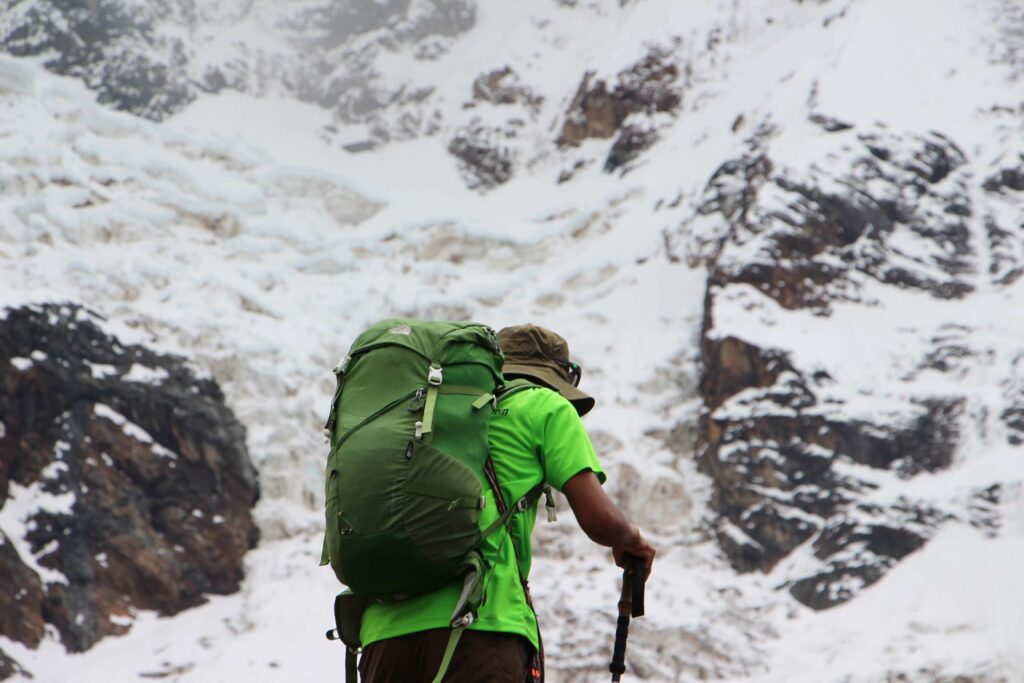
The Salkantay Trek to Machu Picchu takes hikers on an extraordinary altitude journey — from the soaring heights of the Andes to the lush lowlands of the Peruvian cloud forest. This dynamic change in elevation is one of the reasons the trek is so special, offering a dramatic variety of landscapes, climates, and ecosystems in just a few days.
The adventure begins in Soraypampa (3,900 m / 12,795 ft), a high Andean valley surrounded by snow-capped peaks. From here, trekkers take a short but steep hike to the stunning Humantay Lake (4,200 m / 13,779 ft), a turquoise glacial lagoon that offers an early taste of high-altitude hiking. The next major ascent leads to the legendary Salkantay Pass (4,630 m / 15,190 ft) — the highest point of the entire trek and its most challenging section. Standing at the pass, surrounded by towering peaks and vast silence, is a moment of triumph that few travelers ever forget.
After conquering the pass, the trail descends dramatically into a completely different world. By the afternoon, the air grows warmer and more humid as you enter the Andean cloud forest — a region filled with waterfalls, orchids, coffee plantations, and tropical wildlife. Campsites like Chaullay (2,900 m / 9,514 ft) and Lucmabamba (2,000 m / 6,561 ft) offer a welcome change from the thin mountain air, letting trekkers rest and recover in the peaceful jungle environment.
The final section of the trek passes through Llactapata (2,700 m / 8,858 ft), a hidden Inca archaeological site that provides one of the most breathtaking panoramic views of Machu Picchu across the valley. From there, the route descends to Aguas Calientes (2,040 m / 6,692 ft), the base town below the ancient citadel. The journey ends at the legendary Machu Picchu (2,430 m / 7,972 ft), where altitude, history, and beauty merge perfectly — a fitting reward after crossing one of the most stunning high-altitude trails in the world.
Classic Salkantay Trek 5 Days / 4 Nights – Difficulty & Altitude Level
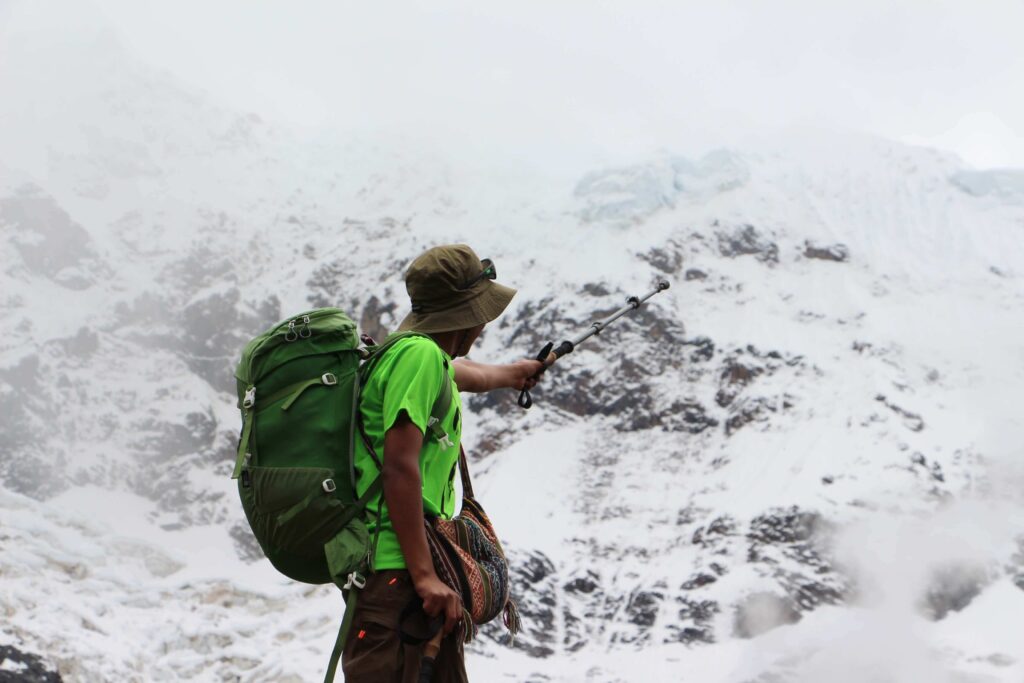
The Classic 5-Day Salkantay Trek is designed for travelers who want to enjoy the journey at a more relaxed and balanced pace. On this itinerary, you’ll have two gradual days to reach the Salkantay Pass, giving your body time to acclimatize and allowing you to fully appreciate the changing landscapes.
Day 2 is when you’ll conquer the Salkantay Pass (4,630 m / 15,190 ft) — the highest and most impressive point of the route — but you’ll do so with more time, less pressure, and better acclimatization. Later in the trek, you’ll experience a local coffee tour in Lucmabamba, where you’ll learn about traditional Andean coffee cultivation and taste freshly roasted beans.
The real magic happens at Llactapata, where the group camps overnight facing Machu Picchu. Waking up to sunrise views of the Inca citadel from a private, eco-friendly campsite is a moment unique to Tunqui Expeditions, and one of the highlights of the entire adventure.
Best for: Travelers seeking a balanced adventure with time to rest, acclimatize, and connect with local culture.
Salkantay Trek 5-Day Difficulty & Altitude Level Overview
DAY 1 – Soraypampa & Humantay Lake
- Difficulty: Moderate
- Distance: 12 km / 7.5 miles
- Hiking Time: 6–7 hours
- Highest Altitude: 4,200 m / 13,779 ft
- Campsite Altitude: 4,150 m / 13,615 ft
Your adventure begins with an uphill hike to Lake Humantay, a turquoise gem surrounded by snow-capped peaks. Although the final 30 minutes are steep, the panoramic views make every step worthwhile. The return descent can be tough on the knees, so trekking poles are highly recommended. At night, you’ll camp under a dazzling Andean sky — a perfect introduction to the magic of Salkantay.
DAY 2 – The Salkantay Pass (The Most Challenging Day)
- Difficulty: Challenging
- Distance: 18 km / 11.8 miles
- Hiking Time: 8–9 hours
- Highest Altitude: 4,630 m / 15,190 ft
- Campsite Altitude: 2,770 m / 9,087 ft
This is the hardest and most breathtaking day of the trek. The journey begins with a 3-hour ascent to the Salkantay Pass, located at an impressive 4,630 meters (15,190 ft) — nearly 400 meters higher than Dead Woman’s Pass on the Inca Trail. The climb is demanding, both physically and mentally, but reaching the summit rewards you with awe-inspiring views of Mount Salkantay, a sacred peak revered by the Incas. After crossing the pass, the trail descends dramatically into lush valleys, where the air becomes warmer and the landscape greener.
Your Tunqui Expeditions guides will be by your side the entire time, encouraging you, pacing the group wisely, and ensuring everyone reaches the pass safely. Their motivation and positive energy are often what help trekkers push through this unforgettable day.
DAY 3 – Into the Cloud Forest
- Difficulty: Moderate
- Distance: 12 km / 7.5 miles
- Highest Altitude: 2,800 m / 9,186 ft
- Campsite Altitude: 2,700 m / 8,858 ft
Today’s hike is a refreshing change of scenery. As you descend further, the trail leads you through lush tropical forests, waterfalls, and plantations of coffee, bananas, and avocados. The oxygen-rich air feels revitalizing after the high-altitude days. The terrain is mostly downhill and easy to follow, making this a day to recover your energy and fully enjoy the natural diversity of Peru.
DAY 4 – Llactapata & Aguas Calientes
- Difficulty: Moderate
- Distance: 14 km / 8.7 miles
- Highest Altitude: 2,800 m / 9,186 ft
- Hotel Altitude: 2,040 m / 6,692 ft
After breakfast, the trail ascends toward Llactapata, an ancient Inca archaeological site with a rare, distant view of Machu Picchu across the valley — a sight few travelers ever see. From there, you’ll descend through the forest toward Hidroelectrica and continue on foot to Aguas Calientes, the town at the base of Machu Picchu. That evening, you’ll rest in a comfortable hotel, preparing for the grand finale of your journey.
DAY 5 – Machu Picchu (The Reward)
- Difficulty: Easy
- Machu Picchu Altitude: 2,430 m / 7,972 ft
- Optional Hikes:
- Huayna Picchu: 2,720 m / 8,924 ft
- Machu Picchu Mountain: 3,000 m / 9,843 ft
Your final day begins early with a short bus ride or hike to Machu Picchu, one of the New Seven Wonders of the World. Walking through the ancient stone paths as the sun rises over the mountains is a spiritual and emotional experience — the ultimate reward for your effort. After your guided tour with Tunqui Expeditions’ expert guides, you can choose to climb Huayna Picchu or Machu Picchu Mountain for panoramic views of the citadel and the surrounding jungle.
5-Day Salkantay Trek Difficulty & Altitude Level Breakdown
| Day | Section | Difficulty Level | Distance | Approx. Hiking Time | Highest Altitude | Sleeping Altitude |
|---|---|---|---|---|---|---|
| Day 1 | Cusco – Soraypampa – Humantay Lake | 🟡 Moderate | 12 km / 7.5 mi | 6–7 hours | 4,200 m / 13,779 ft | 4,150 m / 13,615 ft |
| Day 2 | Soraypampa – Salkantay Pass – Chaullay | 🔴 Challenging | 18 km / 11.8 mi | 8–9 hours | 4,630 m / 15,190 ft | 2,770 m / 9,087 ft |
| Day 3 | Chaullay – La Playa | 🟡 Moderate | 12 km / 7.5 mi | 5–6 hours | 2,800 m / 9,186 ft | 2,700 m / 8,858 ft |
| Day 4 | La Playa – Llactapata – Aguas Calientes | 🟡 Moderate | 14 km / 8.7 mi | 6–7 hours | 2,800 m / 9,186 ft | 2,040 m / 6,692 ft |
| Day 5 | Machu Picchu Citadel | 🟢 Easy | Optional hikes | 2–4 hours | 3,000 m / 9,843 ft (max) | — |
Salkantay Trek Difficulty: Day 2 – The Hardest and Most Rewarding Challenge
Day 2 of the Salkantay Trek is where the true adventure begins — and where you’ll face the toughest, yet most inspiring part of the journey. The day starts early with a long, steady ascent along a series of switchback trails leading to the legendary Salkantay Pass, the highest point of the trek at a breathtaking 4,630 meters (15,190 feet) above sea level.
This is not just a test of endurance — it’s a test of spirit. The air grows thinner with every step, your heartbeat quickens, and the surrounding silence of the Andes deepens. It’s a moment when determination matters more than strength. But as you reach the summit, the reward is beyond words: the sight of the majestic Mount Salkantay, its snow-covered peak glistening under the morning sun, standing as one of the most sacred mountains (Apu) in Incan mythology.
If you think the climb sounds manageable, remember that the Salkantay Pass is about 400 meters (1,312 ft) higher than Dead Woman’s Pass (Warmiwañusca) on the famous Inca Trail — a significant difference that challenges even seasoned hikers. This is where your preparation, acclimatization, and mindset truly count.
Fortunately, when you trek with Tunqui Expeditions, you’re never alone. Their expert local guides set a perfect pace, offering encouragement, coca tea, and invaluable advice to help you conquer the pass safely. Step by step, breath by breath, they’ll lead you to the summit — where exhaustion transforms into pride, and every hiker realizes: this is not just a climb, it’s a once-in-a-lifetime achievement.
Day 3 – A Gentle Descent and the Aroma of Andean Coffee
After the challenges of Day 2, the trail on Day 3 becomes noticeably easier and far more relaxing — a welcome change for tired legs. The path winds gently down through the lush, semi-tropical Andean cloud forest, where the cool mountain air mixes with the scent of blooming orchids and rich vegetation. The hike takes about 4.5 to 5 hours, offering plenty of time to enjoy the changing scenery and the soothing sounds of nature around you.
You’ll be treated to a unique local coffee experience in Lucmabamba. Here, a member of the local coffee cooperative will show you the traditional process of harvesting, roasting, and brewing Peruvian coffee — one of the finest in the world. You’ll grind, roast, and taste your own fresh cup, all while learning how coffee farming sustains the families of this beautiful region. It’s a peaceful, sensory moment — a perfect reward after two demanding days on the Salkantay Trail.
Day 4 – Sunrise from Llactapata: A Hidden View of Machu Picchu
Day 4 begins with one of the most unforgettable moments of the entire Salkantay Trek. As dawn breaks, you’ll wake up facing Machu Picchu itself — watching the first rays of sunlight illuminate the ancient citadel from a breathtaking distance. This rare and magical viewpoint from Llactapata is something very few travelers ever experience.
While most trekking companies spend the night in Lucmabamba, the group with Tunqui Expeditions enjoys a private and exclusive campsite at Llactapata, strategically located to capture this sunrise view. Here, you’ll be surrounded by pure nature, the sounds of the jungle awakening, and the mystical silhouette of Machu Picchu glowing golden under the morning sky.
At Tunqui Expeditions, comfort and sustainability go hand in hand. Our private camp is equipped with eco-friendly gear, high-quality tents, and a commitment to leaving no trace behind. This moment — sipping hot coffee while the sun rises over Machu Picchu — is one of quiet triumph and deep connection, a reward reserved for those who journey with care, respect, and the spirit of adventure.
Short Salkantay Trek 4 Days / 3 Nights – Difficulty & Altitude Level
he Short 4-Day Salkantay Trek is an intense, high-energy version of the classic route — perfect for experienced hikers or adventure lovers looking to complete the trek in less time. This itinerary compresses the first two days of the classic route into a single, challenging ascent to the Salkantay Pass on Day 1.
Because of this faster pace, the trek demands more endurance and physical fitness. You’ll cover longer distances each day, but you’ll still experience all the major highlights: the Salkantay Pass, the coffee experience in Lucmabamba, and the breathtaking viewpoint at Llactapata.
In the afternoon of Day 2, you’ll enjoy the coffee tour and a tasting session with local farmers before spending the night in the jungle. The next morning (around 9:00 a.m.), you’ll reach Llactapata, standing face-to-face with Machu Picchu — an unforgettable reward for your effort and determination.
Best for: Adventurous hikers who prefer a faster, more challenging route and want to maximize their experience in just four days.
Short Salkantay Trek 4-Day Difficulty & Altitude Level Overview
DAY 1 – Soraypampa, Humantay Lake & The Salkantay Pass (The Most Challenging Day)
- Difficulty: Challenging
- Distance: 15 km / 9.3 miles
- Hiking Time: 7–8 hours
- Highest Elevation: 4,620 m / 15,157 ft
- Campsite Elevation: 3,850 m / 12,631 ft
Your adventure begins with an early start and a scenic drive to Soraypampa, followed by a hike to the stunning Humantay Lake, one of the most photographed sites in the Andes. After a short break, the trail continues upward toward the Salkantay Pass, the highest point of the trek. This ascent is the most demanding section — both physically and mentally — but the reward is immense: panoramic views of Mount Salkantay (6,271 m / 20,574 ft), sacred to the Inca people. After conquering the pass, you’ll descend to your campsite surrounded by the serene beauty of the high Andes.
DAY 2 – Descent into the Cloud Forest
- Difficulty: Challenging
- Distance: 23 km / 14.2 miles
- Hiking Time: 7–8 hours
- Highest Elevation: 3,600 m / 11,811 ft
- Campsite Elevation: 1,900 m / 6,233 ft
The second day is long but incredibly rewarding as you leave the high mountains behind and descend into the tropical cloud forest. The air becomes warmer, the vegetation greener, and waterfalls and orchids line your path. You’ll pass through small Andean communities and coffee plantations, catching glimpses of local life. Though challenging due to the distance, this day offers some of the trek’s most beautiful contrasts — from snow-capped peaks to the rich biodiversity of the jungle.
DAY 3 – Llactapata Viewpoint & Descent to Aguas Calientes
- Difficulty: Moderate
- Distance: 15 km / 9.3 miles
- Hiking Time: 5–6 hours
- Highest Elevation: 3,000 m / 9,842 ft
Day 3 offers one of the most breathtaking experiences of the entire trek. After an early start, you’ll hike to Llactapata, an ancient Inca archaeological site that offers the first distant view of Machu Picchu, framed by the surrounding mountains. Few travelers are lucky enough to witness this perspective. From here, the trail descends through lush vegetation toward the Hidroelectrica Station, where you’ll continue on foot along the train tracks to Aguas Calientes. Spend the night in a comfortable hotel, resting for your visit to Machu Picchu the following day.
DAY 4 – Machu Picchu (The Ultimate Reward)
- Difficulty: Easy
- Machu Picchu Citadel Altitude: 2,430 m / 7,972 ft
- Optional Hikes:
- Machu Picchu Mountain: 3,000 m / 9,843 ft
- Huayna Picchu Mountain: 2,720 m / 8,924 ft
- Optional Activities Difficulty: Moderate to Strenuous (2–4 hours)
Your final day begins early as you make your way to Machu Picchu, one of the New Seven Wonders of the World. As the sun rises, watch the ancient city slowly appear from the mist — a truly unforgettable sight. Enjoy a guided tour with Tunqui Expeditions’ expert guides, who will share the history, culture, and mysteries of this sacred citadel.
For those with extra energy, optional climbs to Huayna Picchu or Machu Picchu Mountain provide spectacular panoramic views and a final challenge to complete your adventure. The experience ends with a sense of pride and awe — a once-in-a-lifetime journey accomplished in just four incredible days.
Short 4-Day Salkantay Trek Difficulty & Altitude Level Breakdown
| Day | Route | Difficulty Level | Distance | Approx. Hiking Time | Highest Altitude | Sleeping Altitude |
|---|---|---|---|---|---|---|
| Day 1 | Humantay Lake – Salkantay Pass – Wayracmachay | 🟠 Moderate to Challenging | 15 km / 9.32 miles | 7–8 hours | 4,620 m / 15,157 ft | 3,850 m / 12,631 ft |
| Day 2 | Wayracmachay – Lucamabamba | 🔴 Challenging | 23 km / 14.2 mi | 7–8 hours | 3,600 m / 11,811 ft | 1,900 m / 6,233 ft |
| Day 3 | Lucmabamba – Aguas Calientes | 🟡 Moderate | 15 km / 9.32 miles | 5–6 hours | 3,000 m / 9,842 ft | 2,040 m / 6,693 ft |
| Day 4 | Machu Picchu (The Reward) | 🟢 Easy | Optional hikes | 2–4 hours | 2,430 m / 7,972 ft | — |
Salkantay Trek Difficulty: Day 1 – The Hardest and Most Rewarding Challenge
Day 1 of the Salkantay Trek marks the beginning of an unforgettable journey through the heart of the Andes. Starting from Soraypampa (3,900 m / 12,795 ft), trekkers are immediately immersed in breathtaking scenery — surrounded by towering glaciers, rugged peaks, and the crisp mountain air. The trail begins with a moderate climb to the spectacular Humantay Lake, where the turquoise waters mirror the snow-capped mountains, offering one of the trek’s most iconic views.
From there, the path becomes steeper as the group ascends toward the Salkantay Pass (4,620 m / 15,157 ft), the highest and most demanding point of the route. The altitude and thin air make this section a true physical and mental test, but the reward is extraordinary — sweeping views of the sacred Apu Salkantay (6,271 m / 20,574 ft) and the majestic Andean landscape stretching endlessly in every direction. It’s a moment of triumph, where effort and emotion come together in perfect harmony.
Throughout the day, Tunqui Expeditions’ expert guides ensure that every trekker feels supported and motivated. Their knowledge of the terrain, pacing strategy, and care for each hiker’s well-being make the climb safe and achievable for all. By the time you reach the campsite at Wayracmachay (3,850 m / 12,631 ft), you’ll not only have conquered the hardest day of the trek — you’ll have discovered the true spirit of adventure that defines the Salkantay experience.
The Salkantay Trek: The Ultimate Guide to Machu Picchu
If you’re dreaming of hiking through breathtaking Andean landscapes, crossing high mountain passes, and reaching the legendary Machu Picchu through an authentic, less-crowded route — the Salkantay Trek is your perfect adventure. Known as one of the top alternative treks to the Inca Trail, Salkantay offers everything a true explorer could want: dramatic scenery, diverse ecosystems, ancient Inca history, and the challenge of high-altitude adventure.
This Salkantay Trek Ultimate Guide will take you through everything you need to know about the Salkantay Trek — from difficulty and altitude levels to the best time to go, what to pack, and what to expect each day. You’ll learn how the trail leads from the snow-capped peaks of Mount Salkantay (6,271 m / 20,574 ft) and turquoise Humantay Lake, down into lush tropical valleys filled with orchids, waterfalls, and coffee plantations, before arriving at the mystical citadel of Machu Picchu.
With Tunqui Expeditions’ expert guides, you’ll experience the Andes like few others do — trekking responsibly through stunning landscapes, sleeping under starry skies, and waking up to sunrise views of Machu Picchu from hidden viewpoints like Llactapata. Whether you choose the Classic 5-Day Salkantay Trek or the Short 4-Day version, this guide will help you prepare for one of the most rewarding journeys of your life.
Best Time to Hike the Salkantay Trek?
The best time to hike the Salkantay Trek to Machu Picchu is during Peru’s dry season, which runs from May to October. These months provide the most reliable weather conditions — clear blue skies, dry and stable trails, and breathtaking views of the Andes. It’s also the safest time to trek, as river crossings are more manageable and the paths are less slippery compared to the rainy season.
For those seeking the perfect balance between good weather and fewer crowds, May, June, and September are the ideal months to plan your adventure with Tunqui Expeditions. During these shoulder-season months, the valleys are lush and green after the rains, while the mountains remain snow-capped and spectacular. Expect sunny days perfect for hiking and crisp, star-filled nights that make camping in the Andes an unforgettable experience.
Whether you’re chasing panoramic mountain vistas, peaceful trails, or that once-in-a-lifetime sunrise over Machu Picchu, the dry season offers the most enjoyable and memorable Salkantay trekking experience.
👉 Read more: The Salkantay Trek Weather Guide – Tunqui Expeditions
Salkantay Trek Packing List – What You Really Need to Bring
When preparing for the Salkantay Trek to Machu Picchu, packing smart can make all the difference. The trail takes you from freezing mountain passes to warm jungle valleys, so being ready for changing temperatures and conditions is essential. Tunqui Expeditions recommends packing light but efficiently — only what you truly need to stay comfortable, safe, and ready for adventure.
Here’s a list of the must-have essentials you should bring on your Salkantay journey:
- Comfortable, waterproof hiking boots – well broken-in for rough terrain.
- Layered clothing – including thermal base layers, t-shirts, fleece, and a warm jacket.
- Lightweight rain jacket or poncho – weather in the Andes can change quickly.
- Sun protection: sunscreen, hat, and polarized sunglasses.
- Reusable water bottle or hydration pack – staying hydrated is key at high altitude.
- Snacks or energy bars – for extra fuel during long hiking days.
- Personal first-aid kit & insect repellent – for minor cuts, blisters, or bug bites.
- Headlamp or flashlight – evenings in camp can get dark early.
- Trekking poles (optional) – helpful for steep ascents and descents.
- Camera or smartphone – with a portable charger or power bank for photos.
- Cash (small bills) – for snacks, souvenirs, or local coffee stops along the route.
Expert Tip from Tunqui Expeditions:
The weather on the Salkantay route can range from cold mountain air to humid jungle heat. Pack with layers so you can easily adjust your comfort level throughout the day — and don’t forget a good pair of socks and a smile for the summit photo at Salkantay Pass (4,630 m / 15,190 ft)!
👉 Read more: Complete Salkantay Trek Packing Guide – Tunqui Expeditions
How to Book a Salkantay Trek with Tunqui Expeditions (Summary)
You can book any time, but we strongly recommend booking early to secure your spot, the best return train times from Aguas Calientes, and—most importantly—Machu Picchu entry plus optional hikes (Huayna Picchu or Machu Picchu Mountain), which often sell out in peak season. Unlike the Inca Trail (closed every February and limited by permits), Salkantay has no government permit cap and no routine closures—but demand for Machu Picchu tickets and trains still makes early booking the safest choice.
Early reservations also support our responsible travel commitment: they let us plan ahead and give our field team (guides, cooks, muleteers) ample notice for a smooth, well-prepared trek.
Salkantay Trek Packages
- Ultimate Classic Salkantay Trek – 5 Days (Best Seller)
- Classic Salkantay Trek Private – 5 Days
- Salkantay Trek – 4 Days (Best Seller)
- Salkantay Trek – 6 Days
- Salkantay + Short Inca Trail – 5 Days
- Salkantay + Classic Inca Trail – 7 Days (Best Seller)
- Unique 2-Day Salkantay Base Trek
- Salkantay Premium Trek – 5 Days
Ready to book? Pick your itinerary and send us an inquiry—our Trek Experts will confirm availability, tickets, and trains, then guide you through the next steps.