While many travelers dream of hiking the legendary Inca Trail to Machu Picchu, for me, this path is more than a bucket-list trek — it is part of my life story.
My name is Silvio Tunqui, and before founding Tunqui Expeditions, I walked this trail countless times as a porter and later as a guide. Each stone step, every turn through the cloud forest, and every breathtaking view of the Andes is as familiar to me as the lines on my own hands.
Working as a porter taught me the true spirit of the Inca Trail: resilience, teamwork, and respect for the land. Guiding travelers from around the world showed me how this ancient route has the power to inspire and transform people. That is why I created Tunqui Expeditions — to design a trekking experience that is not only comfortable and carefully planned but also deeply authentic.
When you hike with us, you’re not just following a trail. You’re walking alongside someone who has lived and breathed this journey for years. From choosing the best equipment, to preparing nutritious meals on the trail, to pacing the trek so you can fully enjoy the experience — every detail is crafted with care and knowledge.
For many travelers, the Inca Trail trek is a once-in-a-lifetime adventure. For me, it is home. And I would be honored to guide you along this path, sharing not only the stunning views and history of the Incas but also the stories and traditions that make this journey unforgettable.
In this article, we’ll walk you through everything you need to know about hiking the 4 day Inca Trail to Machu Picchu, with insights from my years of experience on the trail.
Machu Picchu is believed to have been built by Pachacuti Inca Yupanqui, ruler of the Inca Empire during the mid-1400s at the height of their power. The archaeological site sits on the eastern slope of the Andes, high above a loop in the Urubamba River, nearly 8,000 feet (2,430 m) above sea level.
The site covers 80,000 acres (32,374 ha) on a plateau with terraced fields on the edge that were once used for growing crops. Its breathtaking views and well-preserved architecture have earned Machu Picchu Peru the title of one of the Seven New Wonders of the World. Today, it is one of the most-recognized ancient sites in the world, attracting thousands of visitors each year who dream of completing the Inca Trail to Machu Picchu hike.
The Inca Trail trek is just a small part of the vast network of roads built throughout the ancient Inca Empire. Known also as the “Royal Road,” this trail was once used by the emperor in the 15th century to make a pilgrimage to Machu Picchu. Unlike most roads built for commercial use, the purpose of the classic 4 day Inca Trail was ceremonial. The pilgrimage included sacred rituals to honor the mountains and peaks along the route.
In modern times, concerns about overuse of the trail have led the Peruvian government to place strict regulations on the number of tourists permitted to hike the Inca Trail to Machu Picchu tour each year, as well as the companies allowed to provide guided treks. As a result, booking your Machu Picchu trek well in advance is absolutely essential, as permits sell out quickly during the high season
By Silvio Tunqui, Local Guide & Founder of Tunqui Expeditions
Many travelers ask me,
“Silvio, when is the best time to hike the Inca Trail to Machu Picchu?”
After working more than a year as a porter and many more as a licensed guide, I can honestly say — I know this trail like the palm of my hand. I’ve walked it through sun, rain, and mist, in every season the Andes can offer. Each time of year has its own beauty, its own challenges, and its own magic.
Let me share what I’ve learned from years walking this sacred path.
During this time, the Andes are full of life — the mountains turn deep green, rivers swell, and flowers bloom. But the rain can be heavy, especially from January to March, and the trail can become muddy and slippery.
Every February, the Inca Trail Peru closes completely for maintenance and cleaning. This is something we guides support — it gives the land a chance to rest and recover.
If you do visit Machu Picchu during these months, it’s still beautiful, but expect clouds, rain, and slower hiking conditions.
This is the high season — when Cusco and Machu Picchu are full of visitors from around the world. The weather is dry and clear, perfect for photography and stunning views.
It’s also when I work the most as a guide — sometimes hiking the Inca Trail to Machu Picchu several times a month!
The skies are blue, the stars shine bright at night, and the mountains feel timeless.
However, it’s also the busiest time, with full campsites and long lines at checkpoints. If you plan to hike during this season, book your Inca Trail permits at least six months in advance, because they sell out fast.
If you ask me, these months are the perfect time to hike the Machu Picchu Inca Trail Peru.
The weather is more balanced — not too hot, not too cold — and the crowds are fewer. The valleys are green from recent rains, the flowers are blooming, and the mornings are crisp and clear.
May and September are especially beautiful. You’ll find peaceful trails, more chances to connect with nature, and those unforgettable Andean sunrises that make you stop and just breathe it all in.
After all my years on this sacred road, I can say one thing with certainty:
“The best time to hike the Inca Trail isn’t just about the weather — it’s about walking with respect and an open heart.”
Every season shows a different side of the Andes. If you travel with patience and gratitude, the mountains will reward you — no matter the month.
At Tunqui Expeditions Peru, we help you choose the best time based on your travel goals, comfort, and connection with nature. Because to us, guiding isn’t just a job — it’s sharing our home.
With nearly one million visitors making the journey to the Inca Trail to Machu Picchu each year, choosing the right tour company can feel overwhelming. From budget-friendly options to luxury treks, there are countless operators competing for your attention. But if you want an authentic, responsible, and unforgettable experience, your choice of guide matters more than anything else.
At Tunqui Expeditions, we believe that the best Machu Picchu trek should not only connect you to the breathtaking landscapes of the Andes but also to the people who call these mountains home. Founded by Silvio Tunqui, a former porter and experienced Inca Trail guide, our company was built with one mission: to offer high-quality treks while honoring our cultural heritage and caring for the people behind the journey.
🔹 Locally-Owned & Indigenous-Led
Unlike large international corporations, Tunqui Expeditions is a 100% Peruvian-owned company led by Indigenous guides who grew up in the Sacred Valley. We know the trail like the back of our hands — not just its physical path, but its history, traditions, and sacred meaning.
🔹 Fair Treatment of Porters & Staff
Silvio began his career as a porter, so he knows firsthand the challenges of carrying heavy loads in tough conditions. That’s why our company prioritizes porter welfare: fair wages, proper equipment, nutritious meals, and dignity for the workers who make the Inca Trail to Machu Picchu hike possible.
🔹 Expert Local Guides
Our guides are not just professionals; they are storytellers, historians, and cultural ambassadors. Fluent in Spanish, English, and often Quechua, they provide a deeper connection to the land and traditions that international operators simply can’t replicate.
🔹 Quality Equipment & Meals
From comfortable tents to hearty, delicious food on the trail, we ensure that your experience is both adventurous and enjoyable. Many travelers say our treks feel like “luxury camping in the Andes.”
When researching companies, ask yourself:
By choosing Tunqui Expeditions, you’re not just booking a Machu Picchu trek — you’re supporting a company that respects its people, protects its heritage, and shares the true spirit of the Andes.
For many, the Inca Trail tour is a once-in-a-lifetime journey. For us, it’s our home, our history, and our way of life. Let our Indigenous experts guide you on the adventure of a lifetime, the way it was meant to be experienced.
After years of guiding travelers along the legendary Inca Trail to Machu Picchu, we’re excited to offer you a way to save money on your Inca Trail trek while still enjoying the highest quality service.
When you book directly with Tunqui Expeditions Peru, we include extra perks to make your journey more comfortable — at no additional cost.
🎁 Here’s what you’ll receive FREE with your booking:
Booking your Inca Trail tour with Tunqui Expeditions means more than just a discount — it means supporting a 100% locally owned company that treats porters fairly, uses high-quality equipment, and ensures every traveler has the trip of a lifetime.
So why pay more with big foreign operators when you can get a better Machu Picchu trek deal with local experts? Reserve your spot today and let us guide you on the most authentic Inca Trail to Machu Picchu hike.
Inca Trail Hike Itinerary – Told by Silvio Tunqui, Former Porter and Local Guide
Follow the legendary footsteps of the Incas on this 4-day Inca Trail hike to Machu Picchu, where every step reveals ancient history, stunning Andean landscapes, and the spirit of our ancestors. Guided by local experts from Tunqui Expeditions, you’ll experience one of the world’s most iconic treks with authentic Andean warmth.
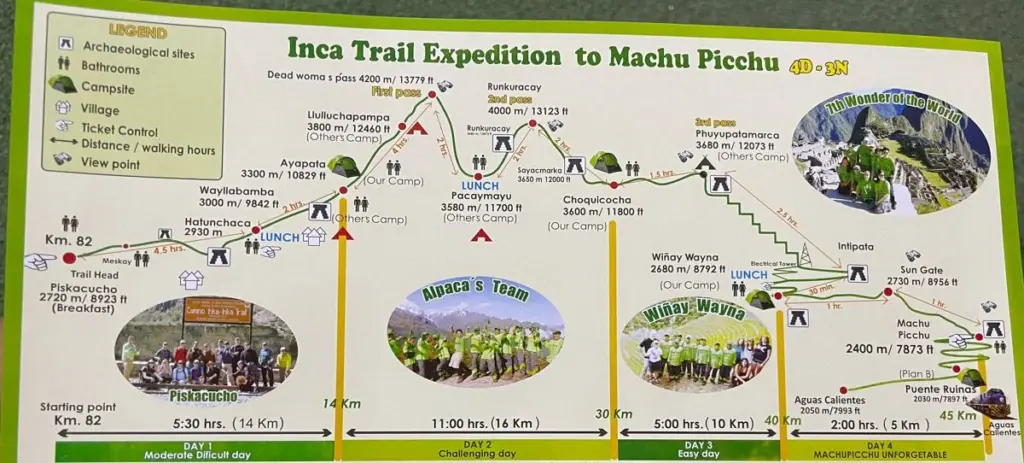
By Silvio Tunqui, Local Inca Trail Guide & Founder of Tunqui Expeditions
Welcome to your first day on the Inca Trail to Machu Picchu! I always tell my guests that today is about warming up your legs, finding your rhythm, and beginning to connect with this ancient path that our Inca ancestors once walked.
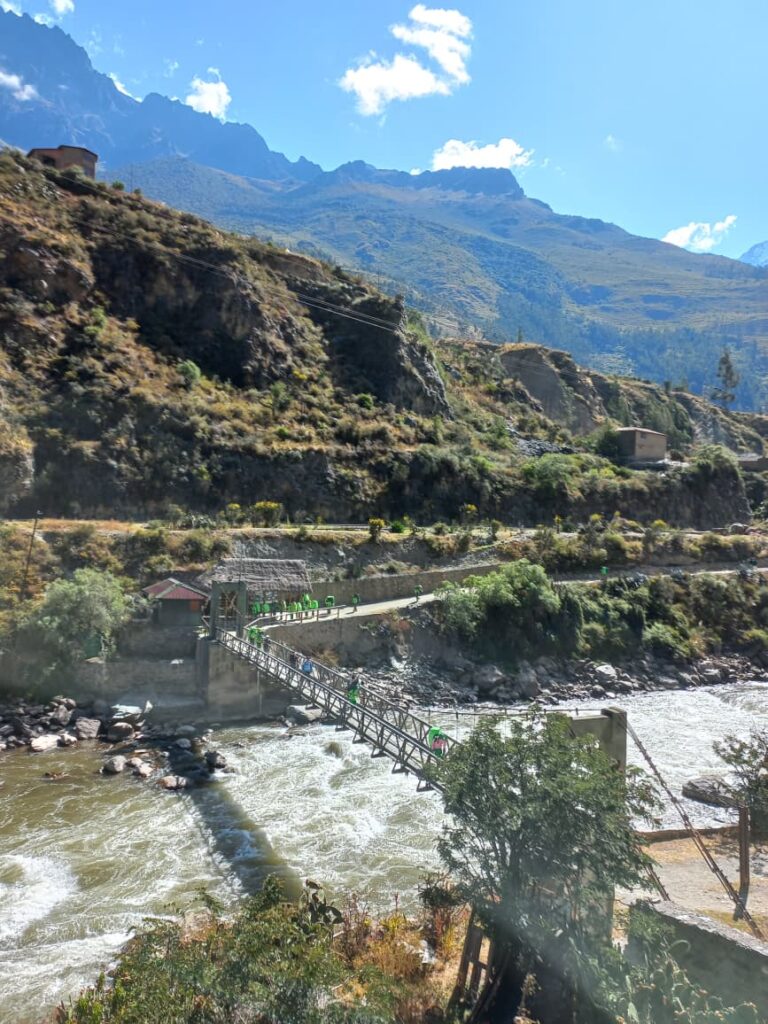
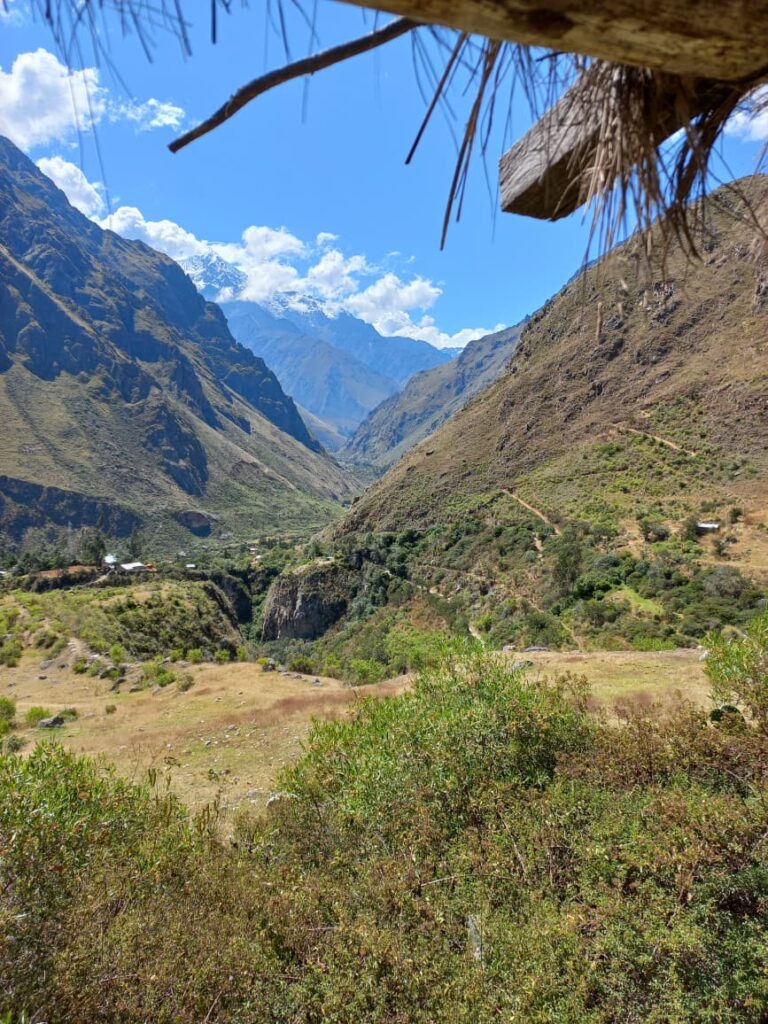
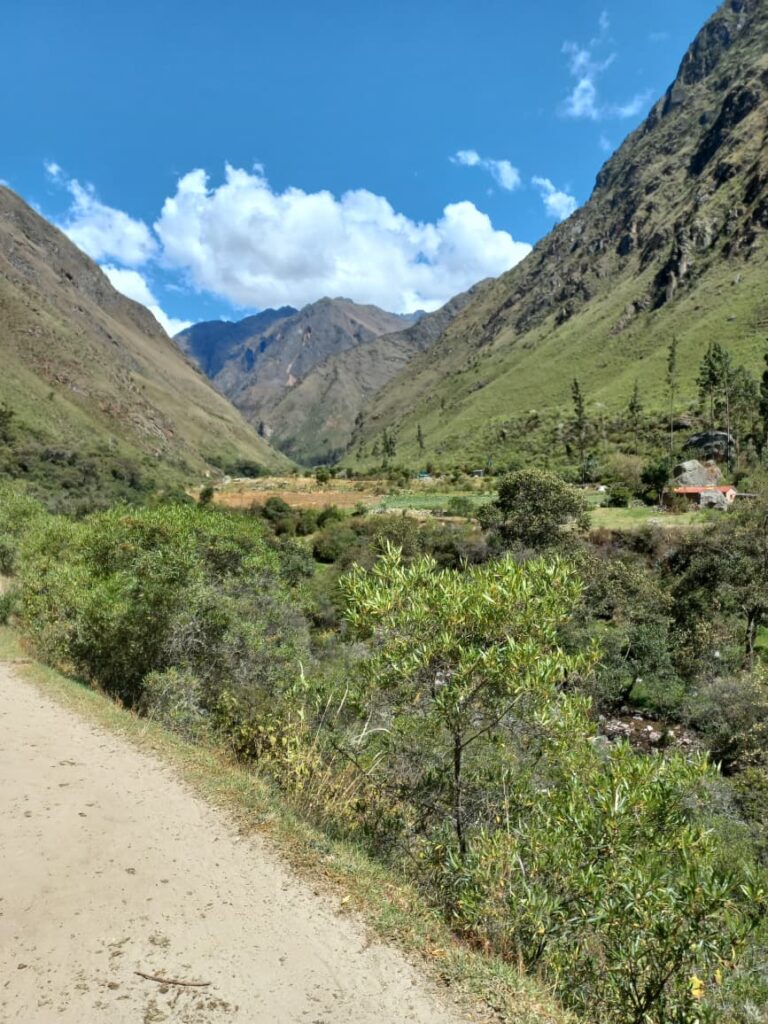
We’ll begin the day early — usually around 4:00 a.m., when I’ll pick you up directly from your hotel in Cusco. The drive to Km 82, our official starting point, takes about two hours. On the way, we’ll stop for a traditional Andean breakfast — hot tea, bread, and local fruit — to give you energy for the day ahead.
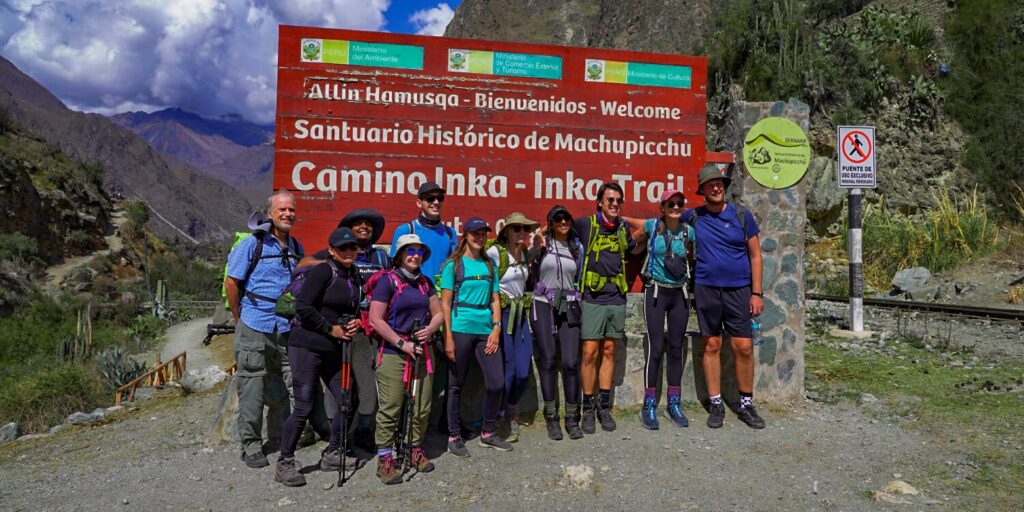
At the checkpoint, you’ll need to show your passport (keep it handy!), and after a short briefing, we’ll officially start our journey. I always say that this moment — when your boots first touch the trail — is the beginning of something truly special.
The first section of the Inca Trail hike is gentle and perfect for getting used to your backpack and altitude. The path winds along the Urubamba River, surrounded by farmland and Andean villages. After about two hours, we’ll reach our first Inca archaeological site, Patallacta, a stunning ancient settlement that once protected the Sacred Valley.
We’ll continue hiking for a few more hours until we reach our lunch spot, where my team — our talented cooks and porters — will be waiting with a freshly prepared hot meal. Many travelers are surprised by how delicious the food is on the trail!
After lunch, we’ll begin the final stretch to our first campsite at Ayapata, which takes about two more hours. This part of the trail is steeper, so take it slow and steady. I’ll be walking beside you, encouraging you with local stories and showing you native plants that the Inca used for medicine and rituals.
By late afternoon, around 5:00 p.m., we’ll arrive at camp, where the team will welcome you with “happy hour” — hot tea, snacks, and big smiles. The sun sets behind the mountains, and the air cools down quickly. It’s a peaceful time to relax, reflect, and enjoy your first night under the Andean stars.
Tomorrow, we take on Day 2 — the most challenging but also the most rewarding day of the entire Machu Picchu trek. But for now, just rest and enjoy being here, walking the same sacred trail the Inca once did.
By Silvio Tunqui, Local Guide & Founder of Tunqui Expeditions
If Day 1 is about finding your rhythm, Day 2 of the Inca Trail to Machu Picchu is where you test your endurance and spirit. This is the toughest day of the trek — but also one of the most rewarding.
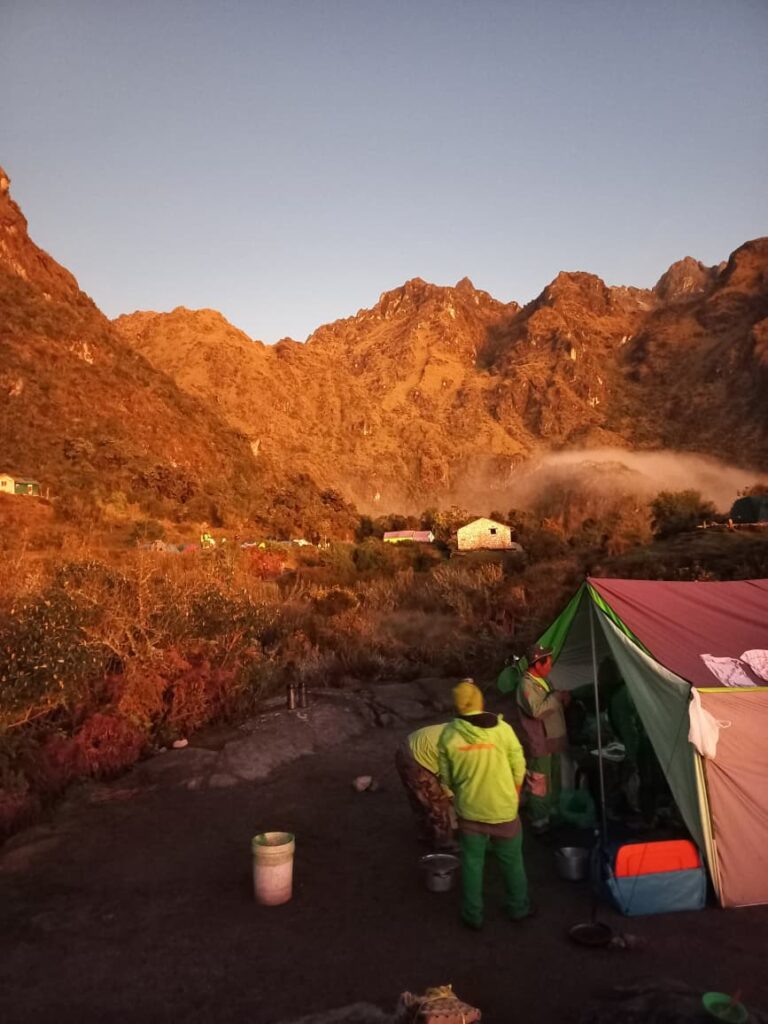
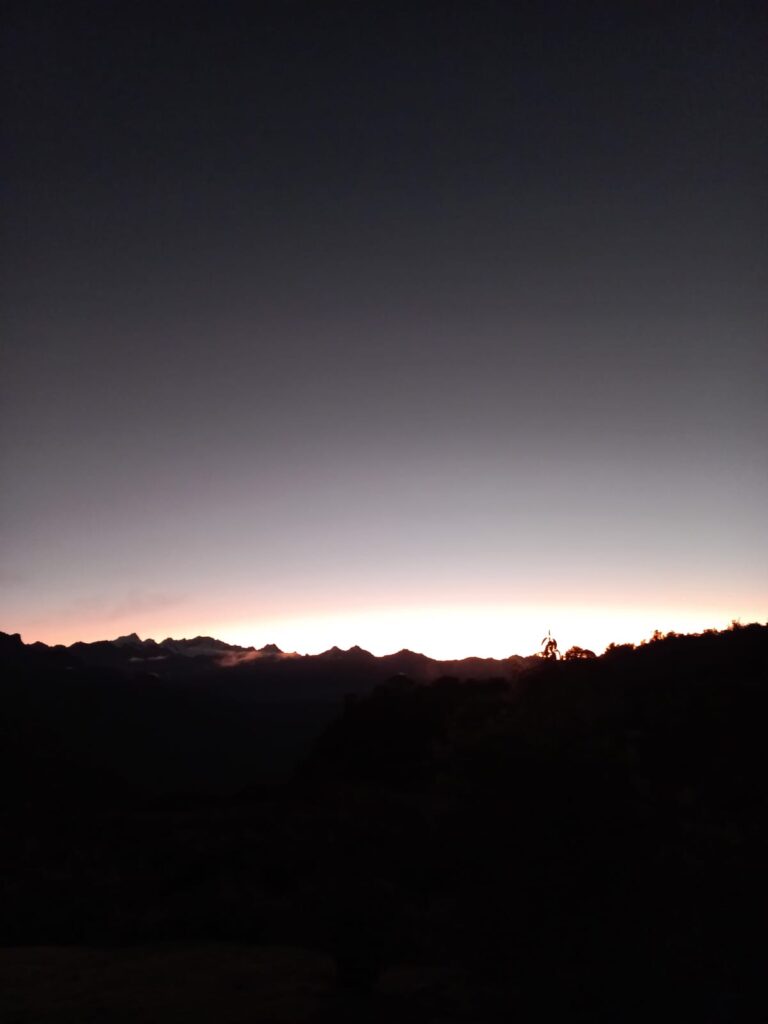
We start early, around 5:00 a.m., when I gently wake you up with a hot cup of coca tea delivered right to your tent — a tradition every Andean guide knows well. The air is crisp, the mountains are silent, and you can already feel the power of the Andes around you.
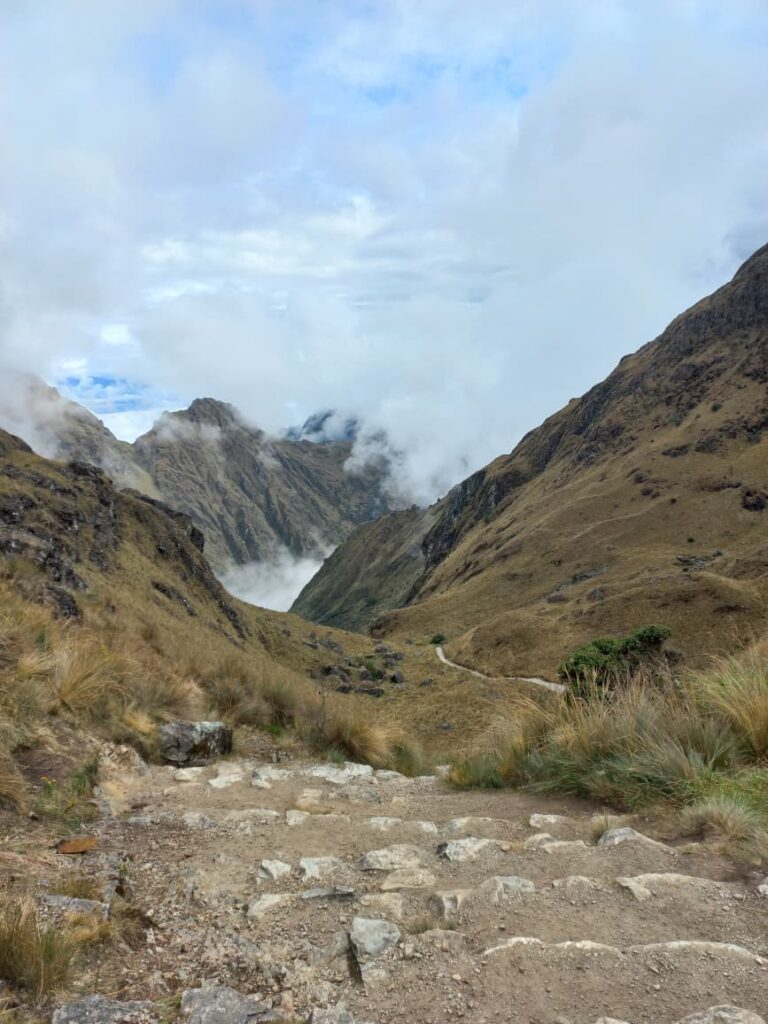
After a hearty breakfast prepared by our chef and porter team, we begin the long ascent toward the most famous section of the Inca Trail hike itinerary — Warmiwañusca, better known as Dead Woman’s Pass.
This climb takes about four hours and is entirely uphill. You’ll feel the altitude today; at 4,200 meters (13,780 feet), every step requires patience and deep breaths. But don’t worry — I’ll be with you every step of the way, reminding you to take it “paso a paso,” just as the Inca once did.
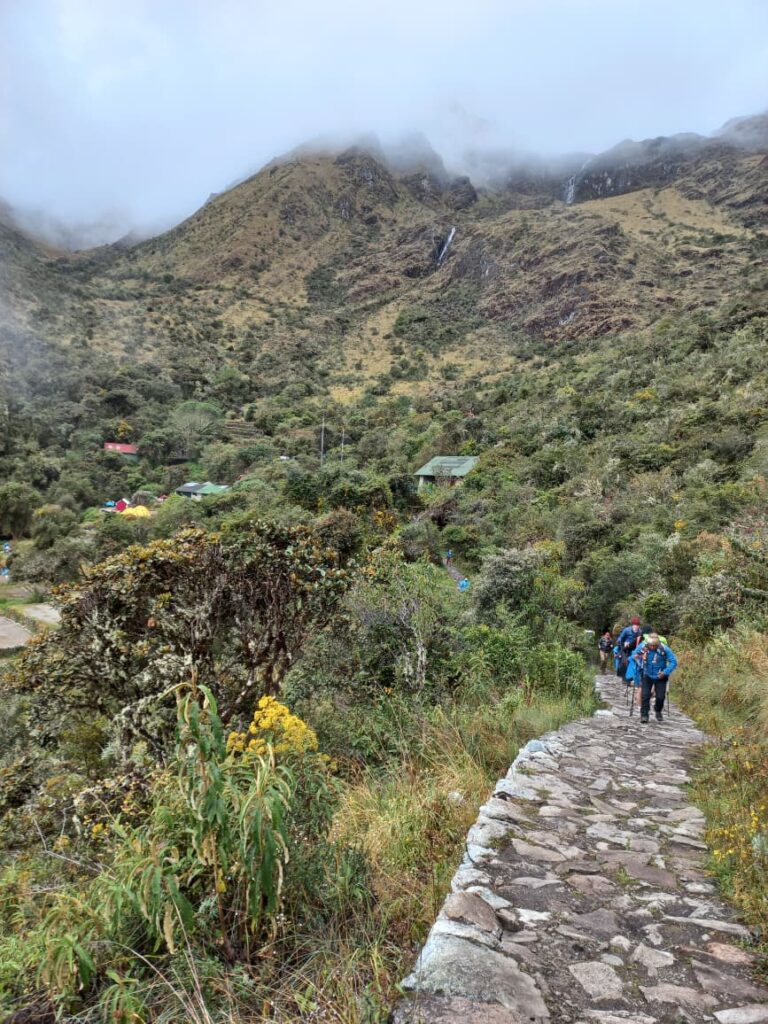
Along the path, we’ll pass through misty cloud forests filled with native plants like muña and chachacoma, used by the locals for centuries to ease altitude sickness. You’ll also see our incredible porters moving swiftly up the mountain with their loads — strong, humble men who are the true heroes of the Machu Picchu trek.
When you finally reach the top of Dead Woman’s Pass, you’ll feel an incredible sense of achievement. I always tell my guests to take a moment here — breathe deeply, touch the earth, and thank the mountains. This is the highest point of the entire Inca Trail to Machu Picchu.
After a short rest and photos, we begin our descent into the Pacaymayu Valley, a peaceful spot where we’ll enjoy a well-earned lunch surrounded by stunning views.
But the adventure doesn’t end there — after lunch, there’s one more pass to conquer: Runcuraccay Pass. The climb is shorter (about two hours) and easier than the first. On the way, we visit a small Inca archaeological site with spectacular panoramic views and twin waterfalls cascading down the opposite valley.
From there, we descend again, visiting the mystical ruins of Sayacmarca, which means “Inaccessible Town.” The name fits perfectly — the site sits on a narrow ridge with breathtaking views of the valley below.
By late afternoon, we’ll arrive at Chaquicocha campsite (3,600 m / 11,811 ft), where the air is cooler and the stars shine brighter. My team will have your tent ready, warm tea waiting, and a delicious dinner prepared.
This night is special — far from the city lights, surrounded by silence and mountains, you’ll sleep knowing you’ve conquered the hardest part of the Inca Trail hike. Tomorrow, the landscape changes completely as we enter the high jungle and approach Machu Picchu’s sacred gates.
By Silvio Tunqui, Local Guide & Founder of Tunqui Expeditions
After the challenging climb of Day 2, today feels like a gift. Day 3 of the Inca Trail to Machu Picchu is all about enjoying the beauty of the Andes at an easier pace. We’ll take our time, breathe deeply, and let the magic of the trail sink in.
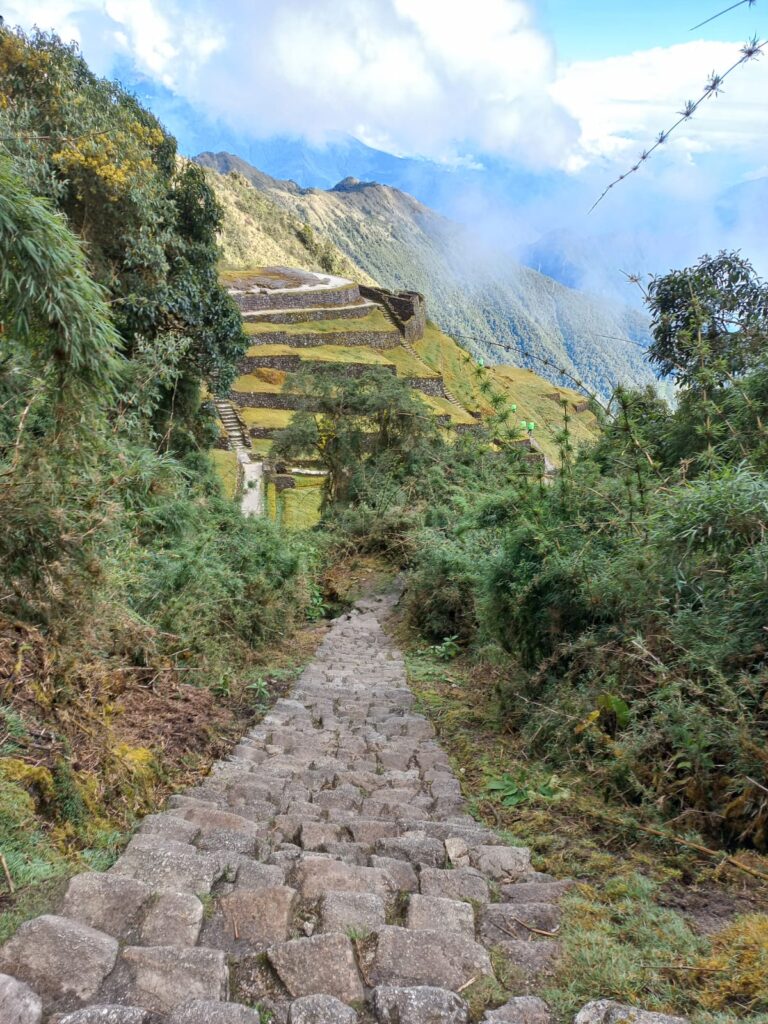
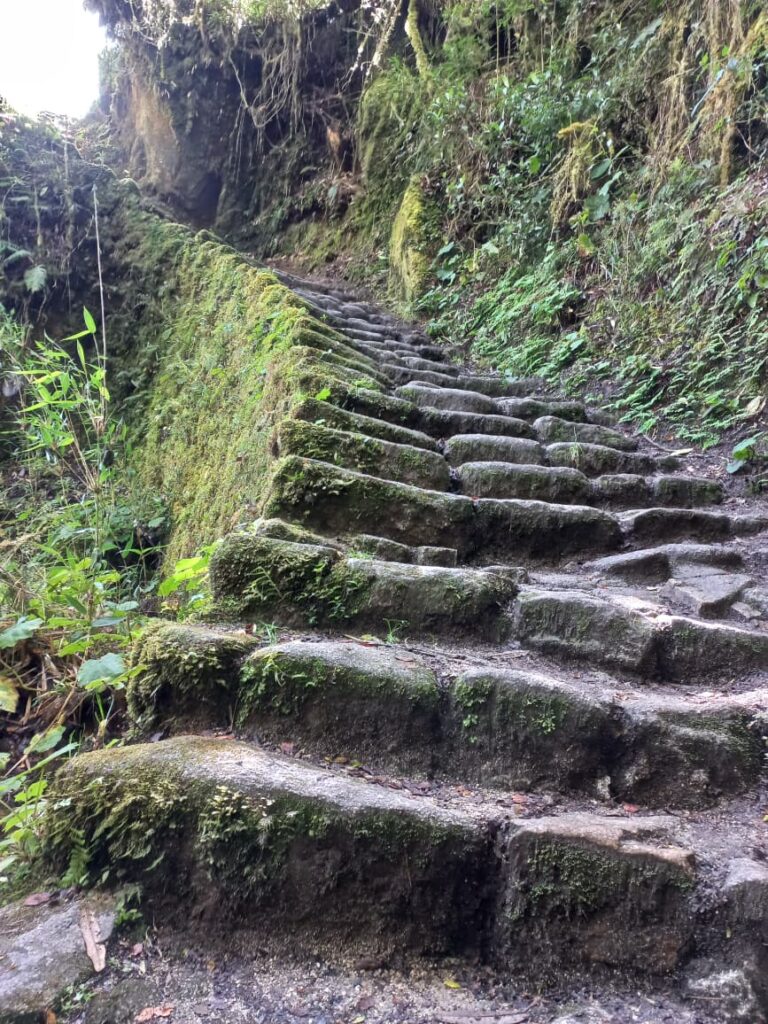
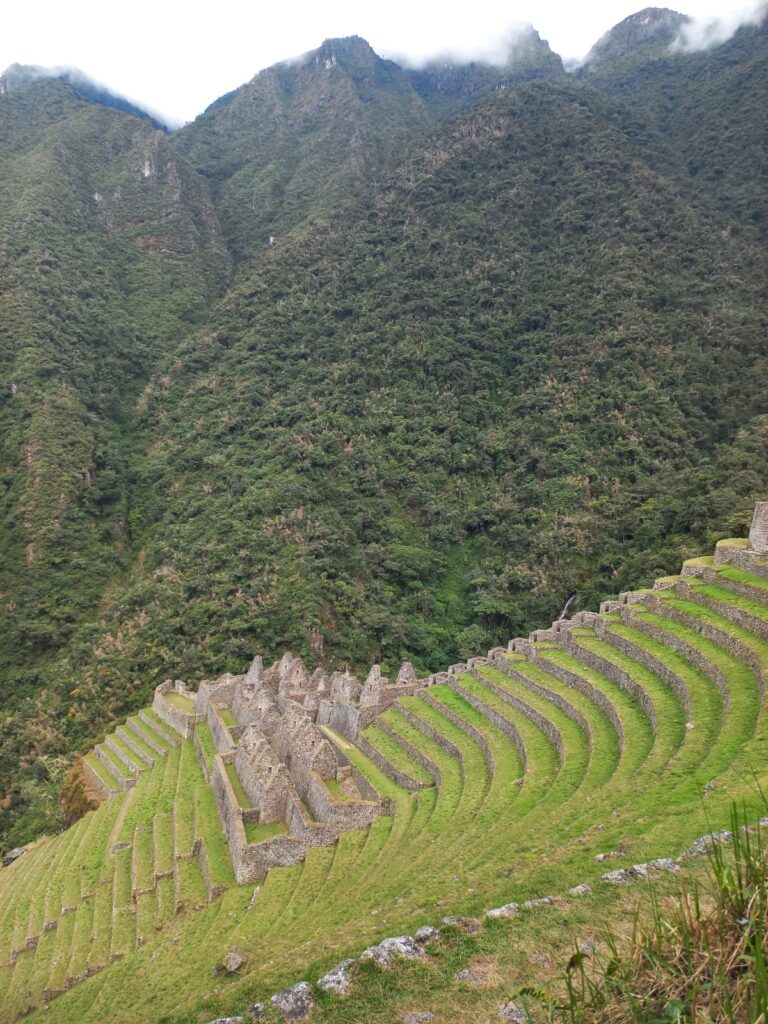
We start the day with a relaxed breakfast and a warm cup of coca tea at our Chaquiccocha campsite, as the sun rises over the surrounding mountains. After two intense days of hiking, this is the easiest and, in my opinion, the most beautiful day of the entire Inca Trail hike itinerary.
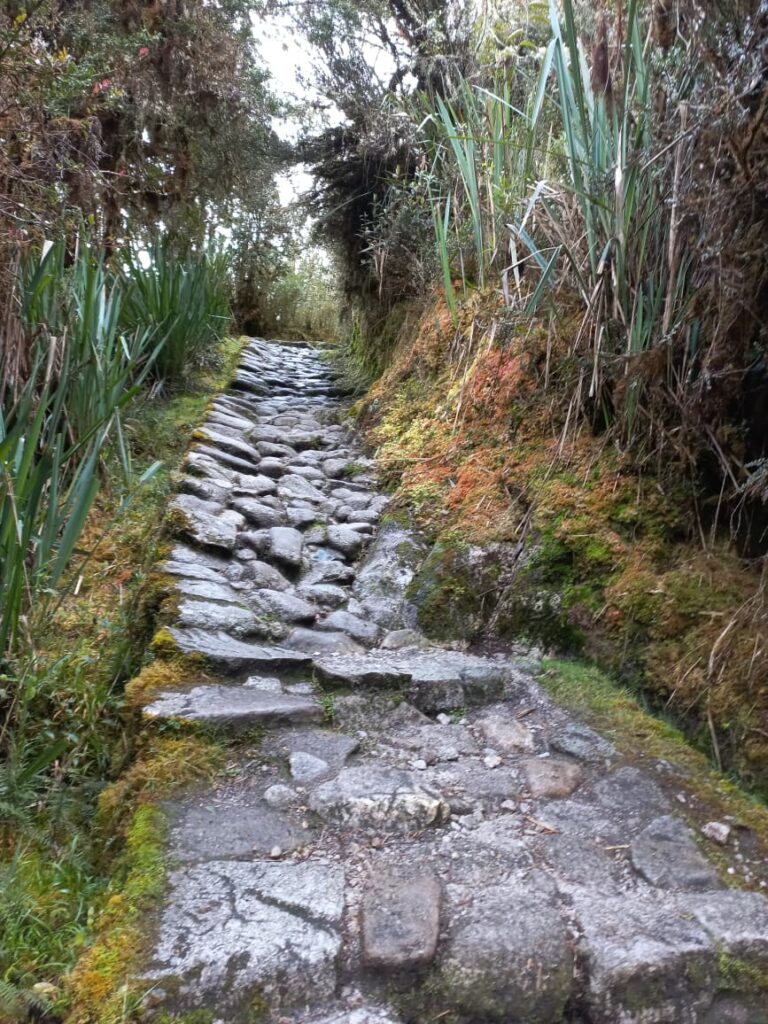
The path begins gently, what we locals call the “Inca flat” — not quite flat, but with rolling slopes that are easy on your legs. For about two hours, we walk through the heart of the Cloud Forest of Peru, surrounded by orchids, moss-covered trees, and the sound of tropical birds.
Here, the landscape changes dramatically. You’ll feel the shift from the high Andes to the lush jungle environment. As we walk, we catch our first glimpse of Machu Picchu Mountain far in the distance — a teasing preview of what awaits us tomorrow.
After a steady descent, we reach the Inca archaeological site of Phuyupatamarka, which means “The Town in the Clouds.” I always pause here with my travelers to share the story of how this site was used for spiritual rituals honoring the mountains and the sun. From this viewpoint, the valleys below stretch endlessly, and on clear days, you can even spot parts of the Urubamba River shimmering far below.
From Phuyupatamarka, we begin a three-hour downhill hike to our next site — Intipata, the “Terraces of the Sun.” These terraces were once used for agriculture, and from here you get one of the best panoramic views on the entire Machu Picchu trek.
A short walk from Intipata brings us to our final campsite, Wiñay Wayna, which we reach around 1:00 p.m.. It’s a short hiking day, giving you time to rest, shower (yes, there are basic facilities here), and enjoy a hearty lunch.
Later in the afternoon, we’ll visit the nearby Wiñay Wayna ruins, just a ten-minute walk from camp. This incredible site — whose name means “Forever Young” in Quechua — is the most impressive Inca ruin on the trail besides Machu Picchu itself. Built on steep terraces with cascading water channels, Wiñay Wayna perfectly captures the harmony between Inca architecture and nature.
As the sun sets, I often gather the group to reflect on the journey so far. You’ll feel both proud and emotional — knowing that tomorrow, we’ll finally arrive at Machu Picchu, the Lost City of the Incas.
Tonight, sleep comes easily, accompanied by the gentle sounds of the cloud forest. The next day, you’ll witness the sunrise at the most sacred site in the Andes — a moment you’ll never forget.
By Silvio Tunqui, Local Guide & Founder of Tunqui Expeditions
This is it — the final and most anticipated day of your Inca Trail to Machu Picchu adventure. Today, you’ll finally stand before the Lost City of the Incas, a moment that will stay with you forever.
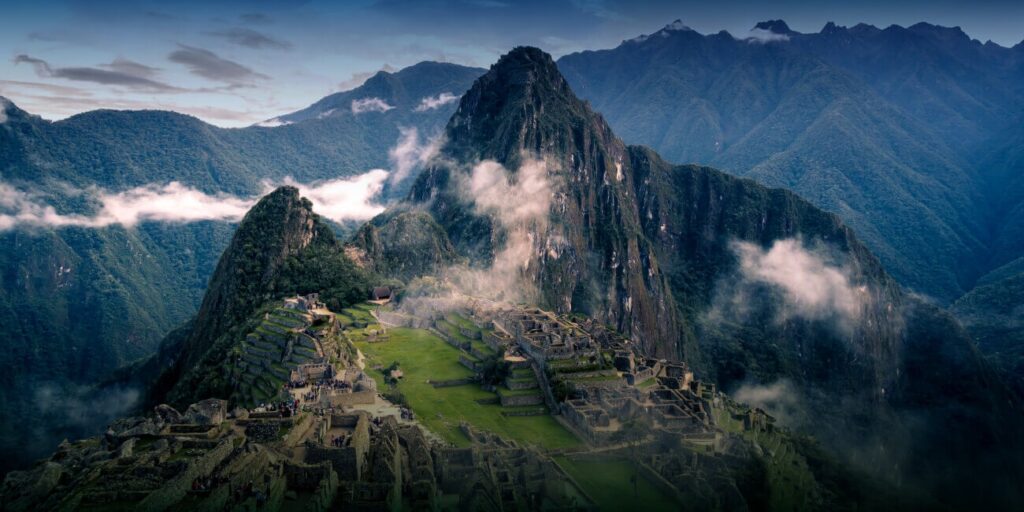
We begin very early — around 3:15 a.m. — when I quietly go tent to tent to wake you with a warm smile and a cup of coca tea. It’s still dark, and the camp is alive with the sounds of porters packing up for their long morning journey.
I always remind my travelers that this early start isn’t just tradition — it’s out of respect for our porter team. They must reach the first train back to Ollantaytambo at 5:30 a.m., otherwise they have to wait all day in Aguas Calientes before returning to their families. These men are the backbone of every Machu Picchu trek, and we honor their hard work with gratitude and punctuality.
Once packed, we walk for about ten minutes to the final checkpoint and wait for it to open at 5:30 a.m. The air is filled with excitement — we’re just a short trek away from the Sun Gate (Inti Punku), the ancient entrance to Machu Picchu.
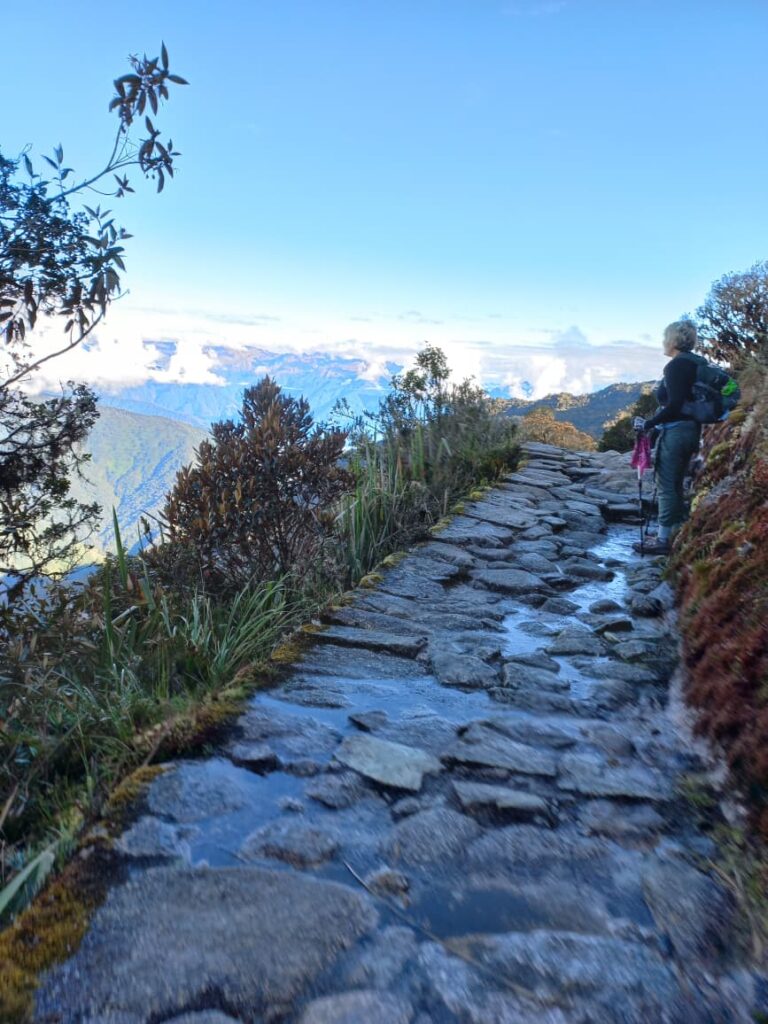
As soon as the gate opens, we begin our final hike. The path is narrow, carved into the mountainside, and filled with anticipation. After about one hour, we reach the Sun Gate, where — if the weather allows — you’ll witness the first breathtaking view of Machu Picchu emerging from the morning mist.
Even after guiding this trail hundreds of times, I still feel emotional every single time I see it. The clouds part slowly, and there it is — the sacred city shining in the early sunlight. Some days, the fog hides everything, but that’s part of the magic too. When the ruins finally appear, it feels like a dream revealing itself.
From here, it’s another easy hour of downhill walking to reach the classic Machu Picchu viewpoint, the one you’ve seen in countless photos. If we arrive early, the site is still peaceful, filled only with trekkers who have completed the Inca Trail — people who have earned this view through effort and perseverance.
I always tell my groups: “This moment belongs to you.” You’ve walked in the footsteps of the Inca for four days, through mountains, valleys, and clouds — and now, you stand where their kings once stood.
After photos and a moment of reflection, we begin our two-hour guided tour of Machu Picchu, exploring its temples, terraces, and sacred sites. I’ll share stories about its construction, its astronomical importance, and the mysteries that still surround it today.
By late morning, the site begins to fill with visitors arriving by train from Cusco. The calm turns into a buzz of energy — people from all over the world, languages mixing in the air. It’s a reminder of just how far-reaching the wonder of Machu Picchu truly is.
After our visit, we take the bus down to Aguas Calientes, where we enjoy one last meal together — a celebration of your incredible journey. Then we board the scenic train to Ollantaytambo, a relaxing ride that gives you time to reflect on everything you’ve experienced.
Once in Ollantaytambo, our private vehicle will take you back to Cusco, dropping you off at your accommodation around 8:00 p.m..
By then, you’ll be tired but fulfilled — carrying with you not just memories, but a piece of the Andes in your heart. The Inca Trail hike isn’t just a trek; it’s a journey through time, spirit, and culture.
By Silvio Tunqui, Local Guide & Founder of Tunqui Expeditions
Many travelers ask me the same question before starting their Inca Trail to Machu Picchu trek:
“Silvio, what should I pack?”
As someone who has walked this sacred trail hundreds of times — first as a porter, and now as a guide — I can tell you that packing smart makes all the difference between an enjoyable trek and a difficult one.
Each Inca Trail tour operator is a little different, but at Tunqui Expeditions, we make sure you have everything you need and understand exactly how much you can bring.
By Peruvian law, porters can carry no more than 25 kg (55 lbs.) total, including their own gear. At Tunqui Expeditions, we respect and protect our porter team — we limit each porter’s load to just 20 kg (44 lbs.), which is safer and more humane.
That means your personal duffel bag can weigh up to 7 kg (15 lbs.), including your sleeping bag and sleeping pad (if you rent them). You’ll carry a small daypack during the day with your essentials — water, snacks, jacket, camera, and passport. More info Ultimate Inca Trail Packing List
Your hotel in Cusco will have a scale so you can check your bag before the trek. Trust me — you’ll want to keep it light. The lighter your pack, the happier your hike!
Our team provides you with a duffel bag before the trek. This will be carried by the porters and will be waiting for you at each campsite.
You should include:
After years guiding the Inca Trail to Machu Picchu Peru, I’ve learned one simple truth:
“The less you carry, the more you enjoy the journey.”
This trail isn’t about luxury — it’s about connecting with nature, culture, and yourself. Bring only what you truly need. Our Tunqui Expeditions team will take care of the rest — from setting up your tent to serving warm meals high in the Andes.
When you walk lightly and open your heart to the mountains, the Inca Trail gives back more than you could ever expect.
By Silvio Tunqui, Local Guide & Founder of Tunqui Expeditions
As a guide who has led hundreds of trekkers on the Inca Trail to Machu Picchu, I can tell you this — one of the smartest things you can bring isn’t something that fits in your backpack… it’s travel insurance.
Many travelers overlook it, thinking, “What could go wrong on a four-day trek?” But out here in the Andes, the weather, altitude, and physical challenge can surprise even the strongest hiker. Having reliable travel insurance gives you peace of mind, so you can focus on the beauty of the trail instead of worrying about the “what ifs.”
Most standard travel insurance plans will cover hiking and trekking, but only up to a certain altitude — usually between 2,000 and 6,000 meters (6,500–19,600 ft).
The highest point on the Inca Trail hike is Dead Woman’s Pass, at 4,200 meters (13,780 ft), so it’s essential to double-check your policy’s altitude limit before you arrive in Peru.
Altitude sickness doesn’t discriminate. I’ve seen super-fit hikers struggle simply because their bodies didn’t adapt fast enough. While serious incidents are rare on the Inca Trail, it’s always better to be prepared — especially in the mountains, where evacuation can be complex and expensive.
In my years of guiding, I’ve helped travelers who underestimated the altitude and had to return early. The ones with comprehensive travel insurance were always relieved they had coverage.
When choosing travel insurance for your Machu Picchu trek, make sure your plan includes:
Some companies, like World Nomads or SafetyWing, include trekking coverage automatically, but always read the fine print.
If you’re planning to visit Rainbow Mountain or Humantay Lake after your trek, you’ll reach even higher elevations (above 5,000 meters / 16,400 ft), so you’ll definitely want that extra altitude coverage.
I always tell my travelers:
“You prepare your body for the Inca Trail — but don’t forget to protect your journey, too.”
The Andes are powerful, beautiful, and unpredictable. With good preparation, local guidance, and the right travel insurance, your Inca Trail to Machu Picchu trek will be safe, smooth, and unforgettable.
By Silvio Tunqui, Local Guide & Founder of Tunqui Expeditions
At Tunqui Expeditions, our goal is to make your Inca Trail to Machu Picchu journey unforgettable — not only for the incredible scenery and history but also for the care and comfort you’ll experience along the way.
Our team is made up of local Quechua guides, porters, and chefs who know the Andes like the lines of their own hands. Everything we provide on the trail has been thoughtfully planned to give you the best balance of comfort, culture, and adventure.
Below is everything that’s included when you join our Classic 4-Day Inca Trail trek.
I always remind my travelers:
“Every detail of your trek — from the food you eat to the tent you sleep in — has been prepared with care by people who love these mountains.”
When you travel with Tunqui Expeditions, you’re not just hiking the Inca Trail — you’re supporting a community of local families, Indigenous guides, and porters who keep the spirit of this ancient path alive every day.
We take pride in providing comfort, safety, and heart in every step of your Machu Picchu trek.
By Silvio Tunqui, Local Guide & Founder of Tunqui Expeditions
As a local guide and former porter myself, I often get asked:
“Silvio, how much should we tip our team on the Inca Trail?”
First, let me say — tipping is never mandatory, but it’s a deeply appreciated gesture of gratitude toward the incredible team that makes your journey possible. The Inca Trail to Machu Picchu is more than just a hike; it’s a shared experience between travelers and the local people who dedicate their effort, strength, and heart to make it unforgettable.
Here at Tunqui Expeditions, our porters, chefs, and guides are paid fair, legal wages, so they never depend on tips to support their families. However, a tip is a beautiful way to say thank you for their dedication and kindness.
Our porters are the true heroes of the Machu Picchu trek. They carry not only your personal belongings but also the tents, food, and all the equipment needed to make the camp ready before you arrive.
Most travelers choose to pool their tips together and give one collective amount to the team after dinner on the third night of the trek.
A common and fair amount is 80–100 soles per porter for the entire trek.
Here’s a simple way to calculate it:
Tipping Formula:
(X × Y) ÷ Z = average contribution per person
Where:
💬 Example:
If your trek has 14 porters and 7 trekkers, and you wish to give each porter 100 soles:
(14 × 100) ÷ 7 = 200 soles per person.
This pooled tip is then divided equally among the porter team — a gesture they will never forget.
Our trail chefs are true artists. Imagine preparing three hot meals a day at high altitude with limited resources — and still making every dish taste amazing!
It’s customary for the chef to receive double what a porter earns, since they work longer hours and carry specialized equipment.
Suggested amount: 160–200 soles per trek.
Tipping Formula:
Y ÷ Z = average contribution per person
Where:
💬 Example:
If you want to give your chef 200 soles and your group has 8 people:
200 ÷ 8 = 25 soles per person.
Tips for the porters and chef are usually collected together on the third night after dinner in a short thank-you ceremony.
Your Inca Trail guide walks beside you from the very beginning — through the tough climbs, the history lessons, the laughter, and the breathtaking views.
Guides are usually tipped individually, not as part of the pooled group tip. This allows you to give directly based on your personal experience.
A common range is 100–160 soles per guide, though you can give more or less depending on your satisfaction and budget.
Remember, it’s the thought and appreciation that matter most. Even a smaller tip, given sincerely, means a lot to us.
I always tell my travelers:
“When you tip your team, you’re not just saying thank you — you’re helping support the Andean families who keep the spirit of the Inca Trail alive.”
Your gratitude encourages us to continue our mission at Tunqui Expeditions Peru — providing ethical tourism that values people, culture, and nature.
So whether it’s a few soles or a heartfelt hug and handshake, your appreciation goes a long way in our mountains.
By Silvio Tunqui, Local Guide & Founder of Tunqui Expeditions
As someone who was born and raised in the Sacred Valley and has spent most of my life guiding travelers along the Inca Trail to Machu Picchu, I can tell you this — visiting this sacred site is not just a journey, it’s a privilege.
Machu Picchu Peru is one of the most remarkable archaeological treasures in the world, and with that honor comes great responsibility. Over the years, the growing number of visitors has brought both opportunity and challenges.
In 2008, Machu Picchu was placed on the World Monuments Fund’s Watch List of endangered sites due to the effects of overtourism — erosion, waste, and environmental stress. Thankfully, the Peruvian government has taken important steps to protect it, limiting entry to 2,500 visitors per day and introducing specific time slots and routes through the site.
Similarly, the Inca Trail is now regulated to allow only 500 permits per day, including porters and guides. These rules help preserve the path that our Inca ancestors built more than 500 years ago — a route that still carries their spirit.
At Tunqui Expeditions, we believe that sustainable tourism means walking respectfully, giving back to the communities we visit, and caring for the Earth that gives us so much. Below are my personal tips for traveling responsibly on the Inca Trail to Machu Picchu.
The Andean mountains are sacred to us — we call them Apus, or mountain spirits. To honor them, follow the 7 principles of Leave No Trace, especially #3: Dispose of waste properly.
Carry a small reusable or plastic bag to collect your trash, including used toilet paper or food wrappers, and dispose of it at camp in the evening. Our porter team at Tunqui Expeditions Peru always carries extra bags, but the best practice is for each traveler to take responsibility for their own waste.
Remember: “If you pack it in, you pack it out.”
Every step you take on the Inca Trail walks through centuries of history — but also through fragile ecosystems. Please stay on marked paths to avoid damaging native plants and sacred ground.
Avoid stepping off-trail, picking flowers, or touching the stonework of the ruins. This path has carried millions of footsteps over the years, and it still stands because people respect it. Think of yourself as a guest in someone else’s home — treat the land with that same respect.
Many travelers think that throwing food scraps like banana peels or orange skins “isn’t littering” because it’s natural. But even organic waste disrupts local biodiversity and can take years to decompose at high altitude.
Please pack it away until you reach camp or a designated trash area. The Andes are not just beautiful — they are delicate. Let’s keep them clean for future generations.
Every sign you see along the Inca Trail has a purpose — to protect nature, sacred sites, and you. If it says “Do not climb” or “No photography,” there’s a reason.
These rules help reduce erosion, preserve holy spaces, and ensure everyone’s safety. As guides, we take these regulations seriously, and we ask our guests to do the same. Respect for the rules is respect for the Inca legacy.
Along the route, you’ll pass several ancient Inca sites before reaching Machu Picchu. These aren’t just old stones — they are sacred places built by our ancestors, still holding energy and history.
Never climb, sit, or lean on the walls, and avoid touching the stone structures. Even a small amount of pressure over time can cause damage. Instead, take your photos respectfully and admire these sites as living heritage.
I always remind my travelers:
“You don’t walk the Inca Trail to conquer it — you walk to connect with it.”
By traveling responsibly, you help protect not only the natural beauty of Machu Picchu but also the spirit and culture of the Andean people.
When you hike with Tunqui Expeditions, you’re supporting ethical tourism, Indigenous communities, and environmental preservation — ensuring that this sacred path remains alive for future generations to experience and love.
By Silvio Tunqui, Local Guide & Founder of Tunqui Expeditions
Over the years, I’ve guided travelers from all over the world on the Inca Trail to Machu Picchu Peru, and I often get the same questions before every trek.
Here are the most common ones, answered from my perspective as someone who has walked this sacred trail hundreds of times.
The Inca Trail is one of the most famous treks in the world, and permits are very limited — only 500 per day, including porters, guides, and cooks.
For that reason, I always recommend booking at least 6 months in advance, especially for the high season (June–August).
If you’re traveling during shoulder months (April–May or September–October), 4–5 months ahead is usually enough, but earlier is always safer.
No. Since 2001, it has been illegal to hike the Inca Trail without a licensed tour operator and certified guide.
This regulation protects both the environment and the safety of travelers.
If you prefer to visit Machu Picchu without hiking, you can take the train from Cusco or Ollantaytambo to Aguas Calientes and then a short bus ride up to the ruins.
At Tunqui Expeditions, we can help arrange either option — the full Inca Trail or alternative treks like Salkantay or Lares.
A typical Classic Inca Trail costs between $650 and $1,000 USD per person, depending on the service level.
At Tunqui Expeditions Peru, we believe in fair pricing and ethical tourism — that means paying our porters fair wages, providing quality food, and using excellent equipment.
Yes, this might make our tours a bit more expensive than the cheapest options, but you’ll feel the difference every step of the way.
Many travelers ask this. The truth is, operating the Inca Trail responsibly is not cheap.
Permits, staff wages, transport, high-quality meals, and proper equipment all add up.
But choosing a company that treats its team with respect and provides sustainable service ensures that your money directly supports local communities and families — not just a big corporation.
The Inca Trail is about 45 km (28 miles) over 4 days, with several long climbs and descents.
It’s not a technical hike, but the altitude makes it challenging — especially on Day 2, when we cross Dead Woman’s Pass (4,200 m / 13,780 ft).
If you do light cardio or hiking before your trip and spend 2–3 days acclimating in Cusco, you’ll be perfectly ready.
And remember — as I always tell my guests:
“The trail is not a race. The Inca walked with patience and respect, and so will we.”
Usually, if you spend a few days in Cusco before your trek, your body will adapt naturally.
We always serve coca tea and carry coca leaves on the trail — the same natural remedy the Inca used for altitude.
If you prefer to bring medication, that’s completely fine, but it’s rarely needed when you’re well-acclimated.
Absolutely. At Tunqui Expeditions, we take food seriously — it’s part of the experience.
We offer vegetarian, vegan, gluten-free, and lactose-free options, and our chef prepares every meal fresh on the trail.
Just let us know in advance, and we’ll make sure you’re well-fed and happy.
Hiking poles are optional, but I highly recommend them, especially for steep downhill sections.
Per Inca Trail regulations, poles must have rubber tips to protect the ancient stone path.
If you don’t bring your own, we rent professional trekking poles that meet the official requirements.
Our Tunqui Expeditions tents are high-quality, weatherproof, and set up for two people per tent.
If you’re traveling solo, we’ll pair you with another trekker of the same gender — or you can request a private tent for a small extra cost.
Your duffel bag will already be waiting for you inside when you arrive at camp.
There are basic public toilets at some points along the trail, especially on the first day.
However, they can be rustic, so our team provides a private portable toilet tent for your group — kept clean and discreet by our porters.
Be sure to bring your own toilet paper and small waste bag for any stops along the trail.
There are no hot showers, but on the third night, cold showers are available at camp for those who want to freshen up.
Each evening, we provide warm water and soap at your tent so you can clean up comfortably.
Many travelers find that wet wipes and deodorant do wonders on this trek!
Cell signal is unreliable and intermittent, and in some sections there’s no service at all.
Our guides always carry a satellite phone for emergencies, so you’re safe even without a signal.
I encourage travelers to take this opportunity to disconnect and be present — the Andes have a way of speaking to you when you leave your phone behind.
The Inca Trail to Machu Picchu is more than a hike — it’s a spiritual journey.
When you prepare well, travel responsibly, and walk with respect, the mountains reward you in ways words can’t describe.
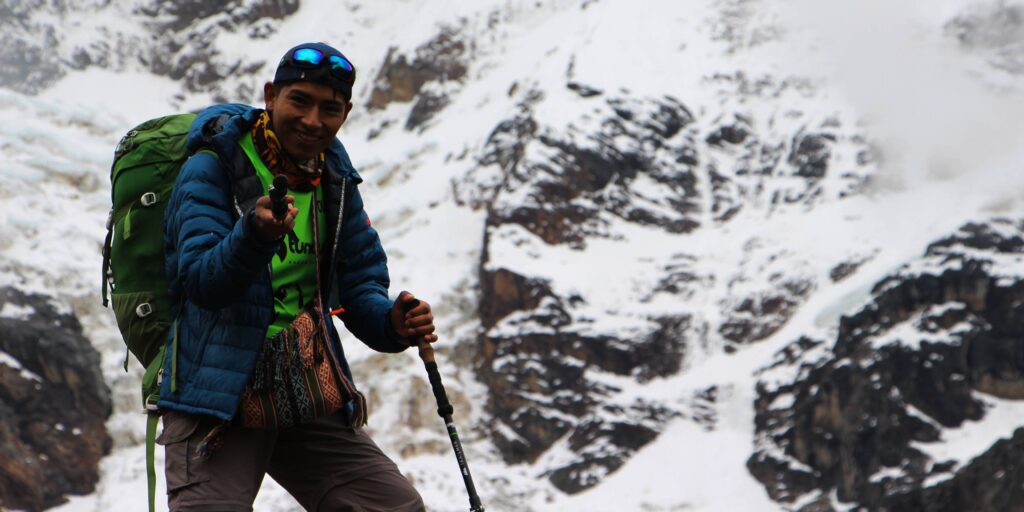
At Tunqui Expeditions Peru, we’ll guide you every step of the way — not just to Machu Picchu, but to a deeper connection with Andean culture and nature.






 Español
  English
