 Español
  English


Inca Trail in June is widely considered the crown jewel of the trekking season in the Peruvian Andes. With the dry winter season in full swing, travelers from the United States and around the world flock to Cusco to experience one of the world’s most iconic hikes: the historic trek through the Andes to the lost citadel of Machu Picchu.
Whether you are planning the traditional 4-day route or considering the shorter 2-day option, here is everything you need to know about trekking the Inca Trail in June.
Inca Trail in June: What to expect
June sits squarely in the Andean dry season, delivering consistent and predictable hiking conditions.
- Daytime Temperatures: Expect sunny, pleasant days with temperatures hovering between 65°F and 70°F (18°C–21°C). Rain is extremely rare, which keeps stone staircases and mountain paths dry and safe.
- Nighttime Temperatures: Because skies remain cloudless, temperatures drop significantly once the sun goes down. High-altitude campsites like Ayapata (10,827 ft) and Chaquicocha (11,811 ft) frequently see temperatures drop near or below freezing (30°F–35°F / 0°C to -2°C).
- Solar Radiation: Due to the high altitude and clear skies, the UV index is intense. High-SPF sunscreen, polarized sunglasses, and a wide-brim sun hat are non-negotiable.
Why June is one of the best months to hike on the Inca Trail
- Unrivaled mountain vistas: Crystal-clear blue skies provide sweeping panoramic views of snow-capped peaks like Mount Veronica and Mount Salkantay.
- First glimpse of Machu Picchu: Entering through the Sun Gate (Inti Punku) early in the morning offers clear, unobstructed views of the citadel without heavy cloud cover.
- Cusco’s jubilee month & Inti Raymi: June is Cusco’s most festive month. Traditional parades, music, and colorful celebrations take place daily around the Plaza de Armas, culminating in the world-famous Inti Raymi (Festival of the Sun) on June 24th.
Inca Trail route options
According to detailed route itineraries in the INCA TRAIL guide, travelers typically choose among three primary options:
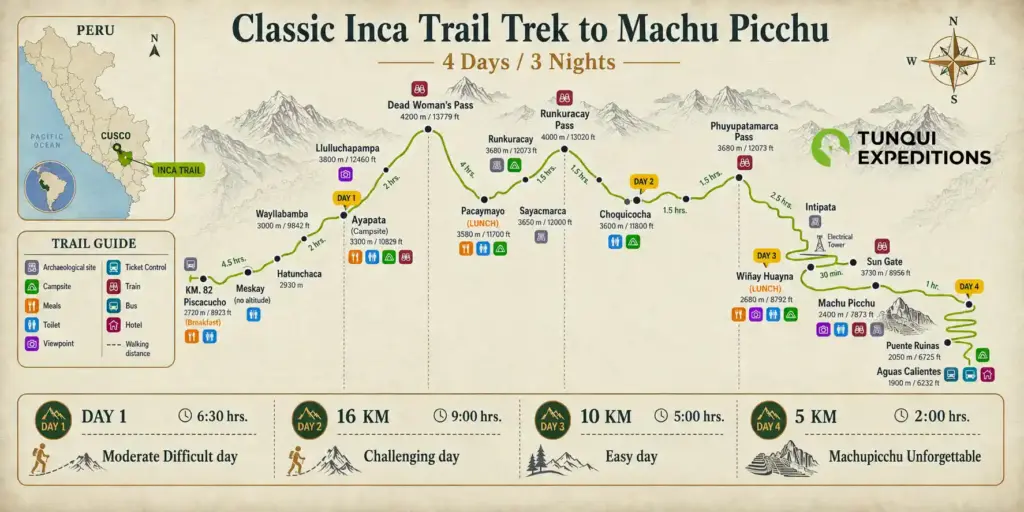
Classic Inca Trail (4 Days / 3 Nights)
- Distance: ~26 miles (42 km)
- Highlights: Starts at KM 82 (Piscacucho), traverses archaeological complexes such as Llactapata, Runkurakay, Sayacmarca, and Wiñay Wayna, and crosses the demanding Dead Woman’s Pass (Warmiwañusca) before arriving at the Sun Gate.
- Ideal for: Hikers seeking the complete, traditional pilgrimage experience.
Short Inca Trail with Hotel (2 Days / 1 Night)
- Distance: ~7 miles (11 km) on Day 1
- Highlights: Begins at KM 104 (Chachabamba), ascends through the cloud forest to the terraced ruins of Wiñay Wayna, and reaches the Sun Gate by late afternoon for sunset views over Machu Picchu, followed by a full tour the next morning.
- Ideal for: Travelers short on time, families, or those who prefer sleeping in a hotel in Aguas Calientes rather than camping.
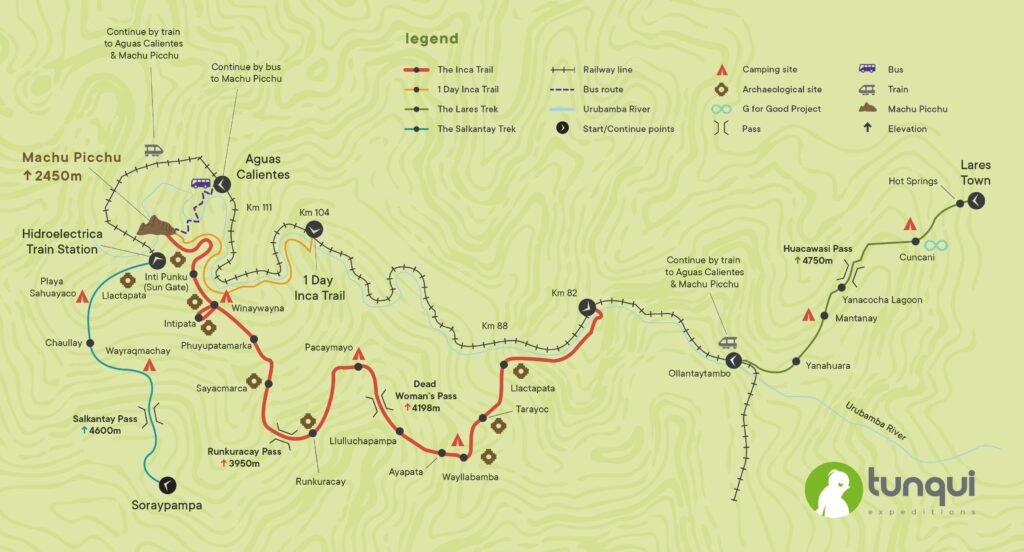
Slow-Paced Inca Trail (5 Days / 4 Nights)
Highlights: Covers the classic route over five days with shorter daily hiking stages, allowing more time to explore each archaeological site and experience Machu Picchu during quieter afternoon and morning hours.
Permit realities: Book months in advance
Under Peruvian government regulations (SERNANP), only 500 permits per day are issued for the Classic Inca Trail—and roughly 300 of those are allocated to essential support staff (licensed guides, porters, and chefs).
- When do June permits sell out? June is peak travel season. Permits for June typically sell out within hours of release, often in October or November of the previous year.
- Passport requirement: Permits are non-transferable and strictly tied to your original passport number and name. Always ensure your passport is valid for at least six months past your travel dates.
Essential packing list for June
Because June features warm days and freezing nights, a smart layering system is essential:
- Base layers: Moisture-wicking thermal tops and bottoms (merino wool is ideal).
- Mid & outer layers: Lightweight hiking shirts, a warm fleece, and a packable down jacket or windbreaker.
- Sleeping bag: Rated for at least 20°F to 15°F (-5°C to -10°C).
- Footwear: Sturdy, well-broken-in waterproof hiking boots with quality wool trekking socks.
- Trekking poles: Adjustable poles with rubber tips (required by park authorities to protect ancient stone trails).
- Daypack: A 25L–30L backpack for daily essentials (water, sunscreen, camera, rain jacket).
- Power bank: Cold mountain nights drain phone and camera batteries faster than usual.
Acclimatization & preparation tips
- Arrive rarly in Cusco: Spend at least 2 to 3 full days in Cusco (11,152 ft / 3,400 m) or the Sacred Valley before starting your trek. This allows your body to adjust to the altitude and prevents acute mountain sickness (AMS).
- Stay hydrated: Drink plenty of water and traditional coca tea, and avoid heavy meals and alcohol during your first 48 hours.
- Book flights & hotels early: Because of Inti Raymi and the high season, flights from Lima to Cusco, central boutique hotels, and return panoramic train tickets (such as PeruRail’s Vistadome) fill up quickly.